


Biohacking skincare means treating your skin as a measurable system: fix the barrier first, layer in clinically dosed actives like peptides and retinoids, protect against UV damage daily, and track results with the same rigor you’d apply to a lab experiment. Most well-formulated actives need 8 to 12 weeks of consistent use before you see objective change. Skip that timeline and you’re just guessing.
TL;DR:
- Consistent use of properly formulated actives like copper peptides requires 8 to 12 weeks to show measurable improvements in skin elasticity and collagen production.
- Topical ingredients such as GHK-Cu and retinoids must be stable and used at studied doses to effectively target aging mechanisms like collagen loss and barrier degradation.
- Focusing on a prioritized routine with sunscreen in the morning and repair serums at night yields better results than overloading with multiple products or ingredients.
- Monitoring skin changes through consistent photos and tracking one variable at a time improves insight into what truly works for your individual skin.
- Devices like LED light therapy support topical routines but do not replace the need for consistent product application and proper timing around in-office treatments.
Table of Contents
- What Does Biohacking Skincare Actually Include?
- The Science of Visible Aging: What Biohacking Actually Targets
- Your Biohacking Skincare Routine: AM, PM, and Weekly
- How Do Devices and In-Office Treatments Fit In?
- How Do You Know a Biohack Is Actually Working?
- How Alloi Skin Applies Biohacking Principles
- What Is Biomarker Testing for Skincare?
- Why the Skin Microbiome Matters in Biohacking
- Do Supplements and Nutraceuticals Help Your Skin?
- Can You Track Your Skin at Home With Apps and Devices?
- Sustainable Results Beat Constant Product Swapping
- Where VitalCopper Fits Your Evening Routine
- Sources
- FAQ
What Does Biohacking Skincare Actually Include?
Biohacking skincare isn’t a single product or gadget. It’s a system of five interventions working together: topicals (peptides, retinoids, antioxidants), devices (LED, at-home microcurrent), in-office procedures (lasers, microneedling), lifestyle factors (sleep, diet, sun exposure), and monitoring (photos, biomarker tracking). Skip any one category and you’re optimizing incompletely.
The problem with most “biohacking” content online is that it borrows the language of precision without the substance. A serum claiming ten peptides at unlisted concentrations isn’t biohacking. It’s marketing wearing a lab coat.
Real skin optimization follows a measure-adjust cycle: introduce one variable, give it time to work, record what changed, then decide whether to keep it. This matters more than any single ingredient, because personalized approaches consistently outperform generic routines once you account for climate, age, and skin phototype.
Quick filters to separate signal from noise:
- Does the ingredient have a published dose that matches what’s on the label?
- Is there a stated mechanism (collagen synthesis, barrier lipid repair) rather than vague “glow” language?
- Does the brand disclose concentration, or just list the ingredient?
- Is the claimed timeline realistic (weeks, not overnight)?
The Science of Visible Aging: What Biohacking Actually Targets
Visible aging comes down to four overlapping mechanisms: fibroblasts slow their collagen output, senescent cells accumulate and stop functioning normally, the lipid matrix that seals your barrier degrades, and cumulative UV exposure drives oxidative damage that breaks down existing collagen faster than it’s replaced.
Clinical Callout: GHK-Cu (copper tripeptide-1) has been shown in clinical research to increase collagen production by up to 70% while improving elasticity over a 12-week window. That timeline isn’t a marketing suggestion. It reflects how long dermal remodeling actually takes at the cellular level.
Peptides like GHK-Cu work by signaling fibroblasts directly, essentially telling them to resume collagen and elastin production. Retinoids work differently: they accelerate cellular turnover and normalize the way skin cells behave in the upper layers, which is why they pair well with, rather than replace, peptide-based repair work.
None of this works if the formulation is unstable. GHK-Cu is sensitive to pH shifts and reacts poorly with strong chelating agents, so a copper peptide serum that looks correct on the ingredient list can still underperform if it wasn’t formulated to protect the peptide’s activity. Stability, not just concentration, decides whether an active reaches your skin intact.
Your Biohacking Skincare Routine: AM, PM, and Weekly
A prioritized routine beats a crowded one. Here’s the order of operations that reflects what the biology actually needs, not what a ten-step routine promises.
Morning priorities, in order:
- Sunscreen, broad spectrum, SPF 30 or higher. This is the single highest-leverage move in any routine. The American Academy of Dermatology treats consistent sunscreen use as the foundational defense against photoaging, and no active ingredient compensates for skipping it.
- Antioxidant serum (vitamin C or similar). Neutralizes UV-driven free radical damage before it accumulates.
- Lightweight hydration. Locks in moisture and preps skin for sunscreen absorption without pilling.
Evening priorities, in order:
- Cleanse without stripping. Harsh surfactants undo barrier work before it starts.
- Peptide serum (repair phase). This is where copper peptides do their remodeling work, typically applied to slightly damp skin for better penetration.
- Retinoid, introduced separately. Start at low frequency (two nights a week) and increase only once skin tolerates it. Never layer a retinoid directly on top of a peptide serum on the same application, since retinoids can degrade some peptide structures. Space them by alternating nights instead.
- Barrier-repair moisturizer. Look for ceramide, cholesterol, and fatty acid ratios rather than a single lipid, since ceramides alone rarely rebuild the full lamellar structure your barrier needs.
Weekly and periodic additions:
Red light (LED) sessions three to five times a week support collagen stimulation without irritation risk. In-office procedures like microneedling or resurfacing lasers belong in the routine only after your barrier is stable, and you should pause retinoids for several days before and after any procedure to reduce irritation. Combining topical actives with proper post-procedure timing reduces complication risk and improves durable outcomes.
Pro Tip: Change one variable at a time. If you add a new retinoid and a new peptide serum the same week, you’ll have no idea which one caused the irritation, or the improvement.
Measurement matters as much as the products themselves. Take photos in the same light, same time of day, and same angle regularly. Check in after a period consistent with typical timelines for actives to show real effects, which is usually several weeks.
How Do Devices and In-Office Treatments Fit In?
Devices amplify a good topical routine. They don’t replace one.
Red LED light has decent clinical support for stimulating collagen and calming inflammation, and Harvard Health’s overview treats it as a legitimate, low-risk addition to a home routine. Blue light shows more evidence for acne-prone skin specifically, targeting bacteria rather than collagen. Lasers and microneedling carry stronger, faster results but require professional oversight and downtime.
A simple decision rule: reach for at-home devices (LED panels, basic microcurrent) for maintenance and gradual improvement. Reach for in-office procedures when you need a step-change, like treating textural scarring or deep static lines that topicals alone won’t resolve.
Timing around procedures follows a consistent pattern:
- Hold retinoids and exfoliating acids for 3 to 7 days before and after any in-office treatment.
- Prioritize barrier repair (ceramide moisturizers, panthenol) in the days immediately following.
- Sunscreen becomes non-negotiable post-procedure, since treated skin is more UV-reactive.
How Do You Know a Biohack Is Actually Working?
Most actives split into two categories: immediate effects (hydration, temporary plumping) that you’ll notice within days, and remodeling effects (collagen synthesis, cellular turnover normalization) that take weeks to show up in a photo.
A workable measurement protocol has three steps:
- Establish a baseline. Photograph skin in consistent lighting before introducing anything new.
- Change one variable, then wait. Give any new active a full 8 to 12 week window before judging it, since most actives require weeks of consistent use to produce measurable change, and short-term reactions rarely predict long-term results.
- Standardize your check-ins. Same time of day, same skin state (no makeup, similar hydration), every time you compare.
Patch test any new active on your inner arm for 48 hours before facial application. Check for known conflicts (retinoids with strong acids, high-percentage vitamin C with certain peptides) before combining. See a dermatologist if you notice persistent redness, burning, or breakouts that don’t resolve within two weeks of stopping the new product.
How Alloi Skin Applies Biohacking Principles
Alloi Skin builds around one rule: every active earns its place at a studied dose, or it doesn’t make the formula. That’s the opposite of the ten-peptide serum trend, where a long ingredient list often masks concentrations too low to do anything measurable.
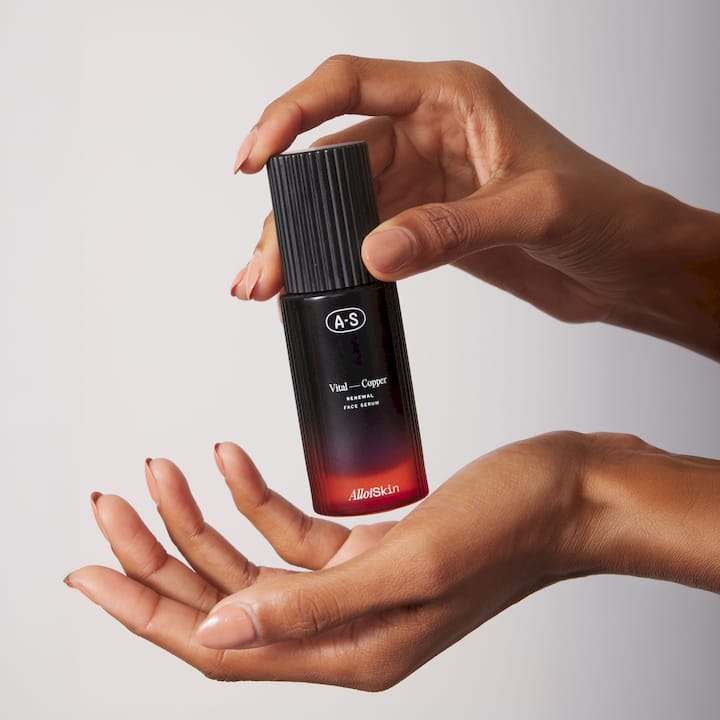
The VitalCopper Renewal Face Serum reflects that discipline directly:
- GHK-Cu (copper tripeptide-1) at a studied dose, targeting the fibroblast signaling and collagen synthesis described earlier in this guide.
- Matrixyl 3000, paired to support structural repair alongside the copper peptide.
- Panthenol, betaine, and hyaluronic acid, included specifically to soothe and protect the barrier while the peptides do remodeling work.
That combination positions VitalCopper squarely in the PM repair slot of the routine outlined above, applied after cleansing and before a barrier-repair moisturizer. Formulation stability matters here too. Alloi Skin’s formulation method controls for the pH sensitivity that copper peptides require to stay active in the bottle.
What Is Biomarker Testing for Skincare?
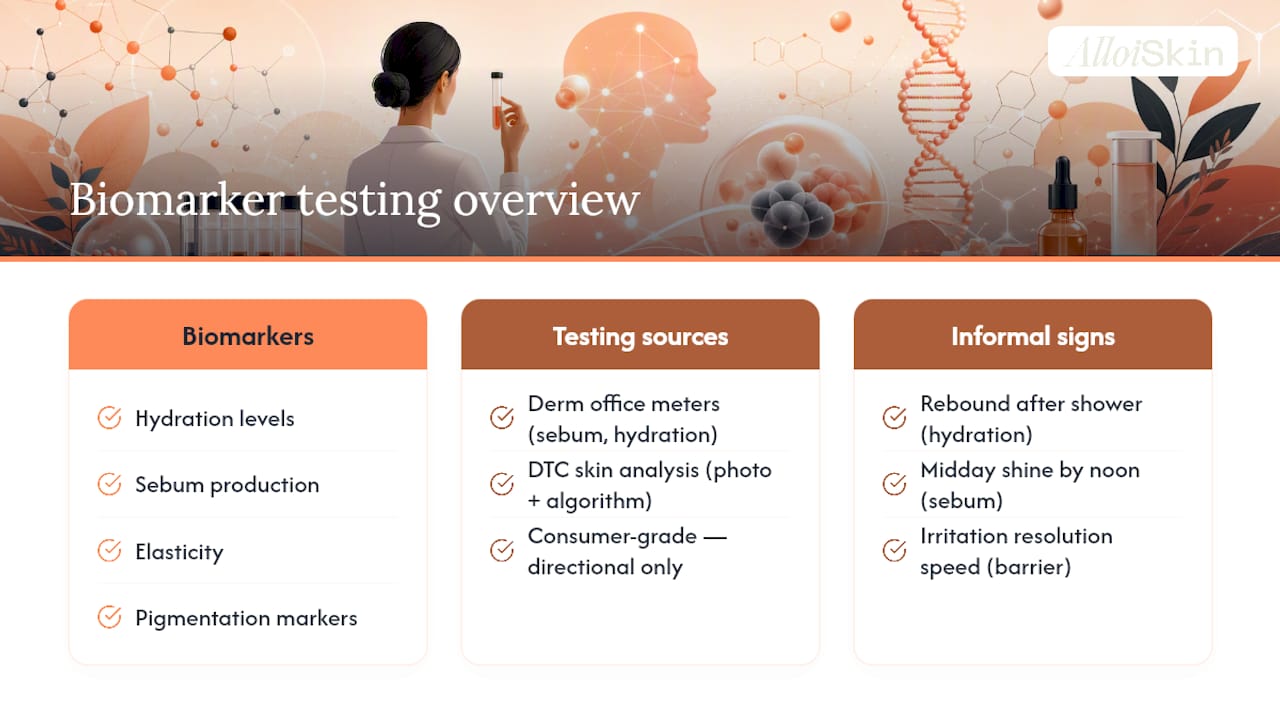
Biomarker testing applies the same logic doctors use for bloodwork to your skin. Instead of guessing which serum “might” work, you measure specific indicators (hydration levels, sebum production, elasticity, pigmentation markers) and let the data point you to actives that address your actual deficits.
At-home versions have become more accessible: some dermatology offices now offer sebum and hydration meters as part of a consultation, and a few direct-to-consumer skin analysis services combine a smartphone photo with algorithmic scoring for texture, pore size, and pigment evenness. These are consumer-grade tools, not diagnostic instruments, so treat the output as a directional signal rather than a lab result.
The bigger shift is philosophical. Skincare research increasingly argues for data-driven personalization because a 25-year-old in a humid climate and a 55-year-old in a dry one respond to the same retinoid completely differently. A standardized “use this at night” instruction ignores that variability, and can actively backfire, over-drying skin that already has compromised barrier function.
Practically, this means paying attention to your own biomarkers even without lab equipment: how quickly skin rebounds after a shower (hydration), whether you get midday shine by noon (sebum), and how fast irritation resolves after a new product (barrier resilience). These informal signals, tracked consistently, function as a low-cost biomarker system that tells you when to adjust dose, frequency, or product entirely.
Why the Skin Microbiome Matters in Biohacking
Your skin hosts a community of bacteria, fungi, and other microorganisms that directly influence barrier function, inflammation, and even how well certain actives perform. Disrupt that community with overly aggressive cleansing or excessive exfoliation, and you can undermine every other step in your routine.
A healthy microbiome maintains a slightly acidic skin pH (around 4.5 to 5.5), which supports the enzymes responsible for building your lipid barrier. Push that pH alkaline with harsh soap-based cleansers, and you compromise both the microbiome and the barrier lipids in one move.
This is where ingredient stacking becomes a real risk. Layering multiple exfoliating acids, a retinoid, and a high-percentage vitamin C in the same routine can strip the microbiome faster than it can recover, leading to the redness and reactivity many people mistake for “sensitive skin” rather than a self-inflicted imbalance. Auditing your routine so each product serves a distinct, non-overlapping mechanism protects both the microbiome and the barrier simultaneously.
Prebiotic and postbiotic ingredients (oat extracts, certain fermented actives) have entered mainstream formulations specifically to support this bacterial balance, though the clinical evidence here is still developing compared to the peptide and retinoid research covered earlier. Treat microbiome-supportive ingredients as a complement to barrier repair, not a replacement for it.
Do Supplements and Nutraceuticals Help Your Skin?
Topical actives address what’s happening at the skin’s surface and upper dermis. Supplements work on a different timeline, feeding the systemic processes (collagen synthesis, oxidative stress management, hydration at a cellular level) that show up in skin quality months later.
Collagen peptides remain the most researched category, largely because ingestible collagen provides amino acids (glycine, proline, hydroxyproline) that serve as raw material for your body’s own collagen production. This isn’t the same mechanism as a topical peptide signaling fibroblasts directly. It’s supplying the building blocks rather than the signal to build.
Omega-3 fatty acids support barrier lipid composition from the inside, which pairs logically with the ceramide-focused barrier repair discussed earlier in this guide. Antioxidant supplements (vitamin C, vitamin E, astaxanthin) work alongside topical antioxidants rather than replacing them, since oral and topical delivery reach different tissue layers.
The catch with nutraceuticals is timeline expectations. If topical actives need 8 to 12 weeks to show remodeling effects, supplements often need longer, since they’re working through digestion, absorption, and systemic distribution before reaching skin tissue. Treat any supplement claim promising visible change in under a month with real skepticism.
Diet itself remains the baseline nutraceutical intervention. Consistent hydration, adequate protein intake, and limiting high-glycemic foods (linked to inflammatory pathways that accelerate collagen breakdown) do more for long-term skin quality than most bottled supplements, though they work on the same multi-month timeline.
Can You Track Your Skin at Home With Apps and Devices?
The at-home monitoring category has grown fast, and it splits into three useful tools: smartphone-based skin analysis apps, dedicated skin scanning devices, and simple photo-tracking discipline that costs nothing.
Skin analysis apps use your phone camera plus algorithmic scoring to estimate hydration, texture, pore visibility, and pigment evenness over time. Accuracy varies significantly by lighting conditions and camera quality, so consistency in how you capture the photo matters more than the app’s sophistication.
Dedicated devices (handheld moisture meters, sebum-measuring tools) offer more consistent readings than a phone camera because they measure a physical property directly rather than estimating it visually. These matter most if you’re testing whether a new barrier-repair product is actually improving hydration retention, since visual improvement often lags behind measurable hydration change.
The simplest and most reliable method remains the one with zero technology: a dedicated photo folder, same lighting, same angle, weekly, cross-referenced against a log of what you changed and when. Practitioners consistently recommend this single-variable photo-tracking approach over relying on memory or general impressions, because skin perception is notoriously unreliable week to week. You’ll swear a serum “isn’t doing anything” right up until you compare a week 1 photo to a week 10 photo side by side.
Sustainable Results Beat Constant Product Swapping
The biggest mistake in skincare isn’t using the wrong ingredient. It’s abandoning a working ingredient after three weeks because you didn’t see instant results, then starting the clock over with something new.
Real biohacking discipline looks unglamorous: fewer products, correct doses, patience through the 8 to 12 week remodeling window, and photos that don’t lie the way memory does. Chasing the next trending active resets your timeline every time, which means you never actually reach the point where any single intervention proves itself.
— Alloi Skin
Where VitalCopper Fits Your Evening Routine
If your PM routine needs a repair-focused step that matches the science this guide covers, VitalCopper Renewal Face Serum was built for exactly that slot. It combines GHK-Cu and Matrixyl 3000 at studied doses with panthenol, betaine, and hyaluronic acid to support the barrier while those peptides do their remodeling work, without a ten-ingredient list diluting the actives that matter.
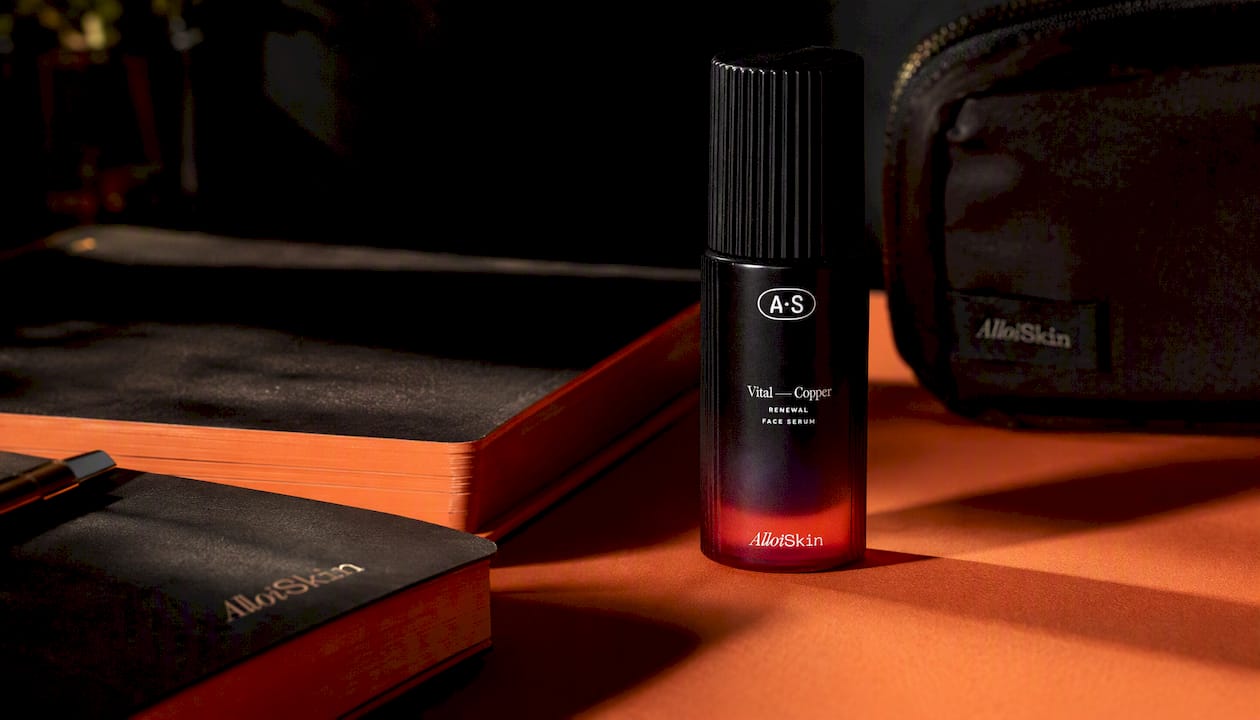
Alloi Skin’s approach skips the guesswork other formulas leave you with: no scanning a label wondering whether a peptide is present in name only. Every active in the VitalCopper Renewal Face Serum sits at a dose that matches the research behind it, and the formulation method page lays out exactly how stability and pH are controlled to keep that copper peptide active. If you’re ready to apply the measure-adjust cycle this guide describes, start with a baseline photo tonight, add VitalCopper to your PM routine, and check back in at the 8 to 12 week mark to see what actually changed.
Sources
FAQ
What Is Biohacking in Skincare?
Biohacking in skincare means using measurable, evidence-backed interventions, topical actives, devices, lifestyle changes, and tracking, to optimize skin biology rather than following generic routine advice.
What Do Koreans Use Against Wrinkles?
Korean skincare routines typically emphasize barrier-first layering, consistent hydration, and daily sunscreen, paired with actives like peptides and retinoids introduced gradually rather than all at once. This layering-focused approach lines up closely with the barrier-first, step-by-step routine philosophy many practitioners recommend.
What Is the Number One Skincare Product in the World?
There’s no single universally recognized “number one” product, since skin needs vary by individual, climate, and goal. Clinical evidence points to sunscreen and well-dosed peptides or retinoids as the highest-impact categories, regardless of brand.
Is a Copper Peptide Serum a Good Choice for Biohacking?
Copper peptides like GHK-Cu have solid clinical support for boosting collagen and improving elasticity within a 12-week window, making them one of the more evidence-backed actives available for a biohacked routine. Products like VitalCopper Renewal Face Serum are formulated specifically around that studied dose.
How Long Until I See Results From Biohacking My Skincare Routine?
Most clinically dosed actives, including peptides and retinoids, show measurable change after 8 to 12 weeks of consistent use, since that’s how long dermal remodeling actually takes. Immediate hydration or plumping effects can appear within days, but they aren’t the same as structural improvement.


