


Copper peptides, specifically GHK-Cu (copper tripeptide-1), boost collagen synthesis through two simultaneous actions: they signal fibroblasts to ramp up collagen production, and they supply copper that enzymes need to mature and cross-link that collagen into strong, organized fibers. This isn’t a single-mechanism ingredient acting like a switch. It’s closer to a two-part supply chain, one part message, one part raw material.
The evidence for this comes from three tiers of research. Cell culture studies show fibroblasts producing more collagen when exposed to GHK-Cu. Animal wound models show faster tissue repair and denser collagen deposition. Small human trials have measured increased collagen production and reduced wrinkle metrics after 8 to 12 weeks of topical use. No single study proves everything, but the pattern across all three holds up.
What this means practically:
- Collagen synthesis needs both a signal to fibroblasts and a copper supply for enzymatic maturation.
- Most published skin benefits show up gradually, over two to three months of consistent use, not overnight.
- Formulations like the VitalCopper Renewal Face Serum are built around this dual mechanism at doses that match what the research actually tested.
Key Takeaways
GHK-Cu drives collagen synthesis through dual action: fibroblast signaling that increases collagen gene expression and copper delivery that enables enzymatic cross-linking into mature, structurally sound fibers.
| Point | Details |
|---|---|
| Dual mechanism drives results | GHK-Cu signals fibroblasts to produce collagen while delivering copper that lysyl oxidase needs for cross-linking. |
| Dose window is narrow | Activity starts at picomolar concentrations and peaks near nanomolar, so formulation stability matters more than high percentages. |
| Timeline runs 8 to 12 weeks | Clinical studies measuring collagen and wrinkle improvements used consistent twice-daily application over this period. |
| Evidence is solid but not exhaustive | Cell and animal research is strong; human trials are real but small, so treat copper peptides as well-supported, not miraculous. |
| Alloi Skin formulates around the mechanism | The VitalCopper Renewal Face Serum pairs GHK-Cu with Matrixyl 3000 and barrier-supporting actives at studied doses rather than diluted amounts. |
Table of Contents
- How Copper Peptides Help Collagen Synthesis at the Cellular Level
- What Does the Research Show About Copper Peptides and Collagen?
- How Should You Actually Use Copper Peptides for Best Results?
- What Are the Downsides and Safety Considerations?
- Copper Peptides vs. Retinoids, Vitamin C, and Growth Factors
- How Alloi Skin Approaches Copper Peptide Formulation
- What Happens to Copper Peptides Once They’re Absorbed?
- Does Your Skin Type or Age Change How Copper Peptides Work?
- Why Does GHK-Cu’s Antioxidant Activity Matter for Collagen?
- What the Research Actually Supports vs. What Skincare Marketing Claims
- Ready to Put the Science Into Your Routine?
- Sources
- FAQ
How Copper Peptides Help Collagen Synthesis at the Cellular Level
GHK-Cu is a small molecule: the tripeptide glycyl-L-histidyl-L-lysine (GHK) bound to a copper ion. It was first isolated from human plasma, where it naturally declines with age. That decline is part of why researchers got interested in the compound in the first place. Replacing what the body loses turned out to do more than just top off a deficiency.
The mechanism has two independent tracks, and it’s worth separating them clearly because most explanations blur them together.
Track one: fibroblast signaling. GHK-Cu binds receptors on dermal fibroblasts and triggers intracellular signaling that partially mimics the transforming growth factor beta (TGF-β) pathway, one of the body’s primary systems for directing tissue repair and collagen gene expression. This upregulates transcription of collagen I and collagen III genes, the two collagen types that make up most of the dermis. More transcription means more raw collagen protein gets made in the first place.
Track two: copper as a cofactor. Making collagen protein is only step one. Raw collagen strands are floppy and structurally weak until they get cross-linked into stable fibers, and that cross-linking depends on two copper-dependent enzymes: lysyl oxidase and lysyl hydroxylase. Copper is a required cofactor for lysyl oxidase, meaning the enzyme cannot function without it. Without adequate copper, collagen fibers stay immature and mechanically weak, which is exactly what happens in copper-deficiency states. GHK-Cu delivers copper directly to the site where this cross-linking happens.
Here’s what makes this dual mechanism unusual: most collagen-boosting ingredients only handle one side of that equation. Vitamin C, for instance, is a cofactor too (for different enzymes, prolyl and lysyl hydroxylase), but it doesn’t send the same fibroblast signal GHK-Cu does. Retinoids stimulate transcription but don’t deliver a structural cofactor. GHK-Cu does both.
There’s a third piece that’s less discussed: extracellular matrix remodeling. Skin doesn’t just need more collagen. It needs old, damaged collagen cleared out and replaced in an organized way, not dumped in as disorganized scar-like tissue. This process is governed by a balance between matrix metalloproteinases (MMPs, which break down old collagen) and their inhibitors (TIMPs). Research on GHK’s broader gene expression effects shows it influences genes tied to this remodeling balance, not just raw collagen output. That balance is why properly regulated copper peptide activity tends to produce smoother, more structurally normal skin rather than thickened or uneven tissue.
Statistic to know: In fibroblast cultures, GHK-Cu’s stimulation of collagen synthesis begins at picomolar concentrations (around 10⁻¹² M) and peaks near nanomolar concentrations (around 10⁻⁹ M). That’s an extraordinarily narrow, extraordinarily low active range. A few implications follow directly:
- Copper peptides work at tiny concentrations, so a formula doesn’t need a high percentage of active ingredient to be effective.
- Delivery and stability matter more than raw concentration. If the peptide degrades in the bottle or doesn’t penetrate to the dermis, the picomolar-to-nanomolar window at the fibroblast never gets reached, regardless of what the label says.
- More isn’t automatically better. Above a certain concentration, dose-response curves for GHK-Cu tend to flatten or reverse, which is a strong argument against “maximum strength” marketing claims for this particular ingredient.
This dose sensitivity is the single most overlooked detail in copper peptide skincare. A product can list GHK-Cu on its ingredient panel and still underdeliver if the formulation doesn’t protect the peptide or get it where it needs to go.
What Does the Research Show About Copper Peptides and Collagen?
The foundational work traces back to 1988, when Maquart and colleagues first demonstrated that GHK-Cu stimulates collagen synthesis in fibroblast cultures, establishing the dose-response curve described above. That single cell culture study is the reason nearly every later paper on this compound exists. It gave researchers a reproducible, measurable effect to build on.
From there, evidence expanded in two directions.
Animal wound models. In vivo studies on wound healing have shown that GHK-Cu accelerates tissue repair, with animal models demonstrating increased collagen deposition and measurably faster wound closure compared to untreated controls. This work matters because it moves the compound out of a petri dish and into a living system with blood supply, immune response, and the full complexity of tissue repair. The consistency between cell culture and animal findings is part of why copper peptides earned early clinical interest for burn and surgical wound care before skincare brands adopted them.
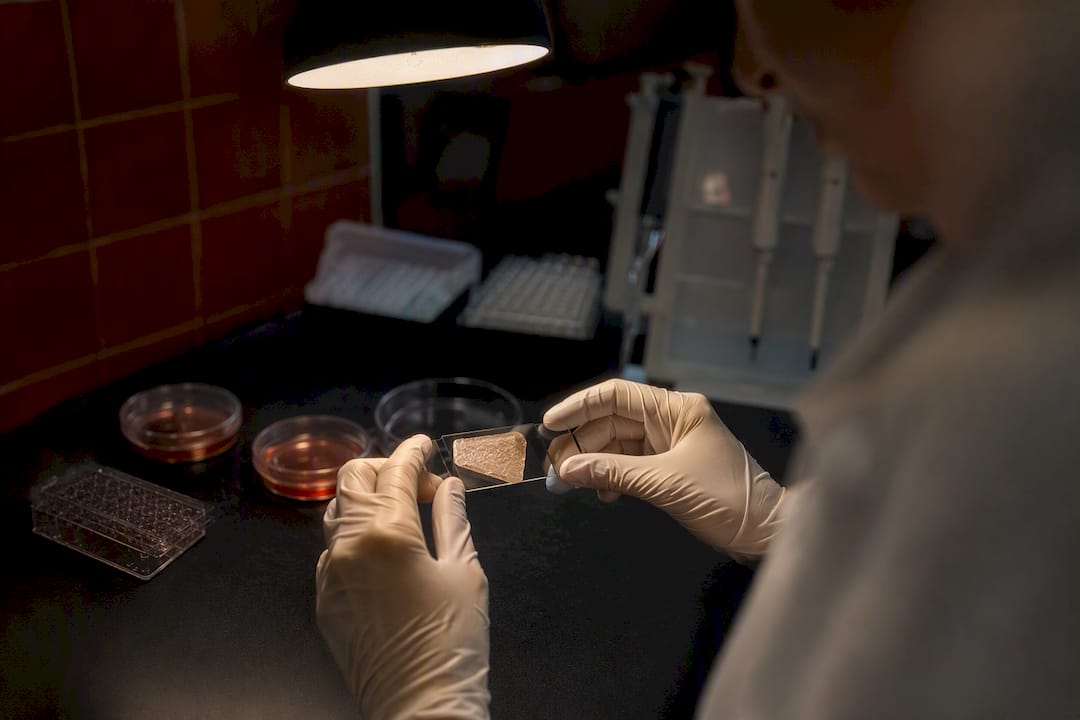
Human trials. This is where the evidence gets thinner but still meaningful. Small clinical studies applying topical GHK-Cu twice daily over 8 to 12 weeks have reported measurable improvements in collagen production markers and reductions in wrinkle volume and depth. A 2014 review of copper’s role in skin biology further documents that copper-GHK complexes increase protein synthesis of both collagen and elastin, alongside supporting roles in wound healing and skin repair broadly.
Here’s the honest accounting of what that evidence can and can’t tell you:
- The mechanism is well-established at the cell and tissue level, backed by decades of biochemistry on copper-dependent enzymes.
- Human trial data is real but comes from small sample sizes, and study designs vary widely in formulation, concentration, and measurement method.
- Most human studies run 8 to 12 weeks, which tells you about medium-term change but says little about what happens after a year or more of continuous use.
- There isn’t yet a large, standardized, multi-site randomized controlled trial that would let dermatologists compare copper peptides head-to-head against, say, prescription tretinoin with full statistical confidence.
None of that undermines the underlying science. Lysyl oxidase’s dependence on copper is basic, well-replicated biochemistry, not a marketing claim. But it does mean you should treat copper peptides as a well-supported, mechanistically sound tool for skin longevity rather than a miracle compound with airtight, large-scale proof at every claimed benefit. Dermatologists who work with these ingredients tend to describe them in exactly those more measured terms: supportive, cumulative, maintenance-focused.
How Should You Actually Use Copper Peptides for Best Results?
Getting the biology right on paper doesn’t help if the product on your shelf can’t deliver it. Four practical rules translate the mechanism into a routine that actually works.
- Apply consistently, typically once or twice daily. Clinical studies showing measurable collagen and wrinkle improvements generally used consistent twice-daily topical application. Skipping days repeatedly interrupts the steady signaling and copper delivery that fibroblasts respond to.
- Give it real time. Expect visible changes starting around 8 to 12 weeks, sometimes longer for finer details like texture and elasticity. Collagen remodeling is a slow biological process, not a same-week fix. Alloi Skin’s guide to the first 12 weeks with a copper peptide serum walks through what to realistically expect at each stage.
- Check for stable delivery, not just ingredient presence. Because active concentrations sit in the picomolar-to-nanomolar range, a formula needs the right carrier system, pH, and preservation to keep the peptide intact and get it to the dermis. Alloi Skin’s formulation approach is built specifically around this: effective delivery matters as much as the ingredient list itself.
- Sequence it away from harsh actives. Strong AHAs, BHAs, and intense retinoid peels can alter skin pH and increase permeability in ways that may destabilize peptide activity or increase irritation when layered together. Many formulators recommend using copper peptides in a separate part of your routine, either alternating mornings and evenings with stronger acids, or leaving a buffer period after an in-office peel.
Pro Tip: If you’re recovering from microneedling or a chemical peel, wait until your provider confirms the skin barrier has closed (usually a few days, depending on procedure depth) before introducing copper peptides. Once cleared, they’re commonly used specifically because they support the same collagen remodeling process your skin is already doing during recovery.
One formulation detail worth flagging: copper peptides and pure vitamin C (L-ascorbic acid) can, in some combinations, interact and reduce each other’s stability, particularly in high concentrations or unstable pH environments. This isn’t a hard rule against ever using both, but it’s a reason to either separate them into AM/PM routines or choose products specifically formulated to keep both actives stable together.
What Are the Downsides and Safety Considerations?
Copper peptides carry a generally favorable safety profile in topical use, but “generally favorable” isn’t the same as “risk-free,” and the honest picture includes some real caveats.
- Transient irritation or redness can occur, especially in sensitive skin or when copper peptides are introduced alongside other active ingredients too quickly.
- Rare sensitization or allergic response is possible, as with any topical active, though it’s uncommon in the published literature.
- Interaction risk with strong acids or peroxides exists at the formulation level. Combining copper peptides with certain vitamin C forms or benzoyl peroxide in the same application can degrade one or both actives rather than causing a safety issue, but it does reduce effectiveness.
- The evidence base has real limits. Long-term, large-scale randomized controlled trials tracking aesthetic outcomes like wrinkle depth or skin thickness over years, not weeks, simply don’t exist yet for GHK-Cu. Most of what we know comes from smaller trials and mechanistic research, which is scientifically solid but not the same as decades of population-level data.
Topical application also has a hard ceiling: skin penetration is limited to the epidermis and upper dermis, where the fibroblasts and collagen-producing machinery actually live. This is a cosmetic-level intervention working within skin’s normal repair biology, not a medical treatment for systemic copper deficiency or connective tissue disease.
To minimize risk, patch test any new copper peptide product on a small area of skin for a few days before full-face use. Avoid introducing it the same week as a new acid exfoliant or retinoid, so you can identify what’s causing any reaction. If you’re using copper peptides around an in-office procedure like microneedling, laser treatment, or a professional peel, check with your provider on timing rather than guessing.
Copper Peptides vs. Retinoids, Vitamin C, and Growth Factors
Each major collagen-supporting ingredient does one job well. Copper peptides are distinctive because they do two jobs at once.
- Vitamin C acts as an enzymatic cofactor for prolyl and lysyl hydroxylase, supporting collagen synthesis at the enzyme level, but it doesn’t independently trigger the fibroblast signaling that GHK-Cu does.
- Retinoids work primarily by stimulating gene transcription, ramping up collagen production at the source, but they don’t supply a structural cofactor for cross-linking, and they come with more irritation potential.
- Growth factor serums can stimulate cell signaling broadly, but formulations vary enormously in quality and stability, and evidence quality is inconsistent across brands.
- Collagen peptide supplements, taken orally, provide amino acid building blocks for collagen synthesis systemically, a different route entirely from topical delivery, and one that works on a different tissue-wide timescale.
These ingredients aren’t competitors so much as complements. A reasonable routine might pair a copper peptide serum for daily signaling and structural support with a prescription retinoid a few nights a week for stronger transcriptional stimulation, timed so the two aren’t applied in the same window. Vitamin C tends to work best in the morning under sunscreen, while copper peptides fit naturally into a PM routine.
Where copper peptides genuinely simplify things is in routines that have become cluttered with single-purpose ingredients. Because GHK-Cu handles both a signaling function and a structural cofactor role in one molecule, a well-formulated copper peptide serum can replace two or three separate steps rather than adding a fourth thing to remember.
How Alloi Skin Approaches Copper Peptide Formulation
Formulating with GHK-Cu is less about listing the ingredient and more about respecting what the research actually says it needs: a narrow effective concentration range, a stable carrier, and a delivery system that gets it to the dermis intact. That’s the starting point for how Alloi Skin builds around copper tripeptide-1.
Fewer ingredients, at the right dose, tend to outperform long ingredient lists where every active is present but none at a concentration that matches what studies actually tested. This is the core problem with a lot of “everything serum” formulations: they can dilute the very actives they’re marketing.
A formulation is only as effective as its weakest link, whether that’s an underdosed active, an unstable carrier, or an ingredient list so long that potency gets spread too thin to matter. Delivery and dose discipline decide whether a copper peptide actually reaches the dermis in a state fibroblasts can use.
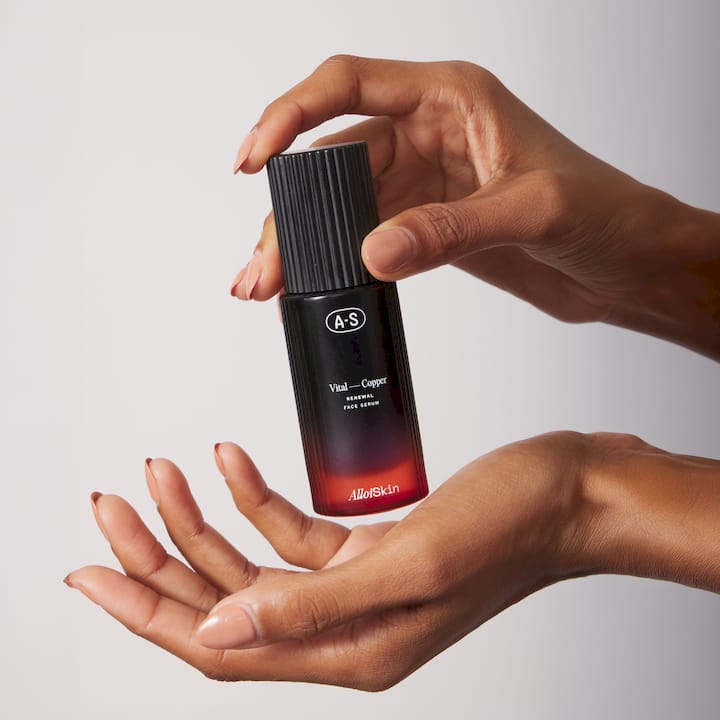
The VitalCopper Renewal Face Serum combines GHK-Cu with Matrixyl 3000, a separately studied peptide complex known for supporting collagen and elastin synthesis through a different signaling pathway, alongside hyaluronic acid, panthenol, and betaine. Those last three aren’t filler. They support barrier function and hydration, which matters because irritated or compromised skin doesn’t respond to collagen-stimulating actives as efficiently as a healthy barrier does.
Alloi Skin’s formulation philosophy, in short: fewer actives, dosed at levels the research supports, in a carrier built to protect them.
What Happens to Copper Peptides Once They’re Absorbed?
Copper peptides don’t linger indefinitely in skin tissue after application. Once GHK-Cu penetrates into the epidermis and upper dermis, it gets broken down through normal enzymatic processes, the same peptidase activity that breaks down other small peptides in skin. The copper ion itself gets incorporated into cellular copper pools, where it can be used by copper-dependent enzymes like lysyl oxidase, or eventually cleared through normal cellular copper regulation mechanisms the body already has in place for managing trace minerals.
This turnover is actually central to why consistent, ongoing application matters more than a single high-concentration treatment. GHK-Cu isn’t designed to sit in skin tissue as a stored reserve. It acts, gets metabolized, and needs to be replenished for the signaling and cofactor effects to continue. This is part of why researchers and dermatologists frame copper peptides as supportive, maintenance-oriented ingredients rather than one-time fixes. Some clinical framing describes the injury-response signal GHK is thought to mimic as something closer to an emergency repair cue the body releases and then clears once tissue starts healing, and topical application essentially recreates that temporary signal on a schedule.
The practical upshot: there’s no evidence of concerning copper accumulation in skin tissue from typical topical use at studied concentrations, since the compound is processed through the same pathways skin already uses to manage trace minerals and peptide fragments. But it also means the benefits are use-dependent. Stop applying it, and the elevated signaling and copper delivery stop with it, though existing collagen structure built during use doesn’t just disappear overnight.
Does Your Skin Type or Age Change How Copper Peptides Work?
Individual response to copper peptides varies, and the biology explains why. Skin that’s already lower in baseline collagen synthesis, which tends to happen with age as fibroblast activity naturally slows, may show more noticeable relative improvement simply because there’s more room for the signaling boost to matter. Younger skin with robust collagen turnover may see more subtle, maintenance-level changes rather than dramatic visible shifts.
Skin type factors in too, mostly through tolerance and barrier condition rather than through the collagen mechanism itself. Sensitive or compromised skin barriers may experience more transient irritation when introducing copper peptides, particularly if the surrounding routine includes other active ingredients. Oilier skin types generally tolerate copper peptide serums well, since the formulations tend to be lightweight rather than occlusive.
Underlying skin conditions matter as well. Skin affected by conditions like rosacea or eczema may need a slower introduction and closer attention to formulation compatibility, since inflamed or barrier-compromised skin can react more strongly to any new active, not just copper peptides specifically. This is also where the cosmetic versus medical distinction becomes relevant: topical copper peptides support the skin’s existing repair biology, but they aren’t formulated or tested as treatments for underlying dermatological disease.
None of this means copper peptides only work for certain people. It means the timeline and visible magnitude of results reasonably differ from one person to the next, which is exactly why an 8 to 12 week trial window, rather than a two week judgment, gives a fairer read on whether a specific formulation is working for your skin.
Why Does GHK-Cu’s Antioxidant Activity Matter for Collagen?
Collagen synthesis doesn’t happen in isolation. It happens inside a cellular environment that’s constantly under low-grade stress from UV exposure, pollution, and normal metabolic byproducts called reactive oxygen species. That oxidative stress damages fibroblasts and existing collagen fibers, working directly against the repair process GHK-Cu is trying to support.
This is where GHK-Cu’s second job comes in: it functions as an antioxidant and anti-inflammatory agent in skin tissue, not just a collagen-signaling molecule. It helps modulate inflammatory processes and appears to reduce oxidative damage in tissue, which indirectly protects the collagen-building environment rather than adding a third, separate mechanism.
Think of it as reducing the fibroblasts’ workload. If oxidative stress and inflammation are constantly damaging new collagen as fast as it forms, net improvement stalls even if the signaling and cofactor mechanisms are both working correctly. By calming that background inflammatory noise, GHK-Cu’s antioxidant activity lets the signaling and cross-linking mechanisms actually show results in skin structure over time, rather than getting offset by ongoing low-grade damage.
This is also part of why copper peptides show up so often in post-procedure and recovery-focused formulations. Procedures like microneedling deliberately create controlled injury to trigger new collagen production, but that same injury also generates inflammation and oxidative stress. An ingredient that supports collagen synthesis while simultaneously calming inflammation fits that recovery window particularly well, which is consistent with how dermatologists describe copper peptides as skin longevity and repair-support tools rather than aggressive, disruptive treatments.
What the Research Actually Supports vs. What Skincare Marketing Claims
The gap between the science and the sales pitch on copper peptides is smaller than with most trending ingredients, but it’s still there. The biochemistry behind lysyl oxidase and copper is decades old and well-replicated. Where things get overstated is timeline and magnitude: marketing often implies faster, more dramatic change than the 8 to 12 week clinical window actually shows.
The bigger blind spot is formulation. Most conventional advice focuses entirely on whether GHK-Cu is present on an ingredient list, and almost never on concentration or delivery stability, even though the picomolar-to-nanomolar dose-response curve makes both of those factors decisive. A product can be technically accurate in its labeling and still underperform if the peptide degrades before it reaches the dermis.
If there’s one thing worth prioritizing first, it’s this: choose a formulation built around correct dosing and stable delivery over one with the longest ingredient list. Copper peptides reward patience and consistency, not layering more actives on top in hopes of speeding things up.
— Alloi Skin
Ready to Put the Science Into Your Routine?
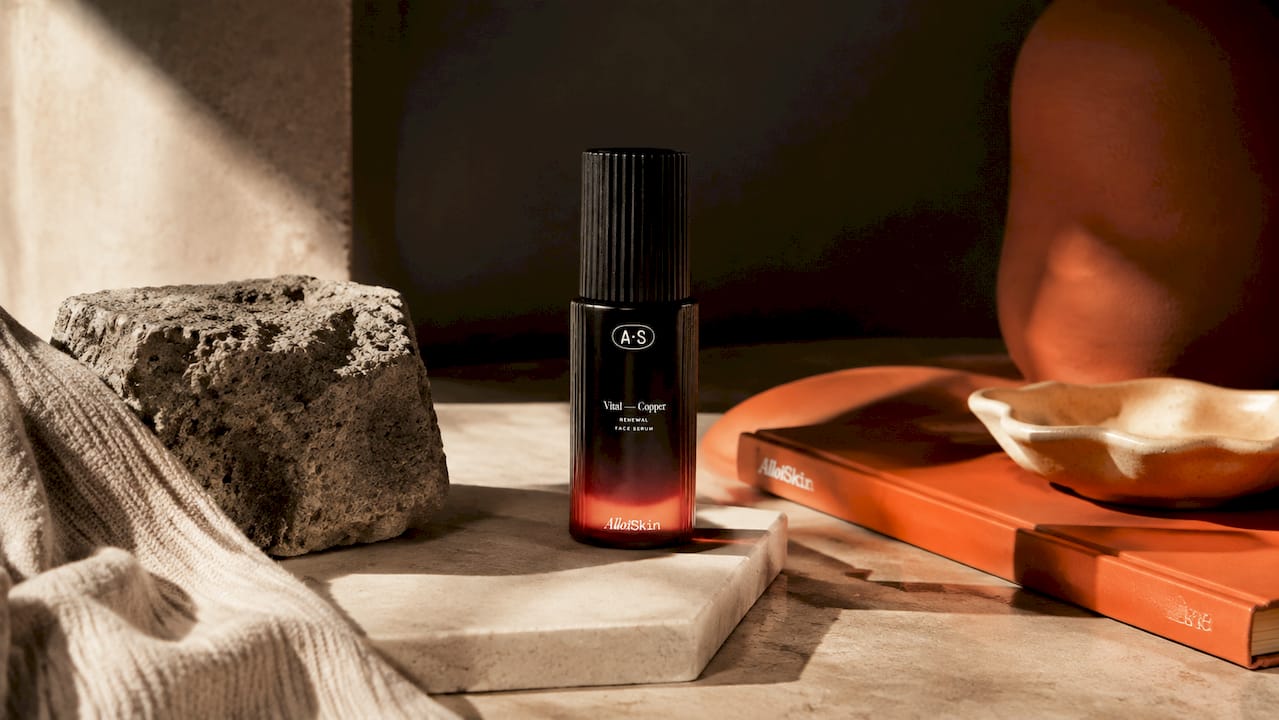
Understanding the mechanism is one thing. Getting a formulation that actually delivers GHK-Cu at a dose the research supports is the harder part, and it’s exactly the gap Alloi Skin built its approach to close. Rather than stacking a dozen peptides at trace amounts, the VitalCopper Renewal Face Serum concentrates on copper tripeptide-1 and Matrixyl 3000 at studied levels, paired with hyaluronic acid, panthenol, and betaine to support your skin barrier while collagen remodeling does its slower work underneath.
If you’ve read this far because you want results you can actually track rather than guess at, the 12-week expectations guide walks through what a realistic timeline looks like from week one onward. When you’re ready to start, you can shop the VitalCopper Renewal Face Serum directly and build your routine around a formula designed with the dosing this article just walked through, not around a long ingredient list that dilutes what actually matters.
This article is general information, not a substitute for advice from a qualified doctor. Consult a qualified healthcare professional about your own circumstances before acting on anything here.
Sources
- Regenerative and Protective Actions of the GHK‑Cu Peptide in the Light of the New Gene Data - PMC
- Using Copper to Improve the Well-Being of the Skin - PMC
- Copper | Linus Pauling Institute Micronutrient Information Center
FAQ
What are the downsides of copper peptides?
The main downsides are transient irritation in sensitive skin, potential formulation instability if not properly carried, and a limited pool of large, long-term clinical trials confirming aesthetic outcomes over years rather than weeks.
What are GHK-Cu uglies?
Some users report temporary breakouts, dryness, or purging-like reactions when first introducing copper peptides, often called “uglies,” usually tied to skin adjusting to a new active or to an unstable formulation rather than the peptide itself.
What should you not mix copper peptides with?
Avoid layering copper peptides directly with strong AHAs, BHAs, or potent retinoid peels in the same application, and separate them from certain vitamin C forms, since combining actives at high concentrations can reduce stability and increase irritation risk.
How long does it take for copper peptides to work?
Most clinical studies measuring collagen and wrinkle improvements used consistent application over 8 to 12 weeks, and that window is a reasonable, evidence-based benchmark before judging whether a copper peptide serum like VitalCopper is working for you.
Recommended
- Method: How Alloi Skin formulates
- Collagen tripeptides (Pro-Hyp, Hyp-Gly): how they differ from collagen peptides – Alloi Skin
- Marine collagen peptides: what the research actually shows for skin – Alloi Skin
- Copper Tripeptide-1: what it is, how it works, and what the evidence actually shows – Alloi Skin


