


Apply copper peptides once daily in the evening for your first one to two weeks, then increase to twice daily if your skin tolerates it well. The one rule that matters most: never layer copper peptides in the same routine as high-strength vitamin C or strong acids, since the acidity destabilizes the copper complex. Keep them at least a few hours apart, or alternate mornings and evenings. A formulated option like VitalCopper Renewal Face Serum removes the guesswork by pairing copper tripeptide-1 at a studied dose with barrier-supporting actives.
TL;DR:
- Use copper peptides once daily in the evening for the first one to two weeks to assess skin tolerance before increasing to twice daily.
- Avoid applying copper peptides together with high-strength vitamin C or strong acids in the same session; separate them by at least four to six hours.
- Consistent use over 4 to 12 weeks mainly results in increased collagen and elastin markers, leading to firmer, more resilient skin with subtle tone improvements.
- On the scalp, apply a leave-on serum directly to areas of thinning and massage for 60 to 90 seconds, without rinsing, ideally once daily.
- Proper dosing at around 1% concentration in a formulation paired with barrier-supporting actives boosts collagen and supports skin and hair health without significant side effects.
Table of Contents
- What Do Copper Peptides Actually Do for Skin and Hair?
- How Do You Apply Copper Peptide Serum to Your Face?
- How Do You Use Copper Peptides on Your Scalp for Hair?
- Can You Mix Copper Peptides with Vitamin C, Retinol, or Acids?
- What Concentration and Frequency of Copper Peptides Should You Use?
- What Are the Side Effects of Copper Peptides, and How Do You Patch Test?
- How Does Alloi Skin Formulate VitalCopper for Real Results?
- Why Simpler Routines Beat Complicated Stacking
- Ready to Simplify Your Copper Peptide Routine?
- Sources
- FAQ
What Do Copper Peptides Actually Do for Skin and Hair?
Copper tripeptide-1, commonly known as GHK-Cu, is a small signaling peptide that tells skin cells to behave like they’re repairing an injury. That sounds dramatic, but it’s the mechanism behind most of what people notice: GHK-Cu increases markers of collagen and elastin synthesis and supports the skin’s natural wound-repair pathways, even when there’s no actual wound to heal.
Over consistent use, that translates into a specific set of changes rather than a dramatic overnight transformation:
- Firmer skin texture as collagen and elastin production ramps up
- A stronger, more resilient skin barrier, which shows up as less redness and reactivity
- Subtle improvement in tone and photodamage, particularly uneven pigmentation
- On the scalp, better follicle health, which can support hair quality and may help with maintaining hair color as follicles age
Copper peptide before-and-after results in clinical protocols typically appear on a 4 to 12 week timeline, with daily or twice-daily application producing measurable changes in collagen markers. That’s slower than what you’d see from a retinoid, and much slower than an in-office procedure like microneedling or a laser treatment. Dermatologists tend to frame copper peptides less as a wrinkle-eraser and more as a maintenance and recovery tool, the kind of ingredient that keeps skin structure intact rather than one that reverses years of damage in a few weeks. If you’re coming off a procedure, dealing with a compromised barrier, or just want steady structural support, that’s exactly the job copper peptides are built for.
How Do You Apply Copper Peptide Serum to Your Face?
Getting the order right matters almost as much as the ingredient itself. Copper peptides need direct contact with skin to signal effectively, so where they sit in your routine changes how well they work.
- Cleanse first. Start with a gentle cleanser on damp skin, then pat mostly dry, leaving skin slightly damp.
- Skip or use a hydrating toner. If you use one, choose something free of exfoliating acids for this step.
- Apply 2 to 4 drops of copper peptide serum. Press it into skin rather than rubbing, focusing on areas where you want firmness or repair support.
- Give it 60 to 90 seconds to absorb before adding anything else. This short window lets the peptide settle into the skin surface instead of getting diluted or pushed around by a heavier product.
- Layer moisturizer over top to lock in hydration and support the barrier.
- In the morning, always finish with sunscreen. Sun protection isn’t optional here since you’re actively trying to build collagen, and UV exposure works against that goal.
Start with once-daily application in the evening for your first one to two weeks. This gives you a clean read on tolerance before you consider twice-daily application, which is common in clinical protocols showing gene-level upregulation of collagen and elastin.
If your routine includes strong exfoliating acids or vitamin C, you have two options: use them in a separate session entirely (acids in the morning, copper peptides at night), or wait 20 to 30 minutes after an acid application to let skin surface pH normalize before applying your copper peptide serum.

Pro Tip: Introduce copper peptides on their own for the first week, with nothing else new in the mix. If irritation shows up later, you’ll know exactly which product caused it instead of guessing across five new products at once.
How Do You Use Copper Peptides on Your Scalp for Hair?
Scalp application works differently than facial skincare, mostly because rinsing habits get in the way. A leave-on serum is the only format that makes sense here. Rinse-off peptide shampoos wash the active away before it has time to signal anything.
- Apply several drops directly to the scalp, focusing on areas of thinning or where scalp health feels compromised.
- Massage in circular motions for 60 to 90 seconds. This isn’t just for comfort. Massage increases blood flow and helps distribute the product more evenly across the scalp surface.
- Do not rinse it out. The exposure time is what allows the signaling activity to happen, so treat it like a leave-on treatment, not a pre-wash step.
- Start once daily and follow the specific product’s labeling for frequency increases.
- Apply scalp serums before shampooing or on non-wash days, depending on the product; check labeling for timing relative to medicated topical treatments if you’re using those too.
Pro Tip: If you’re also using a prescription topical for hair loss, apply that first and let it fully absorb before layering a copper peptide serum on top, unless your dermatologist has told you otherwise.
A few signs mean it’s time to stop the DIY approach and call a professional: rapid or patchy shedding, visible bald spots, or any sign of scalp infection like pustules, unusual odor, or spreading redness. Copper peptides support scalp health, but they’re not a treatment for underlying conditions that need medical diagnosis.
Can You Mix Copper Peptides with Vitamin C, Retinol, or Acids?
This is where most routines go wrong, and it’s almost always about chemistry, not “sensitive skin.” Copper peptides work best at a near-neutral pH, roughly 5 to 7. Pure L-ascorbic acid, the most potent form of vitamin C, sits at a much lower pH, around 2.5 to 3.5. That acidity can reduce the copper ion in GHK-Cu and pull the whole complex apart before it has a chance to do anything useful.
The practical rule dermatologists point to isn’t complicated: keep copper peptides and high-strength vitamin C or strong acids out of the same application window. Separate them by session, or by at least four to six hours, and the destabilization risk mostly disappears.
Here’s how that plays out in a real routine:
- Vitamin C: Use in the morning; apply copper peptides at night, or space them by 4 to 6 hours if you’re using both in one day.
- Retinoids: Alternate nights (copper peptides one night, retinoid the next), or split them AM and PM if your skin tolerates both well.
- Strong acids (AHAs, BHAs): If you use these in the same session, wait 20 to 30 minutes for skin surface pH to normalize before applying your copper peptide serum.
- Niacinamide, hyaluronic acid, ceramides: These pair well with copper peptides with no separation needed, since none of them shift skin pH into destabilizing territory.
Think of it less as a strict prohibition and more as sequencing. You’re not choosing between vitamin C and copper peptides, you’re just deciding which one gets the morning slot and which one gets the evening.
What Concentration and Frequency of Copper Peptides Should You Use?
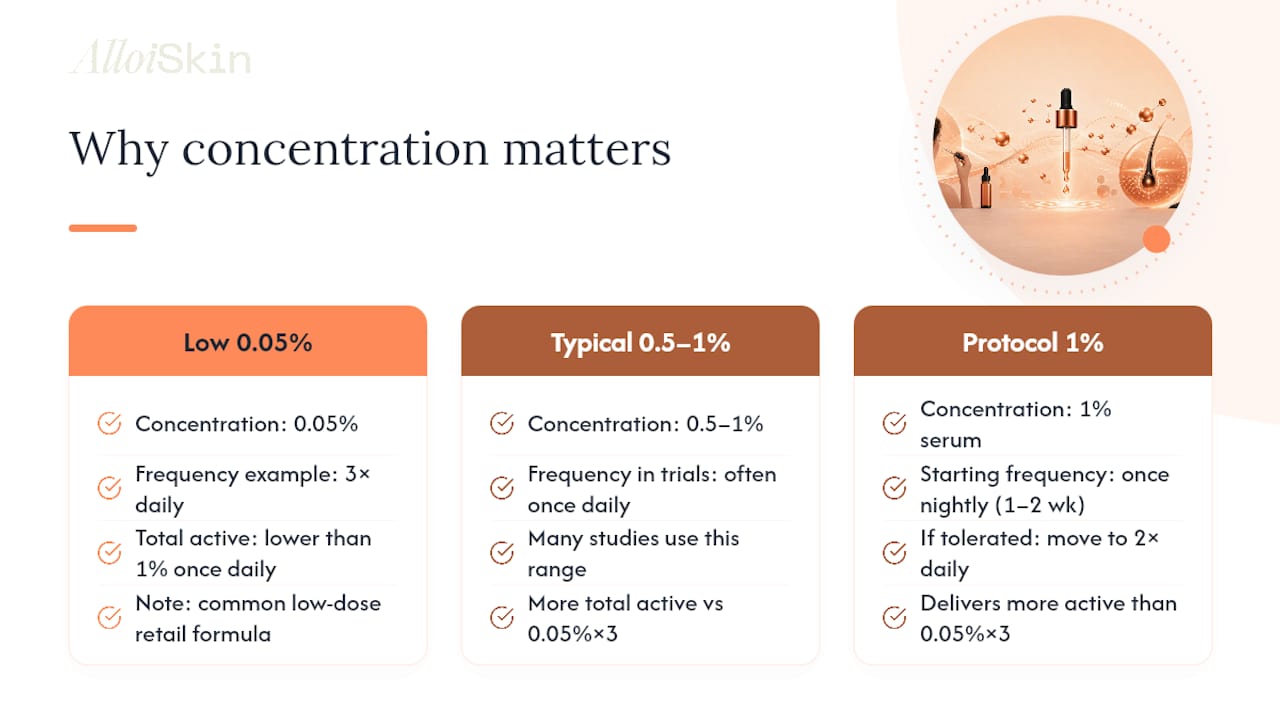
Concentration matters more than how many times a day you apply the product. That’s a shift from how most people think about actives, but it holds up against the research.
Cosmetic studies on copper peptides typically use concentrations somewhere between 0.05% and 3%, with many trials landing around 0.5% to 1%. A well-formulated 1% serum applied once daily generally delivers more total active ingredient than a 0.05% version applied three times a day. Formulation quality and stability do more work than frequency alone, which is why checking a product’s INCI list for where the peptide falls matters more than checking how many times a day the label suggests using it.
For starting cadence, once daily in the evening for the first one to two weeks is the safest ramp. If your skin shows no irritation, moving to twice-daily use aligns with protocols used in trials that demonstrated measurable collagen and elastin gene upregulation.
On timeline: don’t expect visible change in week one, or even week three. Clinical protocols report measurable changes in the 4 to 12 week range, which lines up with how long it actually takes skin to rebuild collagen structure at the cellular level. If you’re tracking copper peptides before and after results, take a baseline photo on day one in consistent lighting, then check back at week 4, week 8, and week 12. That’s a far more honest way to judge progress than daily mirror-checking, which almost never shows anything meaningful.
What Are the Side Effects of Copper Peptides, and How Do You Patch Test?
Copper peptides are generally well tolerated, but “generally” isn’t “universally.” The most common reactions are mild: redness, a stinging sensation on application, or dryness if you introduce them too aggressively.
- Patch test first. Apply a small amount to your inner forearm or behind your ear and wait 24 to 48 hours before using it on your face or scalp.
- Start slow. Once daily for the first one to two weeks, watching for any redness, itching, or breakout activity that wasn’t there before.
- Watch for the signs that mean stop. Persistent burning, swelling, or a rash that spreads beyond the application area needs a pause and, if it doesn’t resolve, a conversation with a dermatologist.
- Be extra cautious with compromised skin. If you have eczema, rosacea, recent cosmetic procedures, or open wounds, talk to a clinician before adding copper peptides into the mix.
| Situation | What to do |
|---|---|
| First time using copper peptides | Patch test 24 to 48 hours, then once daily for 1 to 2 weeks |
| Mild redness or stinging | Reduce to every other day, reassess after a week |
| Eczema, rosacea, or recent procedure | Get clinician approval before starting |
| Persistent burning or spreading rash | Stop use and seek medical review |
How Does Alloi Skin Formulate VitalCopper for Real Results?
Most peptide serums list copper tripeptide-1 somewhere on the ingredient panel without disclosing how much is actually in the bottle. That’s the gap Alloi Skin built VitalCopper Renewal Face Serum to close. It’s formulated at a studied concentration rather than a token amount meant to look good on a label.
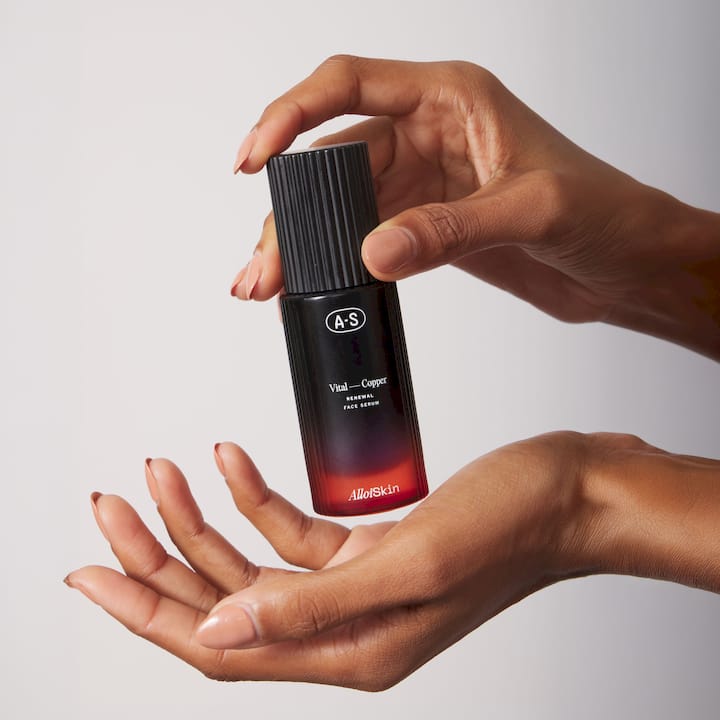
The formula pairs copper tripeptide-1 with Matrixyl 3000, another collagen-supporting peptide complex, alongside panthenol, betaine, and hyaluronic acid. Those last three aren’t filler. They’re there specifically to soothe and protect the skin barrier while the peptides do the structural work, which matters because copper peptides work best on skin that isn’t already inflamed or compromised.
That’s the same dose-forward philosophy behind every Alloi Skin formula: fewer ingredients, each included at a concentration that actually shows up in the research, rather than a long list of actives too diluted to do anything.
- Copper tripeptide-1 (GHK-Cu) at a studied dose for collagen and repair signaling
- Matrixyl 3000 to reinforce structural support
- Panthenol and betaine to calm and stabilize the skin barrier
- Hyaluronic acid for hydration that keeps skin receptive to the actives above
What to expect over the first 12 weeks with a formula like this tracks closely with the clinical timeline: subtle texture changes first, followed by firmness and tone improvements as collagen synthesis builds.
Why Simpler Routines Beat Complicated Stacking
Complicated routines fail for a boring reason: too many variables make it impossible to know what’s working or what’s causing irritation. A minimal routine, one that isolates copper peptides and gives them room to work without five other actives competing for the same skin, is easier to stick with and easier to troubleshoot.
That’s not a marketing angle, it’s how Alloi Skin approaches formulation in general: fewer ingredients, dosed properly, tracked over time. Patch test, start slow, and give any new active the full 12 weeks before deciding whether it’s working. Consistency, not complexity, is what actually moves the needle on skin structure.
— Alloi Skin
Ready to Simplify Your Copper Peptide Routine?
Everything above points to the same conclusion: a single, well-dosed copper peptide serum beats a five-step stack of diluted actives. VitalCopper Renewal Face Serum is built around that exact idea, copper tripeptide-1 at a studied concentration, paired with Matrixyl 3000 and barrier-calming actives like panthenol and betaine, so you’re not left guessing whether the dose on the label is doing anything.
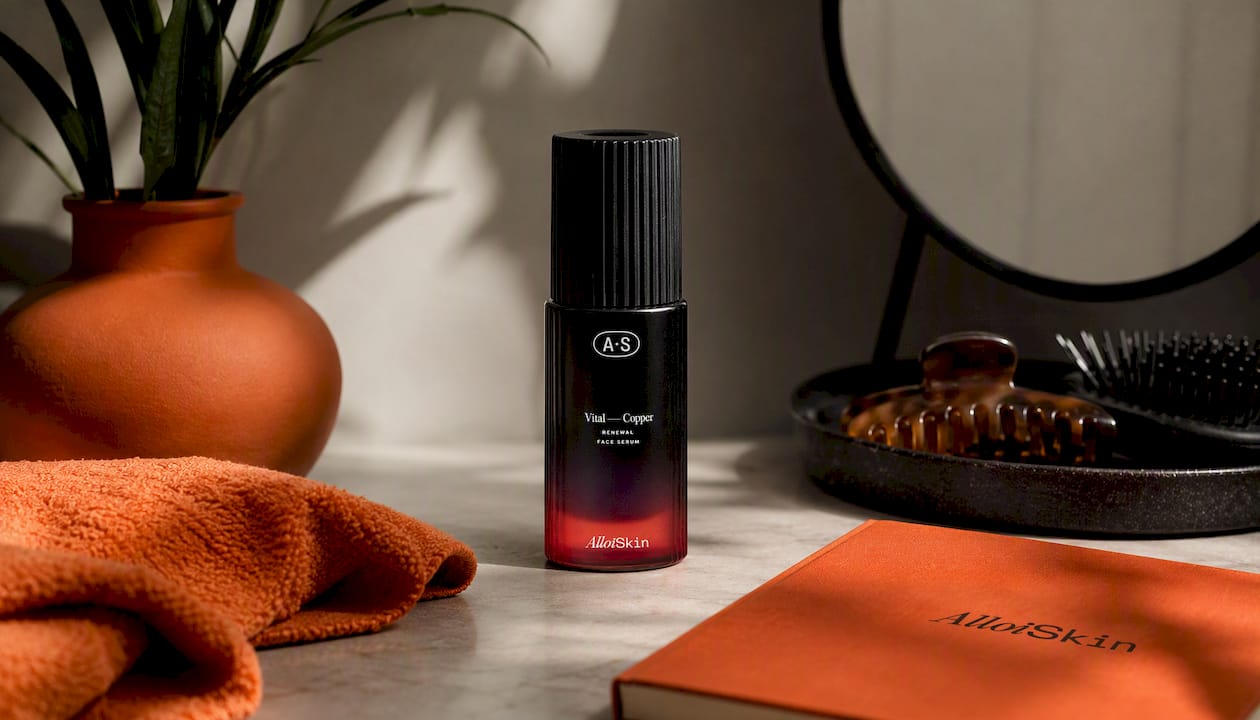
Use it in the evening to start, following the same ramp-up and pairing rules covered above, and patch test before your first full application. Sunscreen stays non-negotiable if you shift to morning use later on. When you’re ready to build a routine around one ingredient that’s actually dosed to work, check out VitalCopper and give it the full 12 weeks to show what consistent, minimal skincare can do.
Sources
- What Are Copper Peptides? Benefits and Uses Explained by Dermatologists — Women’s Health
- PMC6073405 — peer-reviewed article on peptide biology and effects
- A Dermatologist’s Take on the Copper Peptide (GHK-Cu) Trend — Westlake Dermatology
FAQ
What Should You Not Use with Copper Peptides?
Avoid layering copper peptides with high-strength L-ascorbic acid (vitamin C) or strong exfoliating acids in the same session, since the low pH destabilizes the copper complex. Separate them by several hours or use them on alternating parts of your routine instead.
Should You Use Copper Peptides Every Day?
Start with once-daily application in the evening for one to two weeks, then move to twice daily if your skin tolerates it well. Clinical protocols commonly use daily or twice-daily application to produce measurable results within 4 to 12 weeks.
What Are the Downsides of Copper Peptides?
The main downsides are mild irritation (redness, stinging, or dryness) in sensitive skin, and slower, more gradual results compared to retinoids or in-office procedures. Patch testing before regular use significantly reduces the irritation risk.
Do Copper Peptides Actually Work on Skin?
Yes. GHK-Cu is well documented for increasing markers of collagen and elastin synthesis and supporting wound repair, with measurable changes typically appearing between 4 and 12 weeks of consistent use. Results depend heavily on using an adequately dosed formula, such as VitalCopper Renewal Face Serum, rather than a product with copper peptides listed at a token concentration.
How Long Does It Take to See Results from Copper Peptides?
Most people notice initial texture and barrier improvements around week 4, with firmness and tone changes becoming more visible by week 8 to 12. This timeline reflects how long it takes skin to actually rebuild collagen structure, not a marketing estimate.


