


A minimal skincare routine that works is three steps: gentle cleanser, moisturizer, and broad-spectrum sunscreen (SPF 30+). Treatments like retinoids or vitamin C are optional add-ons, layered between cleanser and moisturizer once your skin adjusts. Give this baseline eight weeks before judging results or adding anything new.
TL;DR:
- Using a gentle cleanser, moisturizer with humectants and ceramides, and broad-spectrum SPF 30+ daily provides the core foundation for long-term skin health.
- Only one active treatment, such as retinoids or vitamin C, should be added after at least eight weeks of establishing the basic routine to avoid irritation.
- Sunscreens with textures you enjoy increase adherence, as comfort and feel strongly influence reapplication habits.
- Patch testing new products before full application helps prevent reactions and maintains routine consistency.
- The simplest effective routine emphasizes proven ingredients at research-supported doses, with minimal products for better adherence and results.
Table of Contents
- What a Minimal Skincare Routine Actually Requires
- Morning Routine vs. Evening Routine: What Actually Changes
- How to Pick the Right Cleanser, Moisturizer, and Sunscreen
- How to Add a Treatment Without Wrecking Your Routine
- When the Routine Stops Working, Fix This First
- Why Simplicity and Clinical Dosing Belong in the Same Sentence
- Simplicity Is a Discipline, Not a Compromise
- Where VitalCopper Fits Into a Three-Step Routine
- Sources
- FAQ
What a Minimal Skincare Routine Actually Requires
Three products carry the entire evidence base for long-term skin health: a gentle cleanser, a moisturizer, and a broad-spectrum sunscreen rated SPF 30 or higher. That is not a marketing simplification. It is where the clinical research actually concentrates, according to the American Academy of Dermatology. Everything past that, from serums to exfoliating acids, sits in optional treatment territory.
Cleansing removes sweat, sunscreen, and dead skin cells without ripping apart the barrier that holds moisture in. You need it once daily at minimum, at night, since that is when the day’s buildup needs to come off. A morning cleanse is optional, mostly useful if you sweat overnight or use heavier nighttime products. Use lukewarm water, not hot, and massage for about 30 seconds with fingertips rather than a wash cloth. If your face feels tight, dry, or “squeaky clean” right after rinsing, that cleanser is stripping lipids it should be leaving alone.
Moisturizer matters for every skin type, including oily and acne-prone skin, because well-hydrated skin holds up better against irritation from anything else you use. Look for humectants like glycerin or hyaluronic acid, which pull water into the skin, paired with ceramides, which patch the barrier itself. Texture should match your skin type: gel formulas for oily or combination skin, richer creams for dry skin, and something in between for normal skin that just needs daily support.
Sunscreen is the step with the deepest evidence behind it. Daily broad-spectrum SPF 30 or higher is the most well-documented way to prevent photoaging and reduce skin cancer risk, according to the American Academy of Dermatology Association. Use roughly a nickel-sized amount for the face alone, and reapply every two hours if you’re outdoors for extended periods.
Pro Tip: If you skip sunscreen on cloudy days, you’re skipping it on the days UVA rays still reach your skin. Clouds block heat, not ultraviolet light.
A detail most routines get wrong: the sunscreen you actually enjoy wearing outperforms the one with a marginally better lab rating. Research on sunscreen adherence found that texture directly affects how consistently people reapply. A formula that feels heavy, greasy, or pills under makeup gets applied too thin, or skipped by afternoon, no matter what the label promises.
- Cleanser feels wrong if: skin feels tight, dry, or “squeaky” within minutes of rinsing.
- Moisturizer should include: glycerin or hyaluronic acid plus ceramides, in a texture you’d choose again tomorrow.
- Sunscreen minimum: SPF 30, broad-spectrum, reapplied every two hours outdoors.
Morning Routine vs. Evening Routine: What Actually Changes
Morning and evening serve different jobs, and confusing the two is where a lot of minimal routines quietly become complicated. The morning routine exists to protect. The evening routine exists to clean and repair.
- Morning: cleanse (optional), treat, protect. If you rinse in the morning, keep it brief. If you’re adding one antioxidant treatment, a vitamin C serum tolerated well by your skin goes here, followed by moisturizer, then sunscreen last.
- Evening: cleanse, treat, repair. Nighttime is when a single active treatment, most often a retinoid, does its work without competing with sunscreen or environmental exposure. Cleanse first, apply the treatment, then seal it in with moisturizer.
- Layer thinnest to thickest, always. Watery serums go on before creams, and creams go on before sunscreen. Apply them in reverse order and the heavier product blocks the lighter one from absorbing properly.
Notice that only one active treatment appears per routine, and often just once a day. A minimal routine doesn’t mean zero treatment products. It means one treatment slot, used deliberately, instead of five actives fighting for the same layer of skin. That is also the guidance echoed in dermatologist-reviewed sources on building a beginner routine: pick your priority, apply it consistently, and let the basics do the rest of the work.
How to Pick the Right Cleanser, Moisturizer, and Sunscreen
Choosing three products sounds simple until you’re standing in an aisle staring at forty options. Here’s how to narrow it down fast.
For a cleanser, avoid anything that lists sulfates like sodium lauryl sulfate high on the ingredient list. If your skin is dry or sensitive, look for a cream or lotion cleanser. Oily or acne-prone skin usually tolerates a gel cleanser better, but skip anything that leaves your face feeling tight afterward. That tightness is not a sign it’s “working.” It’s a sign it’s damaging your barrier.
For a moisturizer, think of it as a map: humectants attract water, occlusives seal it in, and ceramides repair the structure holding it together. A moisturizer that only lists water and glycerin will feel light but won’t do much for barrier support long term. One with ceramides plus a humectant covers both jobs at once.
For sunscreen, texture decides whether you’ll actually use it. Mineral formulas (zinc oxide, titanium dioxide) tend to suit sensitive or acne-prone skin better since they sit on top of skin rather than absorbing into it. Chemical sunscreens usually feel lighter and blend in more easily under makeup, which matters if you’re someone who skips sunscreen because you hate how it looks on your skin.
- Sensitive or reactive skin: mineral sunscreen, fragrance-free cleanser, ceramide-heavy moisturizer.
- Oily or acne-prone skin: gel cleanser, gel moisturizer, lightweight chemical or hybrid sunscreen.
- Dry skin: cream cleanser, richer cream moisturizer, whichever sunscreen texture feels least heavy to you.
Pro Tip: Before adding any new product to full rotation, patch test it on your inner forearm for three to five days. Waiting to see a reaction on your face after full application means undoing days of progress.
How to Add a Treatment Without Wrecking Your Routine
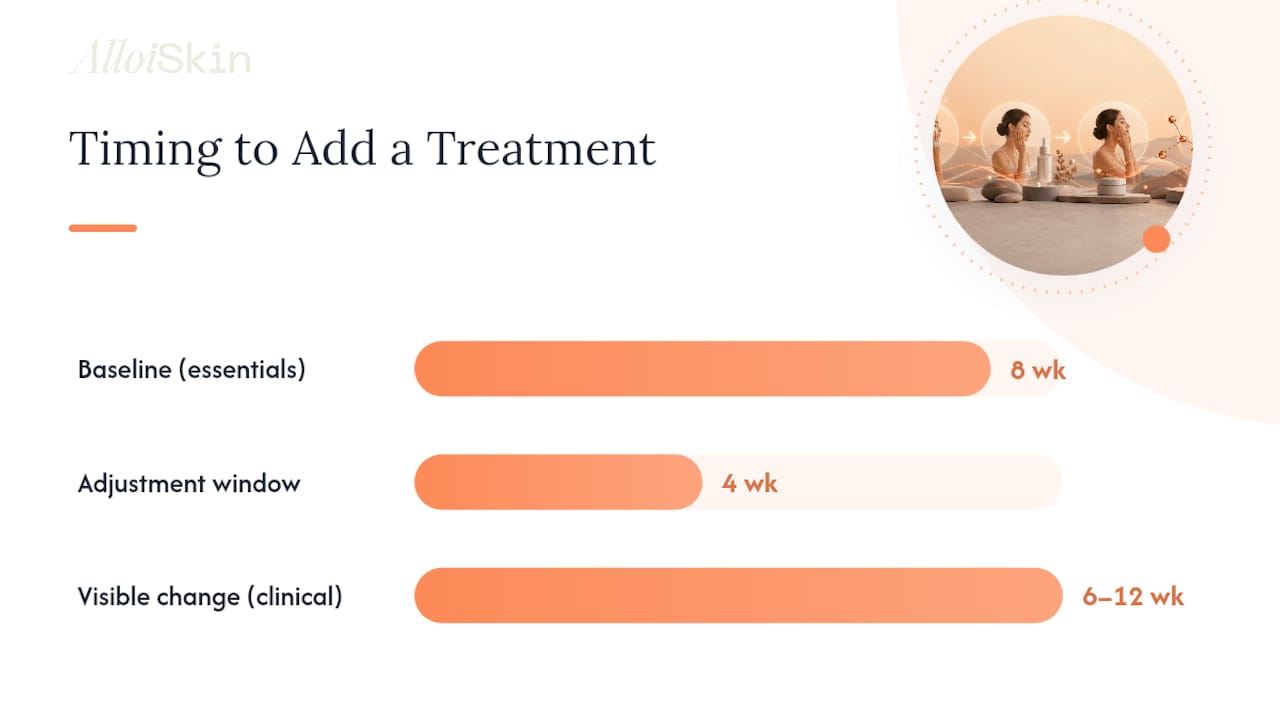
Run your three-step routine for a sufficient period before adding anything else. That waiting period lets your skin barrier stabilize enough for you to accurately judge what’s working and what isn’t. Change three variables at once, and you’ll never know which one caused the improvement or the breakout.
- Weeks 1 to 8: essentials only. Cleanser, moisturizer, sunscreen, no exceptions. This is your baseline reading.
- Week 9: introduce one active. Pick a retinoid at night or a vitamin C serum in the morning, not both. Start at two to three nights or mornings per week.
- Weeks 9 to 12: watch for irritation versus adjustment. Mild dryness or slight flaking in the first two weeks of a retinoid is common. Stinging, swelling, or peeling that doesn’t calm down means you’ve moved too fast.
- Increase gradually. If tolerated, move to every other night, then nightly, over four to six weeks.
Clinical reviews on introducing topical treatments consistently point to a six to twelve week window before meaningful change becomes visible, whether that’s fading discoloration or smoother texture. Rushing past that window to add a second or third active is the single most common way a minimal routine turns back into a cluttered one.
If irritation persists past two weeks despite slowing down frequency, stop the active and give your skin a break. Persistent redness, burning, or breakouts that don’t settle within a month are a signal to talk to a board-certified dermatologist rather than keep experimenting on your own.
When the Routine Stops Working, Fix This First
Most “sensitive skin” complaints trace back to one culprit: the cleanser. If it strips or tightens, replace it before changing anything else. That single swap resolves more irritation than any serum ever will.
- Skin feels tight, flaky, or stings after washing: consider changing the cleanser first, not the moisturizer.
- Redness or a rough, dull texture that won’t calm down: back off exfoliation and use a richer moisturizer for one to two weeks to support barrier repair.
- Persistent acne, cystic breakouts, or a mole or spot that’s changing shape: this is past the scope of a minimal routine and needs a dermatologist, not another product.
- No visible change after eight weeks with basics done correctly: that’s the point to consider one deliberate treatment addition, not three at once.
Why Simplicity and Clinical Dosing Belong in the Same Sentence
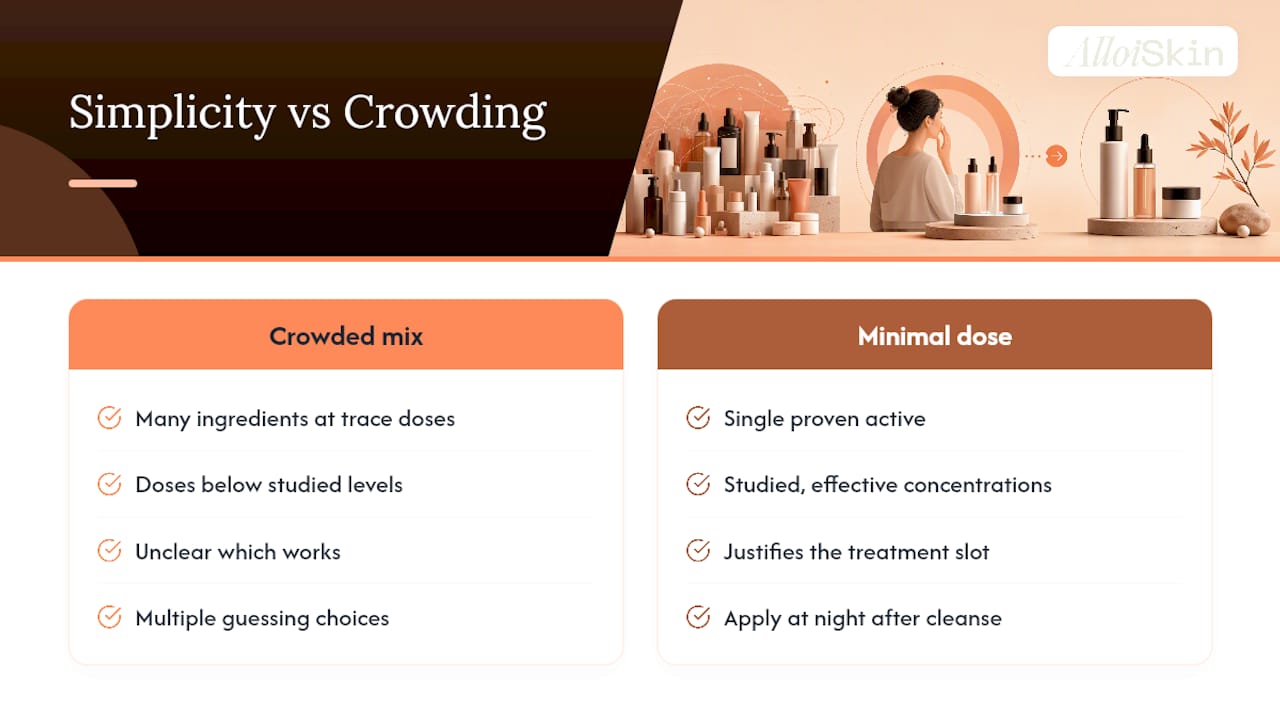
Alloi Skin builds every formula around one rule: fewer ingredients, dosed at levels the research actually supports. That philosophy exists because a crowded ingredient list at trace doses does nothing except crowd your bathroom shelf. The brand standard is built on using proven actives at their studied concentrations, not stacking twelve peptides at doses too low to matter.
That approach maps directly onto the single treatment slot in a minimal routine. Instead of guessing which of five active ingredients is doing the work, a properly dosed formula fills that one slot with something engineered to justify it, applied at night after cleansing and before moisturizer.
Simplicity Is a Discipline, Not a Compromise
Minimalism in skincare isn’t about doing less for the sake of restraint. It’s about doing exactly what earns its place and nothing that doesn’t. The dermatology community keeps circling back to three steps because three steps, done consistently, outperform ten steps done inconsistently or abandoned after two weeks.
Pick textures you’ll actually want to use tomorrow, not the ones that look impressive on a shelf. Consistency beats intensity every time in skincare, and consistency only happens when you don’t dread your own routine.
Try the three-step routine for eight weeks before you touch anything else. That’s the whole experiment.
— Alloi Skin
Where VitalCopper Fits Into a Three-Step Routine
VitalCopper Renewal Face Serum is built for the one treatment slot a minimal routine has room for. It combines copper tripeptide-1 (GHK-Cu) and Matrixyl 3000 at studied concentrations, alongside panthenol, betaine, and hyaluronic acid to support the barrier rather than fight against it.
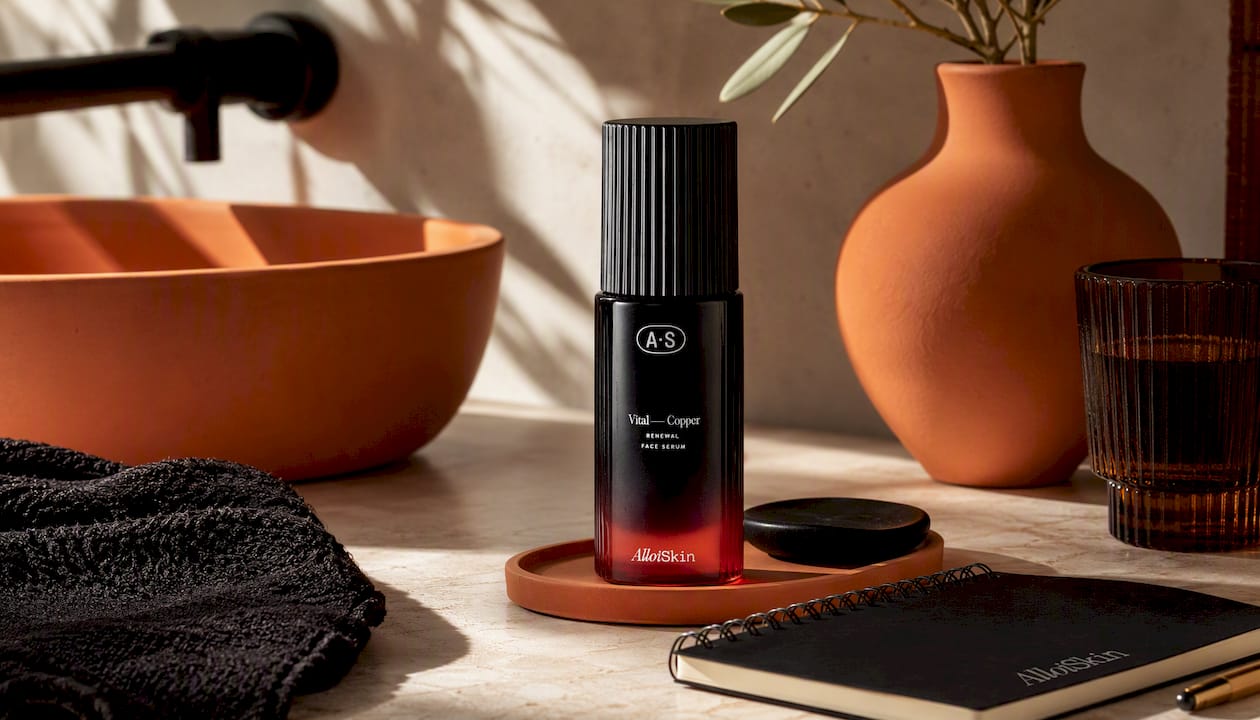
Slot it in at night, after cleansing and before moisturizer, and start two to three nights a week if you’re new to peptide actives, building toward nightly use as tolerated. Give it the same sufficient window the rest of this routine requires. Results from copper peptides and Matrixyl typically build gradually, showing in skin clarity and texture rather than overnight change. If you want the formulation reasoning behind the doses, the method behind VitalCopper breaks down why each ingredient made the cut. For the single-treatment option itself, visit the VitalCopper Renewal Face Serum page and see whether it fits the slot your routine has open.
Sources
- DermApproved — The Minimalist 3-Step Skincare Routine, Backed by Evidence
- Geisinger — How to build a skincare routine for beginners
FAQ
What Is the Simplest Skincare Routine?
The simplest effective routine is a gentle cleanser, a moisturizer, and a broad-spectrum sunscreen with SPF 30 or higher, used daily. These three steps carry the strongest long-term evidence for maintaining healthy skin, with any active treatment layered in later as an optional fourth step.
What Is the 4-2-4 Rule in Skincare?
Definitions of the “4-2-4 rule” vary across sources and it isn’t a standard dermatology framework, so treat any specific version you see online with caution. The safer, evidence-backed approach is the three-step minimal routine outlined above, with one active treatment added only after an eight-week baseline period.
What Is the Best Minimalist Skincare Routine?
The best minimalist routine pairs a non-stripping cleanser, a moisturizer matched to your skin type, and a daily sunscreen you’ll actually reapply. A single, clinically dosed treatment like VitalCopper Renewal Face Serum can fill the optional fourth slot once your basics are established.
What Happened to the Minimalist Skincare Trend?
Skinimalism didn’t fade so much as mature: consumers grew more skeptical of ten-step routines and multi-active serums with too many ingredients at ineffective doses. The trend shifted toward fewer, better-dosed products, which is the same principle behind a minimal routine built on evidence rather than marketing claims.


