


Not all alcohols are the same, and lumping them together is where most skincare confusion starts. The alcohols to watch are volatile, simple alcohols like ethanol, alcohol denat. and SD alcohol, especially when they sit high on an ingredient list. Fatty alcohols like cetyl, cetearyl, and stearyl are a different chemical family entirely. They function as emollients, and the FDA notes that products labeled “alcohol-free” can still legally contain them.
TL;DR:
- Products with high concentrations of denatured alcohol or SD alcohol at the top of the ingredient list are more likely to cause dryness or barrier disruption, especially on sensitive skin.
- Formulations that rely on fatty alcohols like cetyl or cetearyl alcohol at typical use levels are considered safe emollients and do not pose the same irritation risk as volatile alcohols.
- The safety and impact of ethanol depend heavily on formulation, concentration, and skin condition, with some evidence showing no adverse effects over 30 days in specific cases.
- “Alcohol-free” labels only refer to ethyl alcohol and do not exclude the presence of fatty alcohols, which serve different functions and are generally safe.
- For sensitive or compromised skin, prioritize products where alcohols are listed lower or not at all, especially in leave-on treatments, and patch-test new products for 48 to 72 hours.
Table of Contents
- What Types of Alcohol Show Up in Skincare Ingredient Lists?
- How Does Alcohol Actually Affect Skin?
- What Do the FDA and CIR Say About Alcohol Safety?
- How Should You Choose Skincare If Alcohol Concerns You?
- How Alloi Skin Approaches Alcohol in Formulation
- The Real Trade-off Between Alcohol and Skin Comfort
- A Simpler Way to Shop for Barrier-Friendly Skincare
- Where to Verify These Claims Yourself
- Sources
- FAQ
What Types of Alcohol Show Up in Skincare Ingredient Lists?
Alcohol in skincare formulations falls into three practical categories, and knowing which one you’re looking at changes everything about how a product will behave on your face.
Volatile, simple alcohols evaporate quickly and are used as solvents, quick-dry agents, or astringents. Common INCI names include ethanol, alcohol denat. (denatured alcohol), SD alcohol, and isopropyl alcohol. You’ll find these in toners, lightweight gels, and long-wear makeup where a fast, matte finish matters.
Fatty (long-chain) alcohols are solids at room temperature and behave nothing like their volatile cousins. Cetyl alcohol, stearyl alcohol, cetearyl alcohol, and behenyl alcohol thicken formulas, stabilize emulsions, and act as emollients that support the skin barrier rather than strip it.
Alcohol-derived esters, like ethylhexyl esters, are chemically distinct from both categories above. The word “alcohol” appears in their chemistry lineage, but esters behave as lightweight conditioning agents, not solvents or emollients in the fatty-alcohol sense.
A few label-reading habits help here:
- Check ingredient order. Anything in the top five ingredients is present in meaningful quantity.
- Watch for synonyms. “Alcohol denat.” and “SD alcohol” are both denatured ethanol, just labeled differently by region.
- Don’t panic at the word “alcohol” alone. Context and position on the list matter more than the word itself.
How Does Alcohol Actually Affect Skin?
The mechanism behind volatile alcohol’s reputation is straightforward: ethanol is a solvent, and solvents dissolve lipids. When a formula relies heavily on ethanol, it can strip some of the lipid layer that keeps water inside the skin, which can raise transepidermal water loss (TEWL) and leave skin feeling tight or dry shortly after application.
But “can” is doing real work in that sentence, because concentration and skin status change the outcome substantially.
A 2025 double-blinded clinical trial applied a moisturizer with 12% ethanol twice daily for 30 days in a small group of patients with non-inflammatory atopic dermatitis, and found no significant adverse changes in TEWL, hydration, erythema, or skin pH.
That finding matters because it contradicts the blanket “alcohol always dries out skin” rule you’ll see repeated across the internet. A separate 2025 ex vivo formulation study found that 20% ethanol in a cream reduced penetration of a hydrophilic test compound by roughly 40% on intact skin, while also shifting TEWL and surface hydration in some contexts. The takeaway isn’t that ethanol is universally safe or universally harmful. It’s that the formulation matrix, the concentration, and the condition of the skin barrier all decide the outcome together.
Skin that’s already compromised responds differently than intact skin. Rosacea-prone and barrier-impaired skin tends to react to volatile alcohols more readily, since there’s less lipid reserve to buffer the solvent effect. Practically speaking:
- High-percentage ethanol in a leave-on toner applied daily is more likely to cause problems than a trace amount in a rinse-off cleanser.
- Spot treatments with alcohol as a delivery vehicle carry lower risk because exposure is localized and brief.
- Healthy, non-sensitized skin generally tolerates moderate ethanol concentrations better than reactive or eczema-prone skin.
What Do the FDA and CIR Say About Alcohol Safety?
Regulatory and safety-review language is where most marketing confusion actually starts, and it’s worth untangling before you trust any “alcohol-free” claim on a label.
The FDA’s own guidance is specific: “alcohol-free” refers to the absence of ethyl alcohol. It does not promise the absence of fatty alcohols like cetyl or cetearyl alcohol, which are chemically unrelated to ethanol despite sharing the name.
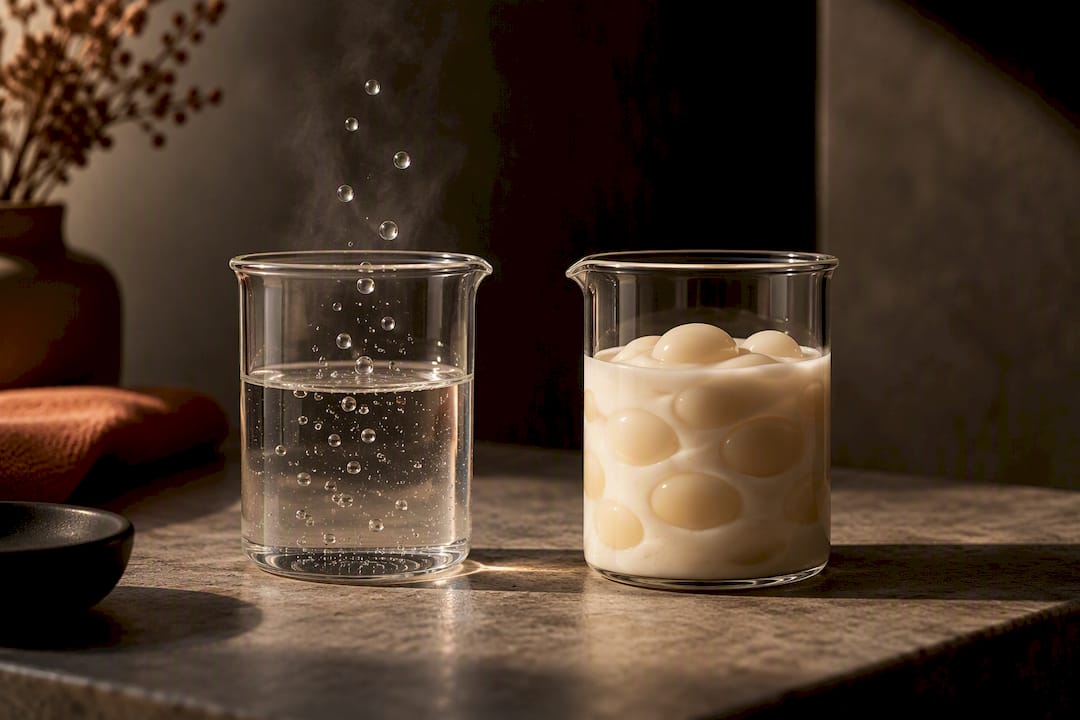
On the fatty-alcohol side, the Cosmetic Ingredient Review (CIR) Expert Panel has repeatedly concluded that long-chain fatty alcohols, including cetyl, cetearyl, myristyl, behenyl, and isostearyl alcohol, are safe for use in cosmetics at the concentrations typically used in leave-on products.
A few practical rules follow from this:
- An “alcohol-free” label tells you about ethanol only, not the full formula.
- Fatty alcohol names ending in “-yl alcohol” are almost always emollients, not irritants.
- CIR reviews specifically evaluate use levels, so “safe as used” reflects real formulation concentrations, not theoretical maximums.
How Should You Choose Skincare If Alcohol Concerns You?
Reading a label with confidence takes about ten seconds once you know what to look for. Here’s the sequence that actually works:
- Scan the first five ingredients. If ethanol, alcohol denat., or SD alcohol appears there, the concentration is likely high enough to affect skin feel and barrier function.
- Separate rinse-off from leave-on. A cleanser with alcohol near the top of the list matters far less than a serum or toner you leave on all day.
- Check your skin type against the product type. If you have rosacea, eczema, or a compromised barrier, prioritize formulas where fatty alcohols (cetyl, cetearyl, stearyl) or no alcohol at all are the norm for daily leave-ons, as explained in this safe detergent guide for eczema-prone skin.
- Recognize when alcohol earns its place. Small amounts can serve as a preservative, a solvent for actives that need help penetrating, or the delivery vehicle in a targeted spot treatment. The FDA’s alcohol-free guidance is a useful reference when a brand’s claims feel inflated.
- Patch-test new products for 48 to 72 hours on the inner forearm before applying to your face. Watch for redness, stinging, or tightness that doesn’t resolve within a few hours.
If irritation, persistent redness, or flaking shows up and doesn’t calm down within a week of stopping the product, that’s a signal to see a dermatologist rather than keep experimenting.
Pro Tip: Keep a “leave-on versus rinse-off” mental filter when shopping. Alcohol positioned high on the list in a cleanser rinses away in seconds; the same ingredient in a moisturizer sits on your skin for hours.
How Alloi Skin Approaches Alcohol in Formulation
Every formula builds around a simple question: does this ingredient earn its place at an effective dose, or is it there to pad a label? That standard shapes how alcohol gets used, if at all, in formulations.
The VitalCopper Renewal Face Serum follows the same barrier-first logic this article has walked through. Instead of relying on volatile alcohols for a quick-dry feel, the formula pairs copper tripeptide-1 (GHK-Cu) and Matrixyl 3000 at studied concentrations with panthenol, betaine, and hyaluronic acid, ingredients chosen to support and soothe the barrier rather than strip it.
When you’re evaluating any serum, including this one, look for the same three things this guide has covered:
- Where alcohol (if present) falls in the ingredient order.
- Whether the brand states concentrations or just lists actives without dosing.
- Whether the formula’s stated purpose matches its actual ingredient behavior.
Transparency on those three points is what separates a formula built for your barrier from one built for a shelf display.
The Real Trade-off Between Alcohol and Skin Comfort
Volatile alcohols feel good in the moment. They vanish fast, leave skin feeling clean, and make toners and gels sit lighter than emollient-heavy creams. That sensory payoff is real, and it’s why so many products still lean on ethanol despite the barrier trade-offs.
For daily leave-on products, though, prioritizing formulas built around fatty alcohols and barrier-supporting actives tends to pay off more over months, not minutes. An occasional alcohol-forward toner or spot treatment, used with a real need in mind, isn’t a barrier crisis waiting to happen. It’s a trade-off worth making consciously instead of by accident.
— Alloi Skin
A Simpler Way to Shop for Barrier-Friendly Skincare
The brand is an option for readers who don’t want to decode ten ingredient lists just to find one product that won’t fight their barrier. Instead of stacking a long list of actives at throwaway doses, the VitalCopper Renewal Face Serum sticks to copper tripeptide-1 and Matrixyl 3000 at the concentrations studied in clinical research, paired with barrier-supporting ingredients like panthenol and hyaluronic acid instead of volatile solvents.
If the taxonomy and label-reading rules in this guide made sense to you, the next step is simple: look at the full ingredient list and formulation philosophy behind VitalCopper, and see how each ingredient’s role and dose are laid out plainly, no guesswork required.
Where to Verify These Claims Yourself
For readers who want to check the sourcing directly: the FDA’s alcohol-free labeling guidance, the CIR safety assessment on fatty alcohols, the 2025 clinical trial on ethanol tolerability, and the 2023 review separating systemic and topical alcohol effects cover the core evidence behind this guide.
Sources
- Alcohol-free | FDA
- PubMed: clinical study on 12% ethanol moisturizer (2025)
- CIR safety assessment (fatty alcohols)
- Advances in Relationship Between Alcohol Consumption and Skin Diseases (PMC, 2023)
FAQ
Is Alcohol Bad for Your Skin?
It depends entirely on the type and concentration. Volatile alcohols like ethanol can dry or irritate skin when used in high concentrations on compromised barriers, while fatty alcohols like cetyl and cetearyl alcohol are generally considered safe emollients at typical use levels.
What Does “Alcohol-Free” Actually Mean on a Label?
An “alcohol-free” claim refers specifically to the absence of ethyl alcohol, according to FDA guidance. The product can still contain fatty alcohols like stearyl or behenyl alcohol, which serve entirely different, non-drying functions.
Which Alcohols Should People With Rosacea or Sensitive Skin Avoid?
Volatile, simple alcohols high on the ingredient list, such as ethanol, alcohol denat., and SD alcohol, are the ones most likely to trigger irritation in reactive or barrier-impaired skin. Fatty alcohols like cetyl and cetearyl alcohol are not the same concern and are typically well tolerated.
Can Alcohol in Skincare Ever Be Beneficial?
Yes, in the right context. Small amounts can act as a preservative or help certain actives penetrate the skin, and research on a 12% ethanol moisturizer found no significant adverse effects over 30 days in a small atopic dermatitis sample.
Does VitalCopper Contain Drying Alcohols?
VitalCopper is formulated around copper tripeptide-1 and Matrixyl 3000 at studied doses, paired with barrier-supporting ingredients like panthenol and hyaluronic acid rather than volatile solvent alcohols. The full ingredient breakdown is available on the product page.


