


Apply serum first, then moisturizer. Serum treats specific skin concerns with concentrated actives; moisturizer seals in that treatment and protects your barrier. Between the two, moisturizer is the slightly more non-negotiable step, since skipping it regularly leaves your barrier exposed to water loss and irritation.
The layering logic is simple once you know it: thinnest product to thickest. Cleanse, apply serum, wait about 30 to 60 seconds if you can, then moisturize.
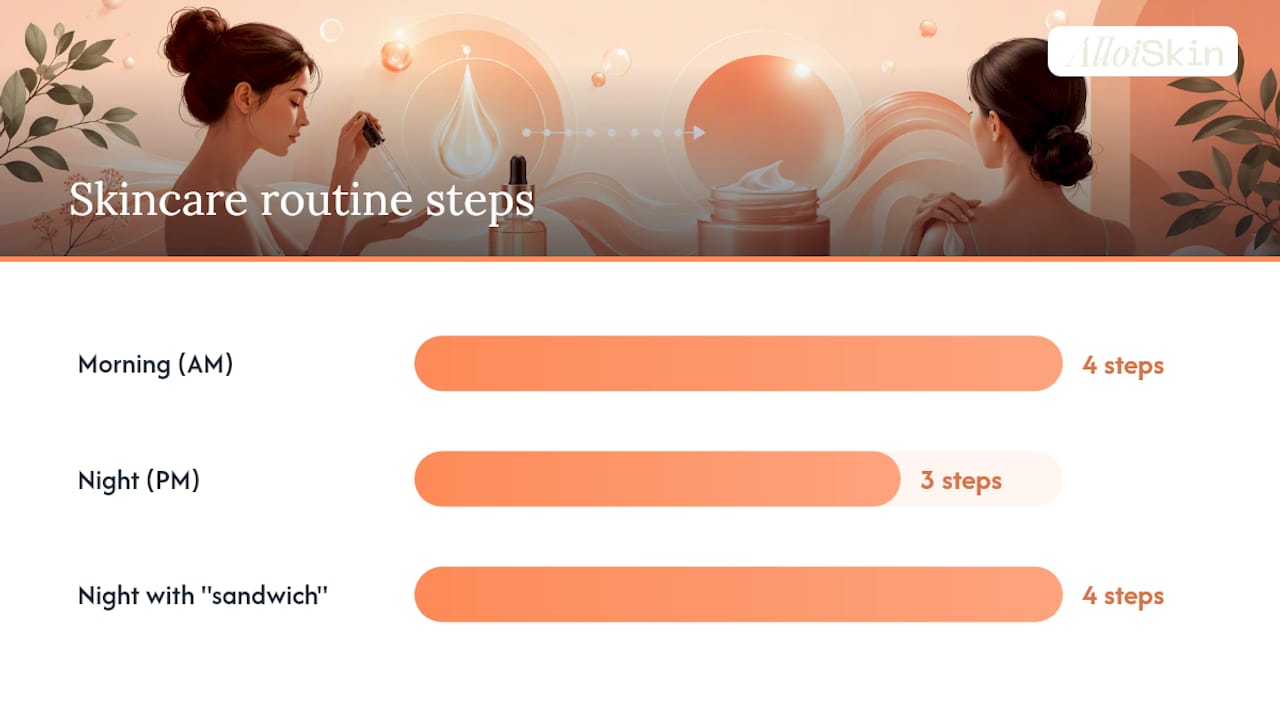
- AM: vitamin C or other antioxidant serum, then moisturizer, then SPF.
- PM: retinoid or exfoliating serum (on those nights), then moisturizer.
- Wait time: 30 to 60 seconds lets a serum absorb before you seal it under a cream.
Key Takeaways
The right skincare order is thinnest to thickest: apply serum first for targeted treatment, then moisturizer to protect and seal the barrier.
| Point | Details |
|---|---|
| Serum goes first | Apply after cleansing, wait 30 to 60 seconds, then follow with moisturizer. |
| Both steps matter | Serums treat specific concerns; moisturizers protect the barrier and prevent water loss. |
| Match actives to skin type | Use hyaluronic acid for hydration, peptides for repair, niacinamide for texture, retinoids for aging. |
| Avoid active overload | Introduce one new active at a time and stagger strong ingredients across different days. |
| Alloi Skin’s approach | VitalCopper Renewal Face Serum pairs copper tripeptide-1 and Matrixyl 3000 at studied doses for the serum step. |
Table of Contents
- Serum vs Moisturizer: What Each One Actually Does
- How to Layer Serum and Moisturizer, Step by Step
- Choosing the Right Serum and Moisturizer for Your Skin
- Layering Mistakes That Undo Your Routine
- How Alloi Skin Approaches the Serum Step
- Sources
- FAQ
Serum vs Moisturizer: What Each One Actually Does
A serum is a concentrated dose of active ingredients suspended in a lightweight, often water-based vehicle designed to penetrate the upper layers of skin. Its whole job is delivery: get retinol, vitamin C, peptides, or exfoliating acids where they can do something.
A moisturizer works differently. It’s built from humectants (like glycerin), emollients (like fatty alcohols), and occlusives (like petrolatum or shea butter) that pull in water, smooth the surface, and slow moisture loss. Moisturizers are protective, not primarily corrective. According to Medical News Today, serums are concentrated and lightweight so they can deliver actives deeply, while moisturizers are thicker formulas built to reduce transepidermal water loss.
That distinction is why order isn’t arbitrary. Smaller molecules and thinner, water-based vehicles need first access to your skin. Put a heavy cream on first and you’ve built a seal that a serum applied afterward simply cannot get through.
- Serum = treatment. Moisturizer = protection and maintenance.
- Texture generally predicts function, but not always. A gel moisturizer can still act as an occlusive barrier step even though it feels light.
One frequently overlooked point: most people benefit from using both, because the two products aren’t competing for the same job. Skipping the moisturizer to “let the serum work” usually backfires. It just leaves the serum’s actives unprotected and your barrier under-supported.
How to Layer Serum and Moisturizer, Step by Step
The order rarely changes, but the products going into that order should shift between morning and night.
- Cleanse. Start with a clean, dry face. Wet skin dilutes serum absorption.
- Apply serum. Use a pea-sized amount, pressed in rather than rubbed. Choose your active based on the time of day: antioxidants like vitamin C in the morning, retinoids or stronger exfoliants at night.
- Wait. Give it roughly 30 to 60 seconds before moving on. The Cleveland Clinic recommends this pause so the serum has a chance to absorb before you layer anything on top.
- Moisturize. Apply a moisturizer suited to your skin type to lock in hydration and reinforce your barrier.
- SPF (AM only). Sunscreen is the last step in your morning routine, always applied over moisturizer, never mixed in with it.
At night, the sequence is identical minus sunscreen: cleanse, serum, moisturizer. If you’re using a retinoid, some people find it more tolerable when moisturizer is applied both before and after (“sandwiching”), which slightly buffers the strength of the active. That’s a workaround for sensitivity, not a change to the core rule.
Antioxidants like vitamin C pair naturally with daytime use because they help defend against environmental exposure. Retinoids and potent exfoliating acids belong at night, partly because they increase photosensitivity, according to Medical News Today.
Pro Tip: If your serum feels tacky or hasn’t fully absorbed after a minute, you’re probably using too much product. A dime-sized amount for your whole face is almost always enough.
Choosing the Right Serum and Moisturizer for Your Skin
Matching actives to your actual concern beats buying whatever has the longest ingredient list.
- Dehydration: a hyaluronic acid serum draws moisture in; pair it with a moisturizer containing ceramides or lipids to keep that water from evaporating, a combination the American Academy of Dermatology points to for dryness.
- Aging and texture concerns: peptides support structural repair, while retinoids address fine lines and turnover, though they need a slower introduction.
- Barrier stress or uneven texture: niacinamide is one of the more versatile actives, tolerated by most skin types.
- Acne: lighter gel serums with niacinamide or targeted exfoliants tend to outperform heavy creams that can clog pores.
Moisturizer texture should follow your skin type, not trends. Oily and acne-prone skin usually does better with a gel or lightweight lotion; dry or mature skin needs a richer cream or balm. If your skin is only mildly dehydrated, a hydrating serum with a light lotion on top may be enough. You don’t always need the heaviest cream on the shelf.
When you’re reading labels, prioritize proven actives at meaningful concentrations over a long ingredient list. The AAD’s guidance on picking a moisturizer is blunt about this: check what’s actually in the formula and at what level, rather than trusting marketing copy. A serum boasting ten “active” ingredients rarely delivers any of them at a dose that does anything.
Layering Mistakes That Undo Your Routine
The most common error is sequencing: applying an oil-based or occlusive moisturizer before a water-based serum. That moisturizer creates a barrier that blocks the serum from absorbing at all, wasting the product entirely.
The second common mistake is stacking too many strong actives in one routine. Vitamin C, a strong exfoliant, and a retinoid used together (or the same day) is a near-guaranteed route to irritation. The Cleveland Clinic advises limiting yourself to one or two key actives at a time and staggering the rest across different days or times.
- Introduce one new active at a time, and wait one to two weeks before adding another.
- Patch-test on your inner arm or jawline before applying a new serum to your whole face.
- Watch for burning, persistent redness, or peeling that doesn’t settle. That’s your cue to stop and, if it doesn’t resolve, talk to a dermatologist.
Pro Tip: When introducing a retinoid, use it two or three nights a week for the first two weeks rather than nightly. Your barrier adjusts faster than most people expect, but only if you don’t rush it.
How Alloi Skin Approaches the Serum Step
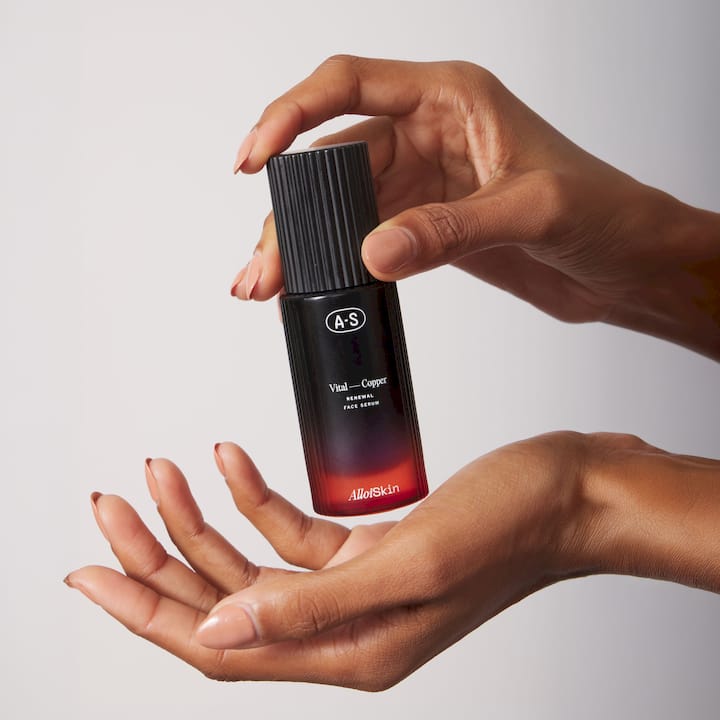
Alloi Skin’s formulation principle is straightforward: fewer ingredients, dosed at levels that are actually studied, instead of long lists padded with actives too diluted to do much. That’s the whole argument against complexity for its own sake, and it shapes every product Alloi Skin makes.
VitalCopper Renewal Face Serum is built around that idea. It combines copper tripeptide-1 (GHK-Cu) and Matrixyl 3000, both peptides with a body of research behind their role in skin repair, alongside panthenol, betaine, and hyaluronic acid to support the barrier while those peptides work.
- Peptides target structural repair and clarity, not just surface hydration.
- Hyaluronic acid and panthenol soothe and support the barrier during that repair process.
- The formula skips filler actives that show up on labels at doses too low to matter.
A routine doesn’t need more ingredients to work better. It needs the right ones, at the right dose, used consistently.
Used as the serum step in the routine outlined above, VitalCopper is meant to sit right after cleansing and before your moisturizer, giving those peptides direct access to skin before anything seals the surface.
Why Simpler Routines Win
Most skincare frustration doesn’t come from using the wrong products. It comes from using too many at once, so nothing gets a fair trial. When you rotate five actives a week, you can’t tell what’s helping and what’s causing the breakout you’re now trying to fix.
Alloi Skin’s position is that one well-dosed, targeted serum paired with a moisturizer that actually protects your barrier beats a shelf of half-strength products every time. Pick fewer things. Track how your skin responds. Give a routine a real six to eight weeks before judging it.
A Serum Built for This Exact Step
If you’ve read this far, you already know the routine: cleanse, serum, wait, moisturize. What most routines get wrong isn’t the order, it’s the serum itself, loaded with actives too diluted to matter.
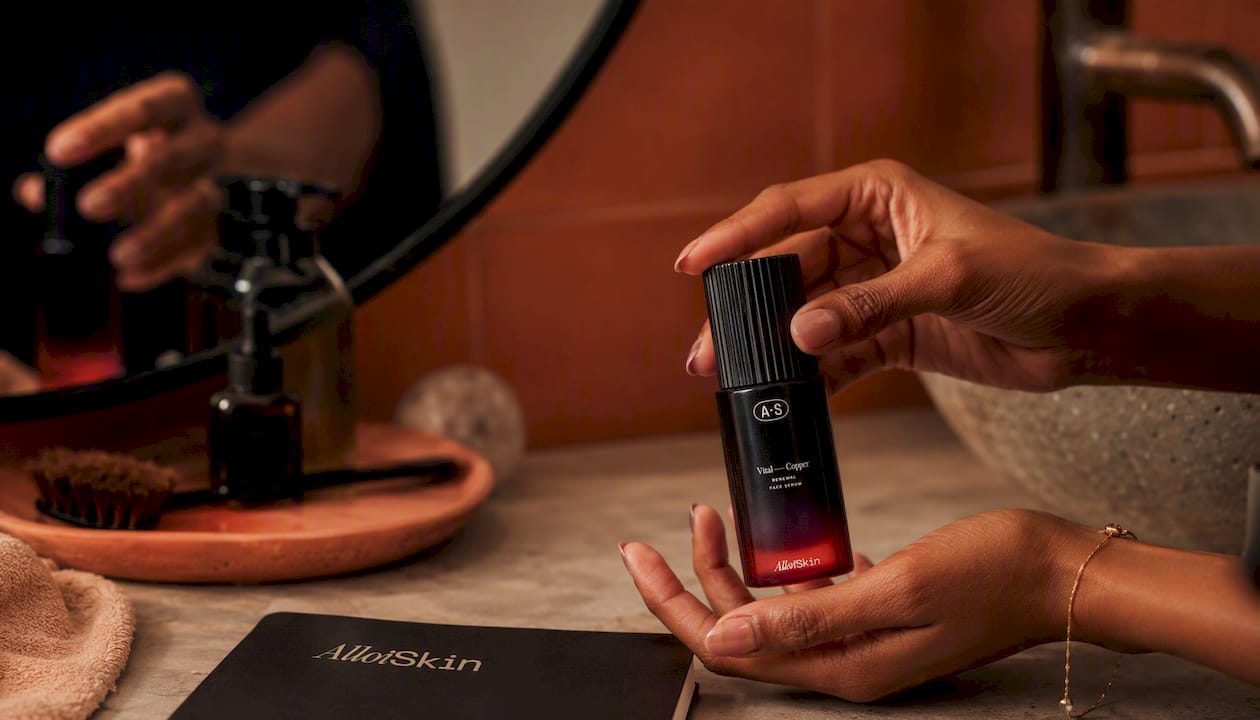
The VitalCopper Renewal Face Serum is formulated around copper tripeptide-1 and Matrixyl 3000 at studied doses, not a long ingredient list designed to look impressive on a label. Alloi Skin publishes its formulation method and full ingredient breakdown so you can see exactly what you’re applying and why, rather than taking a marketing claim on faith. If your current routine has you juggling four half-effective serums, this is a case for replacing them with one that’s dosed to actually do the job. Visit the VitalCopper product page to check the full ingredient panel and start with the serum step your routine has been missing.
Sources
- The Correct Order for Skin Care Products — Cleveland Clinic
- Serum or moisturizer first? The right order for skin care — Medical News Today
- How to pick a moisturizer — American Academy of Dermatology (AAD)
FAQ
Which Is Better, Serum or Moisturizer?
Neither is “better” since they do different jobs. Serums treat specific concerns with concentrated actives, while moisturizers protect your barrier and prevent water loss, and most people get the best results using both.
Is Serum Really Necessary?
Serum isn’t strictly required, but it’s the most direct way to deliver targeted actives like peptides, vitamin C, or retinoids at a meaningful concentration. Moisturizer alone won’t address specific concerns like collagen support or uneven texture the way a well-dosed serum can.
Do You Need Moisturizer After Serum?
Yes, in almost every case. Moisturizer seals in the serum’s actives and prevents transepidermal water loss, and skipping it regularly leaves your barrier under-protected even if the serum itself is working.
Can You Use Serum and Moisturizer Together in the Same Routine?
Yes, they’re meant to be layered together, not chosen instead of each other. Apply serum first, wait about 30 to 60 seconds, then follow with moisturizer.
What if My Moisturizer Feels Heavier Than My Serum?
That’s expected and correct. Moisturizers are formulated to be thicker and more occlusive, which is exactly why they go on last, after the lighter serum has had a chance to absorb.


