


Peptide serums can improve firmness, soften the look of expression lines, and support barrier repair, but only when the peptide and its formulation are right for the job. Results tend to show up over weeks to months, not days, and how much you see depends heavily on concentration, delivery system, and packaging, not just the peptide’s name on the label.
TL;DR:
- Peptide serums require specific peptides at effective concentrations and proper delivery systems to show visible results.
- Formulations with lipid conjugation or encapsulation improve skin penetration, while packaging stability is crucial for preserving peptide activity.
- The strongest evidence supports wrinkle reduction from well-dosed Argireline and Matrixyl peptides, with moderate support for improving firmness and hydration.
- Choosing a serum with clear, named peptides early in the ingredient list and opaque, airless packaging ensures better quality and efficacy.
- Peptides will gradually improve skin over one to three months, but they cannot replace the faster results of injectables or prescription treatments.
Table of Contents
- What Peptides Are and Why They Matter in Skincare
- Types of Peptides in Serums and What Each One Does
- How Peptide Serums Work: Mechanisms and Delivery
- Evidence-Backed Benefits of Peptide Serums
- How to Choose a Peptide Serum That Actually Works
- How to Use Peptide Serum for the Best Results
- Limits and Safety: What Peptide Serums Won’t Reliably Do
- Alloi Skin Spotlight: A Formulation Built Around These Rules
- What Actually Matters When You’re Evaluating Peptide Claims
- Try a Peptide Serum Built on Studied Doses, Not Guesswork
- Sources
- FAQ
What Peptides Are and Why They Matter in Skincare
Peptides are short chains of amino acids, small fragments of the same building blocks that make up collagen and elastin. In skin, they act less like ingredients and more like messengers: certain sequences tell fibroblasts to produce more collagen, others calm inflammatory signaling, and others help regulate how skin repairs itself after damage. This messenger role is what separates peptides from simple moisturizing agents.
Topical peptides work differently than injectables or growth factor treatments. Injectables and prescription growth-factor products bypass the skin barrier entirely, delivering active compounds directly into deeper tissue. Topical peptide serums have to survive contact with the skin surface and penetrate through the stratum corneum, which is a much steeper climb.
That distinction matters for expectations. A few things to know about how peptides function in skin:
- They mimic fragments of collagen or other structural proteins, prompting the skin to respond as though repair is needed.
- Some peptides act on the extracellular matrix directly, influencing collagen and elastin turnover.
- Others work indirectly, modulating inflammation or cell signaling rather than acting as structural proteins themselves.
- Effects are dose-dependent. A trace amount of a promising peptide is unlikely to replicate anything seen in a clinical trial.
Types of Peptides in Serums and What Each One Does
Not all peptides do the same job, and reading past “peptide complex” on a label matters more than most shoppers realize. Four categories show up most often in serums, and knowing them makes reading an ingredient list far more useful.
- Signal peptides, like the palmitoyl pentapeptide-4 in the Matrixyl family, work by mimicking collagen fragments, which prompts fibroblasts to ramp up collagen production.
- Carrier peptides, most notably GHK-Cu (copper tripeptide-1), deliver copper to skin cells, supporting wound healing, antioxidant activity, and anti-inflammatory signaling.
- Neurotransmitter-modulating peptides, such as those in the Argireline family, reduce the muscle contractions behind expression lines, working somewhat like a topical, temporary softening of repetitive movement.
- Enzyme inhibitors and sebostatic peptides protect existing collagen from breakdown and can help regulate oil production, which matters for both aging and acne-prone skin.
The practical takeaway: look for the specific peptide name, not a vague “peptide complex” that could mean almost anything, including trace amounts too low to do much of anything.
How Peptide Serums Work: Mechanisms and Delivery
The biology behind peptide serums is fairly well mapped, even if the marketing around them often isn’t. Signal peptides stimulate fibroblasts to synthesize more collagen and elastin, gradually improving the skin’s structural scaffolding. GHK-Cu goes a step further: it suppresses inflammatory cytokines like IL-6 and TNF-alpha while simultaneously encouraging collagen synthesis, which is why it shows up so often in barrier-repair and wound-healing research.
The evidence: Peer-reviewed research on GHK-Cu shows it decreases production of inflammatory cytokines IL-6 and TNF-alpha while stimulating fibroblast collagen synthesis, a dual action that explains its reputation as both a repair and calming ingredient.
But biology only gets you halfway. Formulation determines whether a peptide ever reaches its target. Most peptides are too large or too water-soluble to cross skin’s outer barrier on their own, so formulators rely on:
- Lipid conjugation (palmitoylation), which attaches a fatty tail to help a peptide pass through the skin’s lipid-rich outer layer.
- Encapsulation or delivery technology, which protects a peptide from breaking down before it reaches living cells.
- Concentration matched to published research, since many consumer products use far lower doses than the trials that made the peptide famous in the first place.
Packaging plays a role too. Peptides are proteins, and proteins degrade with light, air, and heat exposure. A review of peptide mechanisms in skin notes that stability and delivery challenges are as central to real-world performance as the peptide’s biological activity itself.
Evidence-Backed Benefits of Peptide Serums
Peptide serums are not a monolith. Some benefits rest on multiple controlled trials, others on early or industry-funded research, and it helps to know which is which before you set expectations.
Wrinkle reduction has the strongest concentration-dependent evidence. Clinical trial summaries report roughly 30% wrinkle-depth reduction with 10% Argireline over a 30-day trial, and measurable improvement with Matrixyl at just 0.005% over four to twelve weeks. The gap between those two concentrations is the whole story: potency at the tested dose is what produced results, and most retail serums don’t disclose whether they match it.
- Firmness and elasticity improve as signal peptides encourage sustained collagen and elastin production, an effect that builds gradually rather than appearing overnight.
- Barrier support and hydration tend to improve when peptides are paired with humectants like hyaluronic acid, since the peptide’s repair signaling and the humectant’s water retention work on complementary problems.
- Anti-inflammatory and wound-healing support is best documented for copper peptides specifically, given GHK-Cu’s cytokine-suppressing action.
- Texture and tone often improve as a secondary effect of better collagen turnover and reduced inflammation, though this outcome has less dedicated trial data than wrinkle depth.
Worth knowing: the Cleveland Clinic notes that peptides are a genuinely useful addition to a routine, but they are not automatically superior to other well-studied actives like retinoids for every anti-aging goal, and they often cost more per ounce.
Strong evidence exists for Argireline-type and Matrixyl-type wrinkle reduction and for GHK-Cu’s anti-inflammatory action. Moderate evidence supports general firmness and hydration claims. Emerging peptides and multi-peptide blends fall into a third bucket entirely: promising in early trials, but still catching up on independent replication.
How to Choose a Peptide Serum That Actually Works
Picking a peptide serum well comes down to reading past the marketing copy on the front of the bottle and checking a few specific things on the back.
- Look for named peptides, positioned early in the ingredient list. “Palmitoyl pentapeptide-4” or “copper tripeptide-1” tells you something concrete; “peptide complex” tells you nothing about concentration or identity.
- Favor airless or opaque packaging. Peptides degrade with light and air exposure, and a jar you dip your fingers into repeatedly accelerates that breakdown.
- Check for concentration or formulation transparency. Brands willing to publish dose information or point to the studies behind an ingredient are signaling they built the formula around evidence, not just a trend.
- Prioritize complementary barrier actives. Hyaluronic acid, panthenol, and betaine support hydration and calm the skin while peptides do their slower structural work; a serum missing all of them is asking a single ingredient to do a job usually shared by several.
- Treat vague, overloaded “complexes” with suspicion. A serum listing fifteen peptides at unspecified doses is far less likely to deliver a trial-comparable effect than one built around one or two peptides at meaningful concentrations. Fewer, purposeful ingredients tend to outperform kitchen-sink formulas.
Pro Tip: Ask yourself whether a brand would publish its peptide concentration if you emailed and asked. If the answer feels like a hard no, that’s a formulation transparency problem worth taking seriously.
Red flags worth walking away from: a missing peptide name, claims that promise injectable-level results, and zero information about packaging or stability testing.
How to Use Peptide Serum for the Best Results
Application order matters more than most routines account for. Peptide serums work best applied after cleansing and any lightweight hydrating toners or essences, but before heavier creams, oils, or occlusive balms that could block penetration.
- Apply to clean, slightly damp skin so the serum has a clear path to the surface.
- Use daily, morning and night, since peptides work cumulatively rather than as a one-time treatment.
- Expect early signs, like improved hydration and softness, within a few weeks, with firmness and line changes building over one to three months.
- Peptides generally layer safely with hyaluronic acid and most antioxidants like vitamin C.
- If you’re also using a strong retinoid, alternate nights or apply the retinoid separately if you notice irritation, since combining two active-heavy steps can overwhelm sensitive skin. A retinol serum paired with peptides on alternating nights is a common way to get both benefits without overloading the skin.
- Store the bottle away from direct sunlight and heat. A bathroom windowsill is the wrong home for a peptide serum.
Limits and Safety: What Peptide Serums Won’t Reliably Do
Peptide serums are not a substitute for injectable procedures in either speed or magnitude of change. Neurotoxin injections relax muscle activity directly and produce visible results in days; Argireline-type peptides work on the same neuromuscular pathway topically, but far more gradually and less dramatically.
- Effect size depends heavily on concentration and delivery, and many consumer products use lower doses than the trials that established a peptide’s reputation.
- Mild irritation is possible, especially when peptides are layered with multiple other actives at once.
- True allergic reactions are rare but not impossible, particularly with copper-based peptides in people with known copper sensitivities.
- Anyone with persistent redness, breakouts, or a diagnosed skin condition should check with a dermatologist before adding a new active, especially alongside prescription treatments.
- Some industry-funded trials report stronger effects than independently funded ones, so a little skepticism toward brand-sponsored study claims is reasonable.
Alloi Skin Spotlight: A Formulation Built Around These Rules
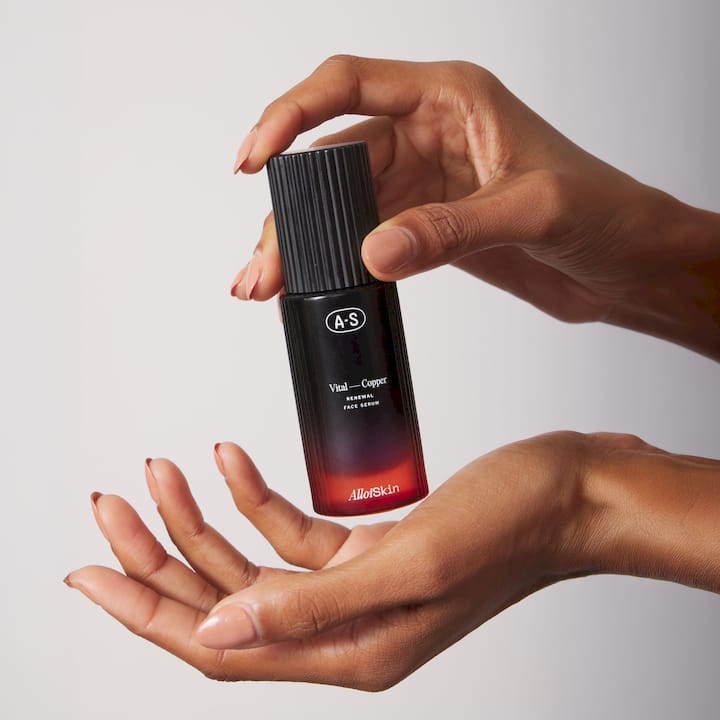
The VitalCopper Renewal Face Serum was built to meet the same standard this guide lays out rather than to chase a longer ingredient list.
- Copper tripeptide-1 (GHK-Cu) at a studied concentration for collagen support and cytokine-calming activity.
- Matrixyl 3000 for signal-peptide-driven collagen stimulation.
- Panthenol and betaine to soothe and reinforce barrier function alongside the peptides.
- Hyaluronic acid to support hydration while the structural work happens underneath.
| Formulation feature | Why it matters |
|---|---|
| Named peptides at studied concentrations | Matches the dose logic behind trial-reported results |
| Opaque, stability-focused packaging | Protects sensitive peptides from light and air degradation |
| Minimal, purposeful ingredient list | Avoids the “complex” problem of trace-dose padding |
Readers who want the deeper ingredient science can review the copper tripeptide-1 breakdown or how Alloi Skin formulates before deciding if it fits their routine.
What Actually Matters When You’re Evaluating Peptide Claims
Most peptide marketing leans on the ingredient’s reputation rather than its dose, and that’s the gap that trips up even careful shoppers. A peptide can have excellent published research behind it and still do almost nothing in a bottle that uses a fraction of the studied concentration. The conventional advice, “look for peptides on the label,” isn’t wrong, but it stops one step too early.
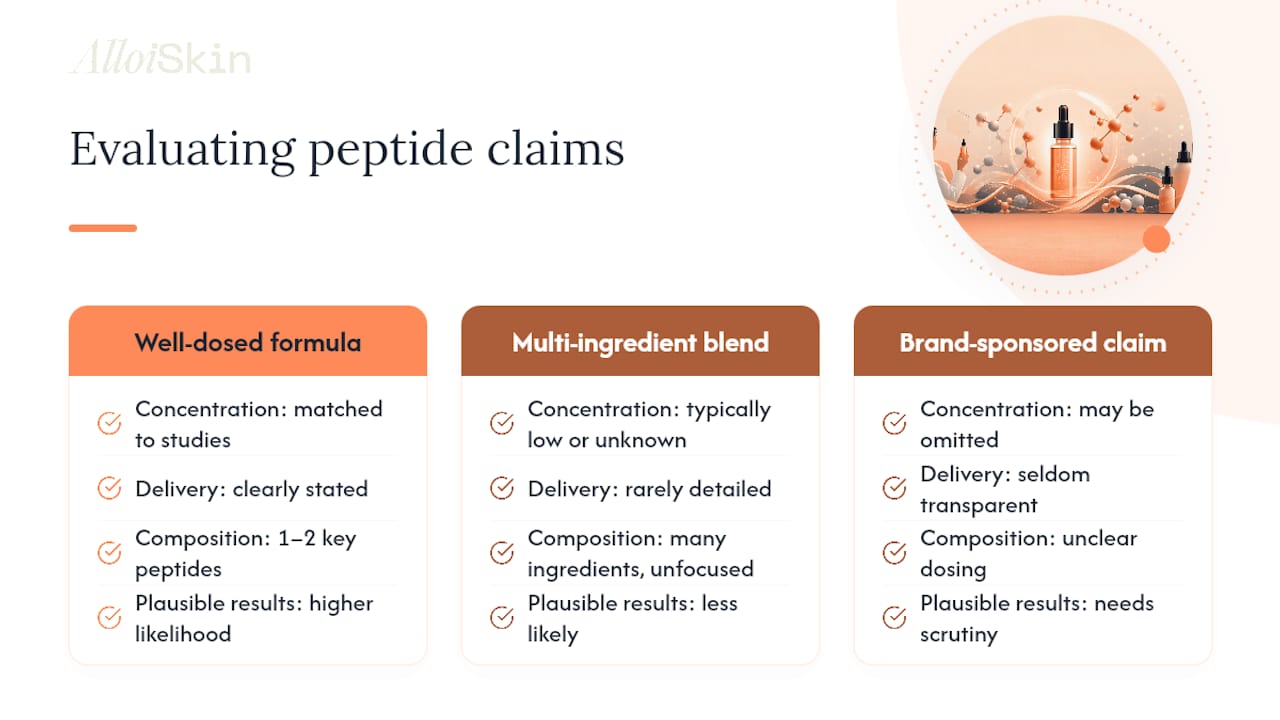
What we’d tell a friend: prioritize concentration and delivery transparency over the length of the ingredient list. A serum built around one or two well-dosed peptides, paired with basic barrier support, has a more plausible shot at trial-like results than a fifteen-ingredient blend where nothing is dosed meaningfully. That’s also why funding source matters when you read a clinical claim. A brand-sponsored study showing dramatic results deserves the same scrutiny you’d give a claim with no study at all.
The reader’s job isn’t to memorize peptide names. It’s to ask one question before buying: does this brand tell me enough to judge whether the dose matches the science?
— Alloi Skin
Try a Peptide Serum Built on Studied Doses, Not Guesswork
Most peptide serums on the market list five, ten, sometimes fifteen actives at doses nobody discloses, leaving you to trust the label instead of the evidence. Alloi Skin takes the opposite approach: the VitalCopper Renewal Face Serum is built around copper tripeptide-1 and Matrixyl 3000 at the concentrations studies actually used, paired with panthenol, betaine, and hyaluronic acid to support the skin barrier while the peptides do their work.
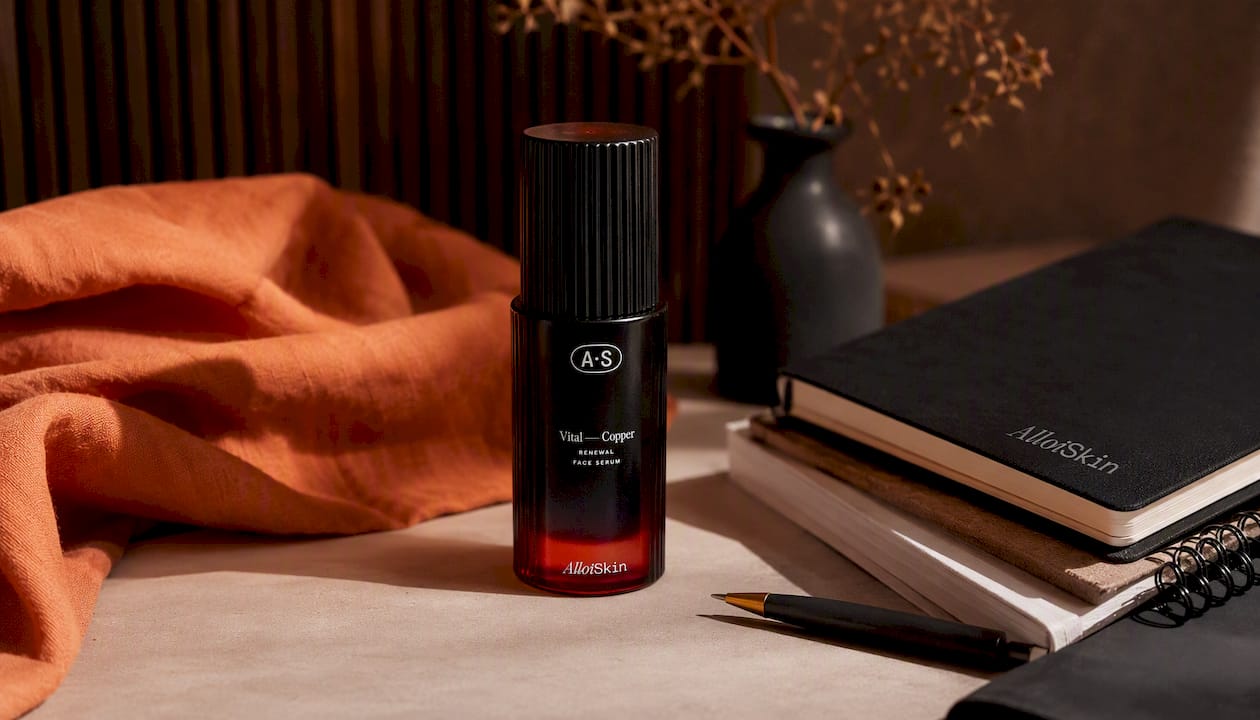
If you’ve read this far wanting a serum that matches the selection rules above rather than fighting against them, that’s exactly what this formulation was built to be. Explore the ingredient breakdown to see the research behind each active, or head straight to the product page to check current availability and start your first order.
Sources
- PMC article on GHK‑Cu (peer‑review)
- Do peptide serums actually work? (RethinkPeptides summary of clinical trials)
- Peptides for skin care (Cleveland Clinic / Health Essentials)
- Peptides and their mechanisms of action in the skin (MDPI review)
FAQ
How Long Until I See Results From a Peptide Serum?
Early hydration and softness improvements often appear within a few weeks, while firmness and wrinkle-depth changes typically take one to three months of consistent daily use to become visible.
Can I Use Peptide Serum With Vitamin C or Retinol?
Peptides generally layer well with vitamin C and most antioxidants; with strong retinoids, alternating nights or separating application helps avoid irritation for sensitive skin.
Do Higher Peptide Concentrations Always Work Better?
Not necessarily. Effectiveness depends on matching the concentration used in published research, since a peptide at a trace dose won’t replicate trial results even if it’s technically present.
Is GHK-Cu Better Than Signal Peptides Like Matrixyl?
They serve different roles. GHK-Cu combines collagen stimulation with anti-inflammatory and wound-healing support, while Matrixyl-type signal peptides focus more narrowly on collagen production. A serum like the VitalCopper Renewal Face Serum pairs both to cover more ground.
Are Peptide Serums Safe for Sensitive Skin?
Most people tolerate peptides well, but anyone with a history of skin sensitivity, copper allergies, or an active skin condition should introduce a new serum gradually and consult a dermatologist if irritation persists.


