


Matrixyl 3000 is a well-documented peptide complex that supports firmer, smoother skin when used consistently, and its safety profile is among the mildest of any anti-aging active on the market. The complex works by supporting your skin’s structural signaling and calming inflammation that degrades collagen over time. Results depend heavily on formulation quality and patience. Give it eight to twelve weeks before judging whether it’s working for your skin.
TL;DR:
- Matrixyl 3000 contains two specific peptides sourced from Sederma, ensuring standardized quality and transparency in formulation.
- Laboratory data support its ability to boost collagen synthesis and reduce inflammation, with real-world results gradually improving skin firmness and texture over 8 to 12 weeks.
- Effective products typically contain around 3% of the Sederma-branded peptide solution, with ingredient placement and supplier transparency being key indicators of quality.
- Peptides are well tolerated across skin types, with minimal irritation, but patch testing and caution are advised for sensitive or compromised skin.
- For optimal results, apply serum to clean, damp skin in the correct layering order, and avoid mixing with very low-pH acids or strong vitamin C formulations at the same time.
Table of Contents
- What Matrixyl 3000 Actually Is (and Why the Trade Name Matters)
- How Matrixyl 3000 Works and What the Evidence Actually Shows
- What Benefits Can You Actually Expect, and When?
- How to Use Matrixyl 3000 Serums the Right Way
- How Do You Spot a Well-Formulated Matrixyl 3000 Product?
- Is Matrixyl 3000 Safe? Side Effects and Skin Type Suitability
- Alloi Skin’s Approach: Pairing Matrixyl 3000 With Copper Peptides
- How Should You Store Matrixyl 3000 Products?
- How Does Matrixyl 3000 Compare to Other Peptide Complexes?
- How Do You Choose a Reputable Matrixyl 3000 Brand?
- Peptides vs. Stronger Clinical Actives: Which Should You Choose?
- VitalCopper Renewal Face Serum: A Formula Built Around What Actually Works
- Sources
- FAQ
What Matrixyl 3000 Actually Is (and Why the Trade Name Matters)
Matrixyl 3000 is not a single ingredient. It’s a branded combination of two signal peptides, palmitoyl tripeptide-1 and palmitoyl tetrapeptide-7, engineered to work together to support your skin’s matrix, the collagen and elastin scaffolding beneath the surface that keeps skin firm. Both peptides fall into a category dermatologists call “signal peptides,” which communicate with skin cells to encourage structural repair rather than acting as exfoliants or hormonal disruptors, according to dermatologists interviewed by Women’s Health.
Here’s where labels get confusing. “Matrixyl” is a trade name owned by Sederma, a subsidiary of Croda. That matters more than most shoppers realize, because it means the raw material comes from a single, standardized source rather than dozens of manufacturers making slightly different versions. When a brand lists “Matrixyl 3000” on its ingredient panel, it’s referencing that specific Sederma formulation, not a generic peptide blend assembled in-house.
You’ll run into a few naming variations while shopping:
- Matrixyl (the original): palmitoyl pentapeptide-4 alone, an earlier generation formula.
- Matrixyl 3000: the two-peptide combination (palmitoyl tripeptide-1 + palmitoyl tetrapeptide-7) most commonly referenced today.
- Matrixyl Synthe’6: a newer, single-peptide formulation Sederma markets as a synthetic alternative with a different mechanism profile.
These aren’t interchangeable, and a product claiming “Matrixyl” benefits without specifying which version is a label worth reading twice. If a brand doesn’t name the exact Sederma variant, you can’t verify what you’re actually buying. That single detail, more than any marketing claim, tells you whether a formulator is being straight with you.
How Matrixyl 3000 Works and What the Evidence Actually Shows
The mechanism is genuinely interesting once you get past the marketing language. Palmitoyl tripeptide-1 mimics fragments of collagen and elastin, which appears to prompt skin cells to ramp up matrix-related signaling, the biological conversation that tells your skin to maintain its structural proteins. Palmitoyl tetrapeptide-7 works differently: it targets inflammation-associated pathways that, over time, contribute to collagen breakdown. Together, the two peptides address both sides of the aging equation, encouraging renewal while dialing down the chronic low-grade inflammation that erodes it, per the mechanism described by Women’s Health.
Now for the part most articles gloss over: where the efficacy numbers actually come from.
Supplier bench testing from Sederma/Croda has reported substantial increases in collagen synthesis for Matrixyl variants in laboratory model systems. That’s meaningful data, but it’s brand-generated data, not an independent clinical trial published in a peer-reviewed dermatology journal.
That distinction isn’t a knock against Matrixyl 3000. It’s simply the reality of how most cosmetic ingredient efficacy gets measured and reported, and it applies to the vast majority of peptides on the market, not just this one.
The honest evidence summary: manufacturer testing supports the mechanism and shows measurable effects in controlled lab conditions, according to the Klow Peptide monograph on Matrixyl formulations. Independent dermatologist commentary and consumer-facing testing, meanwhile, consistently describe real-world results as gradual improvements in firmness and texture rather than dramatic transformation, with peptides generally producing less irritation than retinoids, as Forbes’ peptide serum testing found. That’s the practical takeaway: expect a well-tolerated active with a supportive, cumulative effect, not an overnight fix.
What Benefits Can You Actually Expect, and When?
Matrixyl 3000 produces two different kinds of results on two different timelines, and separating them helps you set realistic expectations from day one.
The immediate effect comes from what surrounds the peptide, not the peptide itself. Most Matrixyl 3000 serums are formulated with ingredients like hyaluronic acid and glycerin that pull moisture into the skin quickly, creating a plumper, more hydrated look almost right away, a formulation pattern Elle’s peptide serum coverage notes across the category. That’s a real benefit, but don’t mistake it for the peptide working.
The structural effect, the part you’re actually paying for, takes longer:
- Days 1 to 14: Hydration and surface smoothness improve, mostly from humectants in the formula.
- Weeks 4 to 8: Early users often report subtler texture changes and a slight increase in bounce.
- Weeks 8 to 12: Peptide-driven improvements in firmness and fine-line softening become more consistently observed, matching the timeline dermatologists commonly cite.
Matrixyl 3000 is best suited to early photoaging: fine lines, mild loss of bounce, and the first signs of textural change. It is not a substitute for the volume restoration that dermal fillers or more intensive procedures provide.
Pro Tip: Take a baseline photo in the same lighting before you start. Twelve weeks of gradual change is nearly invisible day to day, but comparing week 1 to week 12 side by side usually settles the “is this working” question fast.
How to Use Matrixyl 3000 Serums the Right Way
Layering order matters more than most routines account for, and getting it wrong can waste a good serum.
- Cleanse first. Apply your peptide serum to clean, slightly damp skin so it absorbs efficiently rather than sitting on top of residue.
- Apply the Matrixyl 3000 serum next, before heavier creams. Dermatologists note it can be used morning or night, and it layers comfortably underneath moisturizer, according to Women’s Health’s dermatologist sourcing.
- Follow with moisturizer to seal in hydration and support the skin barrier.
- Finish with sunscreen in the morning. Peptides don’t replace UV protection, and unprotected sun exposure undoes the collagen support you’re working for.
For pairing, hyaluronic acid, niacinamide, and ceramides all work well alongside Matrixyl 3000 with no known conflicts. The one area to watch: very low-pH exfoliating acids and strong vitamin C formulations. Some dermatologists suggest that certain peptide types can be destabilized by low pH, so timing them separately, vitamin C in the morning and peptides at night, for instance, is the more cautious approach.
If you’re introducing a retinoid at the same time, start slowly. Alternate nights between the retinoid and your peptide serum for the first two to three weeks, and always patch test a new product on your inner forearm for 48 hours before applying it to your face. For a broader look at scheduling actives across your day, morning versus night routine planning is worth a closer look.
How Do You Spot a Well-Formulated Matrixyl 3000 Product?
This is where most shoppers get misled, and it comes down to one persistent confusion: percentage claims.
The branded Sederma solution is itself a diluted glycerin/water carrier for the active molecules, so percentage figures on finished product labels refer to percent of that branded solution, not percent isolated peptide. Supplier literature commonly references an effective range around 3% of the branded solution in efficacy testing, which formulators use as a benchmark when building a product.
A few practical signals separate a serious formulation from a marketing shell:
- Ingredient placement matters. If the peptide complex appears in the first half of the ingredient list, that’s a reasonable sign of meaningful dosing; buried near the bottom, after fragrance and preservatives, it’s likely present in a token amount.
- Look for named suppliers. Formulators who cite Sederma or Croda by name, or reference the INCI names directly (palmitoyl tripeptide-1, palmitoyl tetrapeptide-7), are being transparent about sourcing.
- Complementary humectants like hyaluronic acid or glycerin suggest a formula built for both immediate comfort and long-term peptide support.
- Fragrance-free formulations reduce the odds of irritation interfering with your ability to judge whether the peptide itself is working.
The biggest red flag is a vague “proprietary peptide complex” claim with no supplier name and no INCI transparency. If a brand doesn’t tell you what’s in the blend or where it came from, you have no way to evaluate the dose you’re actually applying.
Is Matrixyl 3000 Safe? Side Effects and Skin Type Suitability
Peptides sit at the gentler end of the anti-aging active spectrum. Dermatologists generally describe Matrixyl 3000 as well tolerated across skin types, with a considerably lower irritation profile than retinoids or exfoliating acids, according to both Women’s Health and Forbes’ testing coverage. That doesn’t mean zero risk.
- Rare irritation or allergic reaction does happen, but it’s typically traced to the vehicle, fragrance, or preservative system rather than the peptides themselves.
- Patch testing on your inner arm for 48 hours before facial application is still the smartest first move with any new serum, peptide or otherwise.
- Pregnancy, breastfeeding, or active skin conditions like eczema or rosacea warrant a conversation with a dermatologist before adding any new active, even a mild one.
- Persistent redness, stinging, or breakouts that don’t resolve within a week or two are your signal to stop and consult a professional rather than push through.
If you have severely compromised skin barrier function or a diagnosed dermatological condition, see a dermatologist before layering in new actives of any kind.
Alloi Skin’s Approach: Pairing Matrixyl 3000 With Copper Peptides
Alloi Skin built the VitalCopper Renewal Face Serum around a simple premise: fewer ingredients, dosed properly, outperform long lists of actives at token concentrations. Rather than stacking a dozen peptides at negligible doses, the formula pairs Matrixyl 3000 with copper tripeptide-1 (GHK-Cu), two mechanisms that support skin structure through different pathways.
- Matrixyl 3000 contributes matrix signaling and inflammation modulation, as described earlier.
- GHK-Cu brings a separate, well-studied line of evidence around tissue repair and barrier support.
- Panthenol, betaine, and hyaluronic acid round out the formula to soothe and protect the skin barrier while the peptides do their slower structural work.
Pro Tip: When two actives address different mechanisms, layering them rarely causes the diminishing returns you see with stacking near-identical ingredients. That’s the logic behind pairing a matrix-signaling peptide with a copper peptide instead of doubling up on either alone.
Full ingredient rationale and formulation details are available on the product page for readers who want the specifics.
How Should You Store Matrixyl 3000 Products?
Peptides are proteins, and like most proteins, they’re vulnerable to degradation from heat, light, and air exposure. Getting storage wrong can quietly rob you of the results you’re paying for, even with a well-formulated product.
Keep your serum in a cool, dark spot. A bathroom cabinet away from direct sun exposure works fine for most households; a bedroom drawer or medicine cabinet is even better if your bathroom runs warm and humid from showers. Avoid storing peptide serums on a windowsill or anywhere near direct heat, including car interiors during summer months, since heat accelerates peptide breakdown well before the expiration date on the box.
Opaque or dark-tinted packaging, think amber glass or airless pump bottles, protects the formula better than clear jars, which expose the product to light every time you open the lid. Airless pumps carry an added benefit: they limit oxygen exposure with each use, which matters because repeated air contact can degrade peptides over the life of the bottle.
Most Matrixyl 3000 serums have a shelf life of many months unopened, with a shorter window once opened and exposed to air and use. Check the PAO (period after opening) symbol on the packaging, typically a small open-jar icon with a number and “M” for months. If your serum’s texture, color, or scent shifts noticeably from when you first opened it, that’s a sign the formula has degraded and it’s time to replace it, regardless of what the printed date says.
How Does Matrixyl 3000 Compare to Other Peptide Complexes?
Not all peptides do the same job, which is part of why comparing them by name alone misses the point. Matrixyl 3000’s two-peptide combination targets matrix signaling and inflammation, a mechanism distinct from other well-known actives you’ll see on ingredient lists.
Matrixyl vs. Argireline is the comparison that trips up the most shoppers. Argireline (acetyl hexapeptide-8) works through a completely different mechanism: it’s a neurotransmitter-inhibiting peptide that softens the appearance of expression lines by limiting muscle contraction signals, similar in concept to a topical, milder alternative to injectable neuromodulators. Matrixyl 3000 does nothing of the sort. It’s a structural and signaling peptide, not a muscle-relaxing one. Many well-formulated serums actually use both, since they address entirely separate causes of visible aging: expression-driven lines versus structural collagen loss.
Copper peptides like GHK-Cu occupy yet another lane, with a research base centered on tissue repair and wound-healing support rather than direct matrix signaling. That’s why Alloi Skin pairs the two rather than treating them as competing options.
Palmitoyl tetrapeptide-7 on its own, without its tripeptide-1 partner, shows up in some formulas marketed for redness and inflammation specifically, a narrower use case than the full Matrixyl 3000 complex. Meanwhile, collagen tripeptides like Pro-Hyp and Hyp-Gly work through nutrient signaling rather than the cell-communication pathway Matrixyl relies on. They’re related concepts, not interchangeable ones.
How Do You Choose a Reputable Matrixyl 3000 Brand?
Reputation in this category comes down to transparency, and transparency is checkable if you know where to look.
Start with the ingredient list itself. A brand confident in its formulation names the exact peptides, palmitoyl tripeptide-1 and palmitoyl tetrapeptide-7, rather than hiding behind “advanced peptide technology” language. Second, look for any reference to the supplier. Brands that cite Sederma or Croda, even briefly, are signaling that they sourced a standardized, quality-controlled raw material rather than a knockoff blend.
Third, check where the peptide sits on the ingredient list relative to water and the base carrier. It should appear well before preservatives and fragrance, not buried in the last third of the list where trace ingredients live. Fourth, be wary of brands that make dramatic before-and-after claims on a timeline shorter than a few weeks. Given the biology involved, anyone promising visible collagen remodeling in three days is overselling a mechanism that simply doesn’t move that fast.
Finally, favor brands that are specific about concentration context, acknowledging that percentages refer to the branded solution rather than implying pure peptide dosing. That level of honesty about formulation is a better predictor of product quality than flashy packaging or celebrity endorsement.
Peptides vs. Stronger Clinical Actives: Which Should You Choose?
If your skin is sensitive, reactive, or new to actives altogether, peptides like Matrixyl 3000 are the more sensible starting point. They deliver measurable, cumulative benefit without the redness, peeling, or sun sensitivity that comes with retinoids or acid exfoliants.
For deeper wrinkles, significant volume loss, or more advanced photoaging, peptides alone won’t get you there. That’s the territory of retinoids, in-office collagen-stimulating treatments, or injectables, and no amount of peptide serum substitutes for that level of intervention.
The most pragmatic plan for most people: build a peptide foundation, protect it with daily sunscreen, and introduce a retinoid gradually once your skin tolerates actives well. Peptides and retinoids aren’t rivals. For a deeper breakdown of how to sequence them, our peptides versus retinol comparison walks through the staged approach in more detail.
— Alloi Skin
VitalCopper Renewal Face Serum: A Formula Built Around What Actually Works
Alloi Skin makes one serum, not fifteen. That’s deliberate. The VitalCopper Renewal Face Serum pairs Matrixyl 3000 at studied concentrations with copper tripeptide-1 (GHK-Cu), backed by panthenol, betaine, and hyaluronic acid to keep your barrier calm while the peptides do their slower structural work.
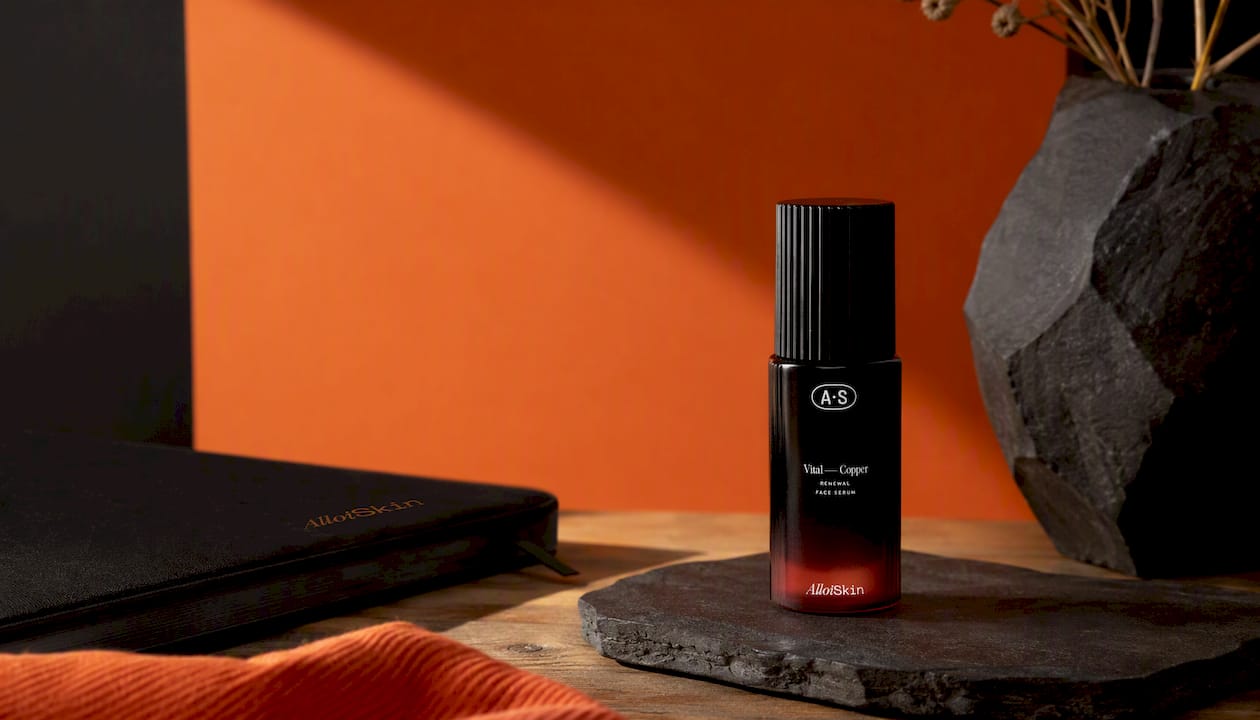
This formula fits readers who want a peptide-first routine without guessing whether the active is dosed high enough to matter, particularly anyone managing early fine lines, dullness, or a compromised barrier from over-exfoliation. Apply it once daily after cleansing, morning or night, before your moisturizer. Skip the twelve-step routine and the ingredient list you can’t pronounce. Visit the VitalCopper product page to see the full formulation breakdown and start with a single, properly dosed serum instead.
Sources
For readers who want to dig into the original reporting and supplier documentation behind this article, the Women’s Health dermatologist breakdown, Croda/Sederma’s official Matrixyl 3000 page, and the Klow Peptide monograph offer the most detailed technical grounding. Manufacturer and supplier pages remain the best resource for raw-material specifics.
- What is Matrixyl 3000? Derms explain everything you need to know. — Women’s Health
- The 8 Best Peptide Serums, Tested & Reviewed for 2026 — Forbes
- Matrixyl Peptide: The Complete Guide (Original, 3000 & Synthe’6) 2026 — Klow Peptide monograph
FAQ
What Does Matrixyl 3000 Do for Skin?
It supports collagen-related matrix signaling and helps modulate inflammation linked to collagen breakdown, contributing to firmer, smoother-looking skin over consistent use, according to dermatologists cited by Women’s Health.
What Should You Not Mix Matrixyl With?
Avoid layering it directly with very low-pH exfoliating acids or strong vitamin C formulations at the same time; some dermatologists suggest separating them by time of day to prevent theoretical destabilization.
What Is Better Than Matrixyl 3000?
Nothing beats it outright; it depends on your goal. Retinoids and in-office treatments address deeper wrinkles and volume loss more directly, while copper peptides like GHK-Cu address tissue repair through a different mechanism, which is why Alloi Skin pairs the two rather than choosing one over the other.
What Are the Side Effects of Using Matrixyl 3000?
Side effects are rare and typically limited to mild irritation or allergic reaction from the product’s vehicle, fragrance, or preservatives rather than the peptides themselves; patch testing before full use is still recommended.


