


Choose Matrixyl 3000 if you want gentler, faster comfort and visible smoothing without irritation. Choose retinol if your priority is deeper structural remodeling and pigment correction over the long term. The two are often complementary: peptide in the morning, retinol at night, or alternating nights while your skin adjusts. If you are pregnant or breastfeeding, skip retinoids entirely and lean on peptides instead.
TL;DR:
- Matrixyl 3000 shows visible wrinkle reduction and collagen boost within 84 days, with better tolerability and no photosensitivity risk than retinol.
- Retinol requires 12 to 24 weeks for significant results and involves an adjustment period with dryness, redness, and increased UV vulnerability.
- Use peptides in the morning and retinol at night, with a suggested gradual introduction and SPF use to manage retinization, especially for sensitive or compromised skin.
- Peptides are safer during pregnancy and breastfeeding, while retinol is contraindicated in these conditions.
- Combining peptides and retinol is safe, with peptides supporting barrier health and reducing retinization symptoms when layered correctly.
Table of Contents
- Matrixyl 3000 Versus Retinol: What Each Ingredient Actually Does
- How Does Retinol Work on Aging Skin?
- Matrixyl 3000 Versus Retinol: Timelines and Side Effects Compared
- Which Skin Profile Fits Which Ingredient?
- Can You Use Matrixyl 3000 and Retinol Together?
- How Alloi Skin Approaches Peptide Formulation
- Sustainable Routines Beat Theoretical Maximums
- A Peptide-First Option Worth Considering
- Studies and Resources Behind This Comparison
- Sources
- FAQ
Matrixyl 3000 Versus Retinol: What Each Ingredient Actually Does
Before comparing outcomes, it helps to know what you are actually putting on your face. Matrixyl 3000 is a peptide complex built from palmitoyl tripeptide-1 and palmitoyl tetrapeptide-7. These are lab-made fragments of collagen that act as matrikines, meaning they mimic the breakdown signals your skin produces when collagen degrades. Your fibroblasts read that signal and respond by producing more collagen and glycosaminoglycans, the same way a fire alarm gets a building’s sprinkler system moving even without an actual fire.
Retinol works through a completely different route: gene expression. Matrixyl 3000 sends a signal that fibroblasts interpret; it does not rewire cellular instructions the way retinol does further down.
Industry-linked clinical reports on Matrixyl 3000 describe visible wrinkle-area reduction and increased collagen and GAG production, with improvements showing up around 84 days of consistent use, and tolerability that tends to outperform retinol in side-by-side comparisons. Worth flagging honestly: much of this data comes from manufacturer-funded trials rather than independent, peer-reviewed studies, which is a real distinction from retinol’s evidence base.
Why people gravitate toward it first: Matrixyl 3000 carries no photosensitivity risk, no purging phase, and no dryness ramp. That makes it a reasonable starting point for pregnant or breastfeeding readers who want active ingredients without the retinoid restriction.
What to look for on a label:
- Concentrations typically sit in the low single digits as part of a broader peptide blend, not as a standalone percentage claim.
- Serums are the most common delivery format because peptides need direct skin contact without a heavy occlusive layer blocking absorption.
- Trustworthy labels list Matrixyl 3000 by its full peptide names, not just a vague “peptide complex.”
If you want a deeper look at the compound itself, Alloi Skin’s ingredient breakdown of Matrixyl 3000 covers the formulation science in more detail.
How Does Retinol Work on Aging Skin?
Retinol takes a longer, more involved path to results, and that path is exactly why its evidence base runs deeper. Once absorbed, retinol converts to retinaldehyde and then to retinoic acid, the active form that binds to RAR and RXR receptors inside skin cells. Those receptors sit on genes that control cell turnover and collagen production, which is why retinol’s effects reach further than a surface-level smoothing agent.
A randomized controlled trial published in JAMA Dermatology found that 0.4% topical retinol significantly improved fine wrinkling scores compared to a vehicle control (−1.64 versus −0.08, P<.001) over 24 weeks, while also increasing procollagen I and glycosaminoglycan expression in treated skin. A 2024 peer-reviewed review of cosmetic retinoids confirms this mechanism holds across formulations: retinoids remodel photoaged skin by stimulating collagen synthesis and improving epidermal thickness.
The trade-off: retinol’s gene-level action is also what triggers retinization, the adjustment period marked by dryness, flaking, and redness as skin cells turn over faster than usual.
Practical points worth knowing before you start:
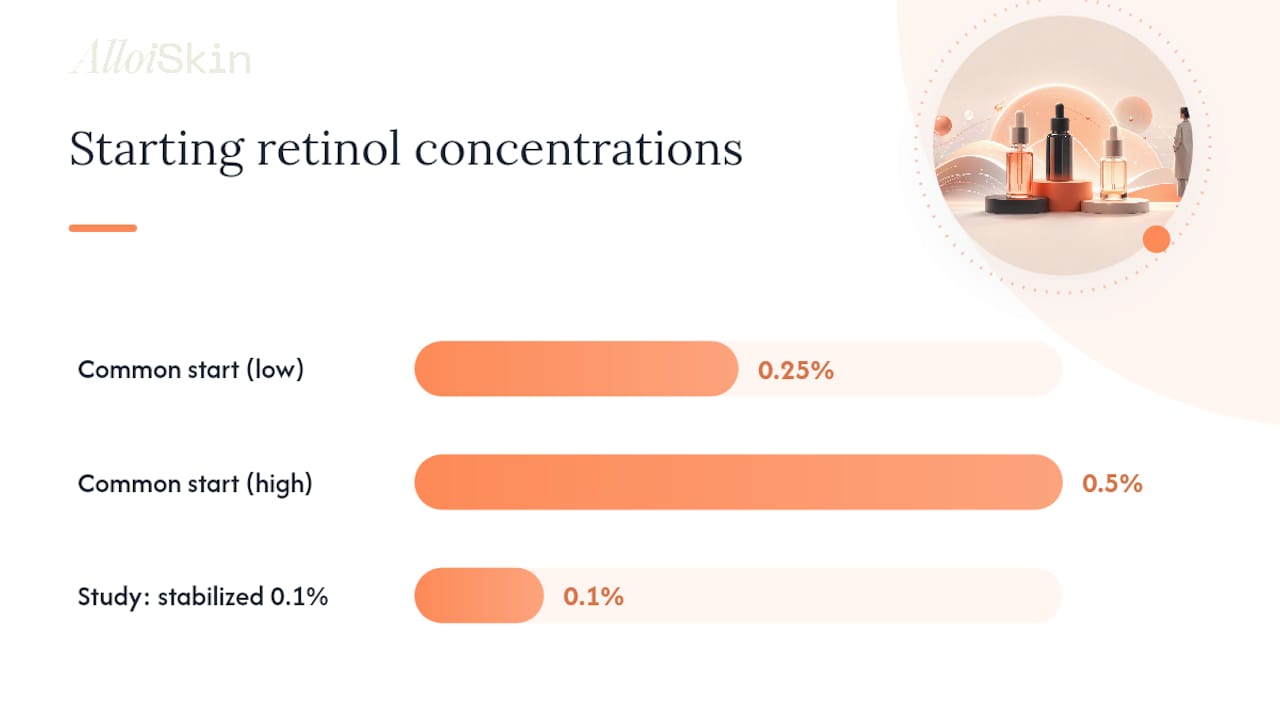
- Most new users begin at 0.25% to 0.5% concentration, two to three nights a week, then build up as tolerance improves.
- Daily broad-spectrum SPF is not optional; retinized skin is measurably more vulnerable to UV damage.
- Some formulations soften this curve. An integrated analysis of 0.1% stabilized bioactive retinol across six studies found measurable photoaging improvements as early as week 4, with tolerability that held up well through 12 weeks.
- If you have rosacea, eczema, or a compromised barrier, talk to a dermatologist before starting rather than guessing at a schedule.
Matrixyl 3000 Versus Retinol: Timelines and Side Effects Compared
Put side by side, the two ingredients solve different problems on different clocks. Here is how they stack up on the factors readers actually care about.
| Factor | Matrixyl 3000 | Retinol |
|---|---|---|
| Visible results | 4 to 8 weeks | 12 to 24+ weeks |
| Mechanism depth | Signals fibroblasts (matrikine) | Alters gene expression (RAR/RXR) |
| Best for | Fine lines, early texture concerns | Deep wrinkles, pigmentation, photoaging |
| Photosensitivity | None | Requires daily SPF |
| Irritation risk | Low | Moderate to high during retinization |
| Pregnancy safety | Generally considered safe | Contraindicated |
Matrixyl 3000’s faster comfort window is not just a marketing point. A practitioner-facing trial on 0.4% retinol found measurable change by week 4 but significant, durable results only by week 24. That six-month wait is where a lot of people quit. Peptides give visible payoff sooner, which matters if your motivation to stick with a routine depends on seeing something change.
Retinol still wins on depth. Nothing in the peptide category currently matches its independently verified record for reversing photoaging and evening out pigmentation at the dermal level.
A quick way to decide which one to prioritize:
- Want comfort and speed? Start with Matrixyl 3000.
- Want deep remodeling and pigment correction? Retinol is the stronger long-term tool.
- Pregnant or breastfeeding? Retinol is off the table; peptides are your active ingredient.
- New to actives entirely? Peptides first, retinol introduced slowly once your barrier is stable.
- Already retinol-tolerant? Layer peptides in for support rather than replacement.
Which Skin Profile Fits Which Ingredient?
Matching the ingredient to your actual skin condition, not just your goal, saves months of trial and error.
- Sensitive skin, rosacea, or eczema. Start with Matrixyl 3000 alone for 4 to 6 weeks before introducing anything else. Retinol on a compromised barrier tends to backfire.
- Pigment concerns (melasma, sun spots, uneven tone). Retinol has the stronger independent evidence here. Introduce it slowly, two nights a week, building to nightly over 8 to 10 weeks.
- Deeper wrinkles and loss of firmness. Retinol’s gene-level remodeling reaches further than peptide signalling. Pair it with a peptide serum in the morning for barrier support.
- First-time retinol users. Run a peptide AM / retinol PM split. The Matrixyl 3000 helps offset the dryness that shows up during the first few weeks of retinization.
- Pregnant or planning pregnancy. Peptides only. Stop retinoids immediately and check with an OB-GYN before restarting any active ingredient postpartum.
Pro Tip: If retinol irritation flares up, don’t stop treatment entirely. Drop to alternate nights and let Matrixyl 3000 carry the routine on off nights until your skin recalibrates.
If irritation persists past four weeks despite a slower schedule, or you notice cystic breakouts, that is the point to escalate to a dermatologist rather than pushing through with over-the-counter products.
Can You Use Matrixyl 3000 and Retinol Together?
Yes, and this is where most readers get the most value from both ingredients at once. Peptides do not interfere with retinol’s conversion to retinoic acid, so there is no chemical conflict working against you.
A workable pattern most people can sustain:
- Morning: Matrixyl 3000 serum, followed by SPF 30 or higher.
- Evening: Retinol, applied to fully dry skin.
- If layering both at night: wait 1 to 2 minutes between the peptide serum and retinol so each has time to absorb.
- During retinol ramp-up: alternate nights, peptide only on off nights.
Copper peptides, if your serum includes them, follow the same layering logic as Matrixyl 3000. Alloi Skin’s guide on layering copper peptides with retinol walks through sequencing in more detail if your routine includes both.
Pro Tip: Never introduce a new retinol strength and a new peptide product in the same week. If your skin reacts, you won’t know which ingredient caused it.
One safety note that applies across the board: if you are pregnant, planning pregnancy, or breastfeeding, retinoids are off-limits regardless of concentration or formulation, and peptides become your primary active. Anyone managing an inflammatory skin condition should get a dermatologist’s input before combining actives at all.
How Alloi Skin Approaches Peptide Formulation
Alloi Skin builds around a simple rule: fewer ingredients, dosed at the concentrations actually used in the studies behind them. That is the opposite of the stacked-serum approach where a dozen peptides appear on a label at fractional, unverifiable amounts.
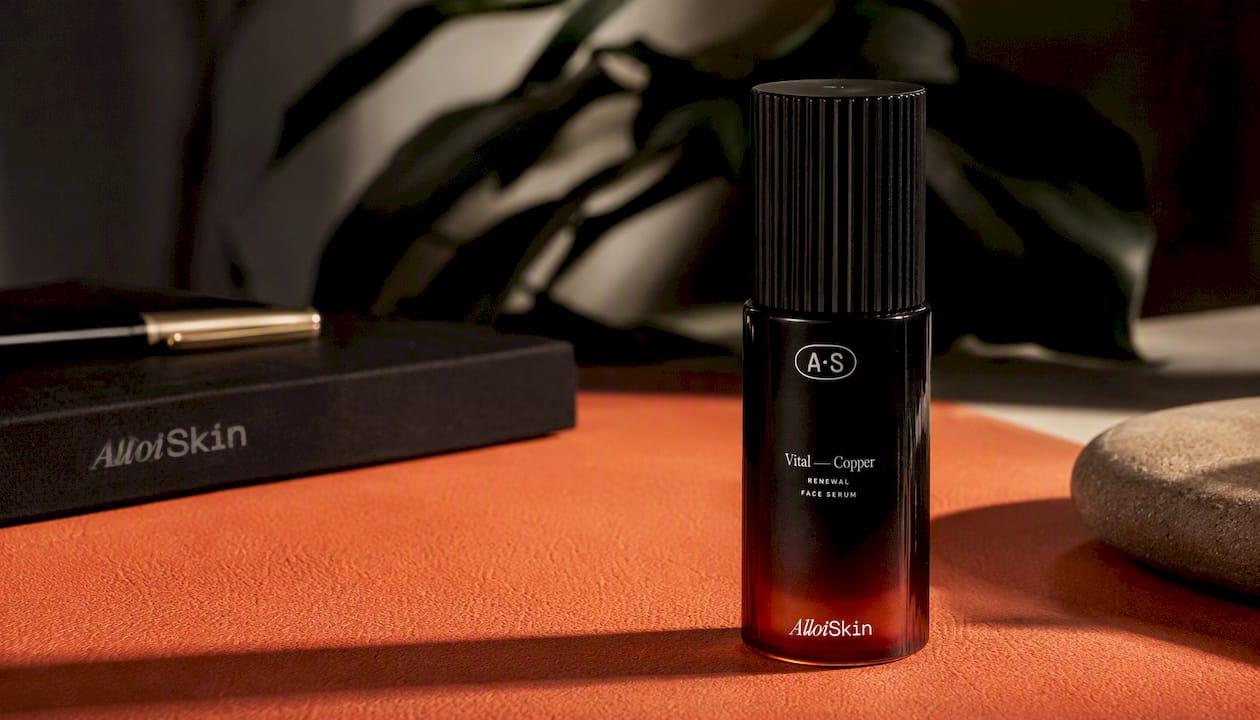
The VitalCopper Renewal Face Serum reflects that principle directly. It pairs Matrixyl 3000 with copper tripeptide-1 (GHK-Cu), another well-studied peptide for structural repair, alongside panthenol, betaine, and hyaluronic acid to support the skin barrier while the actives work.
Who it tends to serve best:
- Readers who want a peptide-forward option without navigating retinol’s retinization period.
- Anyone pairing peptides with retinol on alternating nights or in an AM/PM split.
- People rebuilding barrier function after over-exfoliating or overusing actives.
For readers who want the mechanism behind copper peptides specifically, Alloi Skin’s page on how copper peptides support collagen synthesis and the broader formulation philosophy both go deeper than this article’s scope allows.
Sustainable Routines Beat Theoretical Maximums
The ingredient with the best clinical data on paper is not always the ingredient that gets used consistently, and consistency is what actually drives results. Retinol’s 24-week trial numbers are real, but they assume someone stuck with it through months of dryness and flaking. Plenty of people don’t.
That is the case for treating Matrixyl 3000 as a legitimate starting point, not a consolation prize. It gets people into a routine, keeps their skin comfortable, and buys time to introduce retinol properly if deeper remodeling becomes the goal later. Skip the SPF, though, and none of this matters, since unprotected retinized skin loses ground faster than either ingredient can rebuild it.
If you are pregnant, breastfeeding, or managing a reactive skin condition, the safest active is the one your doctor has actually cleared. Everything else is a routine you can adjust once that conversation happens.
— Alloi Skin
A Peptide-First Option Worth Considering
If retinol’s adjustment period has kept you from starting, or you simply want a serum that does its job without asking you to tolerate irritation first, the VitalCopper Renewal Face Serum is built around exactly that gap. It combines Matrixyl 3000 with copper tripeptide-1, hyaluronic acid, panthenol, and betaine, each included at the concentration studied for effect rather than a token amount for the label.
Use it in the morning under SPF, and it pairs cleanly with a nighttime retinol routine if you decide to add one later. There is no guessing about what is doing the work, because the formulation only includes ingredients dosed to matter. If you want to see the full ingredient rationale and how the formula holds up against the market’s habit of diluted, overcrowded serums, the VitalCopper product page lays out the specifics, and Alloi Skin’s method page explains the formulation reasoning behind it.
Studies and Resources Behind This Comparison
The clinical claims in this article draw from a peer-reviewed review of cosmetic retinoids, a JAMA Dermatology randomized trial on topical retinol, and industry-reported clinical data on Matrixyl 3000. For ingredient-level detail, see Alloi Skin’s Matrixyl 3000 overview and its peptides versus retinol sequencing guide.
Sources
- Cosmetic retinoid use in photoaged skin: A review of the compounds, their use and mechanisms of action
- Improvement of Naturally Aged Skin With Vitamin A (Retinol)
- Matrixyl™ 3000 | Cosmetic Ingredients Guide
FAQ
Is There Anything That Works Faster Than Retinol?
Matrixyl 3000 typically shows visible improvement in 4 to 8 weeks, well ahead of retinol’s usual 12 to 24 week timeline, though it works through a different, less deep mechanism than retinol’s gene-level remodeling.
What Should You Avoid Mixing with Matrixyl 3000?
Matrixyl 3000 has no known conflict with retinol and layers safely with most actives, though strong acid exfoliants used at the same time as any peptide can reduce its stability, so separating them by AM/PM application is the safer approach.
What Do People Use Instead of Retinol for Gentler Results?
Peptide complexes like Matrixyl 3000 are a common substitute for people who want visible smoothing without photosensitivity or a retinization period, which is part of why Alloi Skin built VitalCopper around peptide actives rather than a retinoid base.
Should You Apply Matrixyl 3000 or Retinol First?
If using both in the same routine, apply Matrixyl 3000 in the morning under SPF and retinol at night, or if layering both at night, apply the peptide serum first and wait 1 to 2 minutes before applying retinol.
Is Matrixyl 3000 Effective on Its Own?
Yes. Industry-linked clinical reports show measurable wrinkle-area reduction and collagen increases from Matrixyl 3000 alone, making it a reasonable standalone choice for fine lines and early texture concerns even without retinol in the routine.


