


You can slow glycation-driven skin aging by pairing targeted topicals with daily sun protection and a lower sugar intake. Anti-glycation skincare works by shielding collagen and elastin from new advanced glycation end product formation, not by erasing damage that has already set in. Start with an antioxidant or peptide serum like the Medicube collagen glow booster serum, broad-spectrum SPF every morning, and fewer added sugars at meals. Give it three to four months before judging results, and treat a formulation like Alloi Skin’s VitalCopper Renewal Face Serum as one evidence-aligned option worth considering.
TL;DR:
- Topicals target the prevention of new AGE formation by trapping reactive compounds and supporting collagen, not by reversing existing cross-links.
- Using serums with copper peptides and antioxidants daily for three to six months can improve skin firmness and elasticity.
- Dietary changes like reducing added sugars and favoring polyphenol-rich foods help slow systemic glycation that contributes to skin aging.
- Combining broad-spectrum SPF with targeted skin serums enhances protection against UV and metabolic stress-related glycation.
- Consistent, minimal routine focusing on evidence-backed actives optimizes anti-glycation results over time.
Table of Contents
- What Is Skin Glycation, and Why Do AGEs Matter?
- How Glycation Damages Collagen and Elastin
- Topical Anti-Glycation Strategies: Ingredients and How to Use Them
- Diet, Lifestyle, and Prevention: The Systemic Side of Anti-Glycation Care
- How Alloi Skin’s Approach Maps to Anti-Glycation Care
- Are There Side Effects or Contraindications With Anti-Glycation Ingredients?
- What Product Types Deliver the Best Anti-Glycation Results?
- How Often Should You Use Anti-Glycation Skincare for Results?
- A Practical Timeline and Measurement Perspective
- A Simple Anti-Glycation Routine That Actually Fits Together
- Sources
- FAQ
What Is Skin Glycation, and Why Do AGEs Matter?
Glycation is a chemical reaction, not an enzyme-driven one. Sugar molecules circulating in the blood or sitting on the skin’s surface attach directly to proteins like collagen and elastin, forming compounds called advanced glycation end products, or AGEs. The reaction happens slowly, but it does not reverse on its own. Once collagen fibers cross-link through AGEs, they stiffen, lose flexibility, and stop responding normally to repair signals.
That is why the systematic review on AGEs treats glycation as a cumulative, largely irreversible process, and why prevention outperforms any attempt at reversal.
The visible signs show up gradually:
- Skin that looks yellowish or dull rather than translucent
- Deeper, more static wrinkles that don’t smooth out with hydration
- Loss of bounce and elasticity, especially along the cheeks and jawline
- Slower healing after sun exposure or minor irritation
UV exposure and metabolic stress, including chronically elevated blood sugar, both speed up AGE accumulation. That combination is part of why people who spend heavy time outdoors without SPF, or who eat a high sugar diet, tend to show these signs earlier than their age would predict.
How Glycation Damages Collagen and Elastin
Once AGEs cross-link collagen fibers, the fibers become rigid and resistant to the enzymes that normally break down and rebuild damaged tissue. That process, called reduced repairability, means skin loses its usual turnover rhythm. Instead of cycling out worn collagen for new fibers, the skin holds onto stiffened, cross-linked protein for years.
AGEs also bind to a receptor called RAGE on skin cells, and that binding triggers low-grade inflammation. Chronic RAGE signaling activates enzymes that break down the extracellular matrix, the scaffolding that keeps skin firm. So glycation does double damage: it stiffens existing collagen through cross-linking, and it accelerates the breakdown of surrounding tissue through inflammatory signaling.
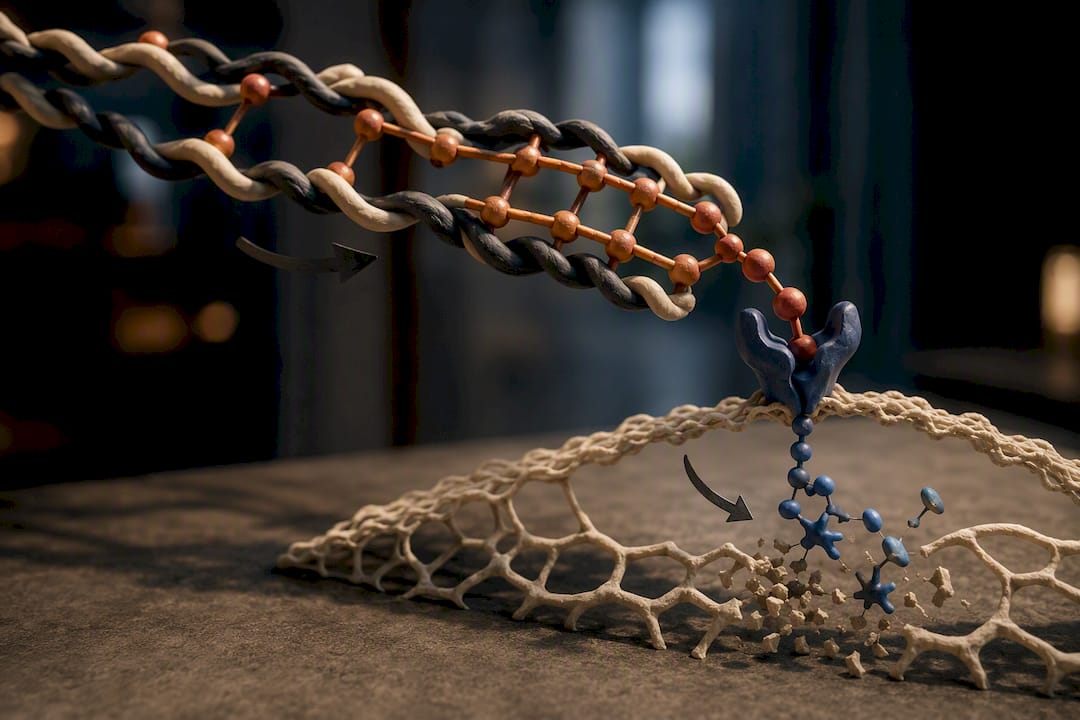
Human and ex vivo tissue studies back this up. Research compiled in the Wiley review on AGEs and skin shows that skin samples with higher AGE content consistently display reduced elasticity and altered collagen structure compared to lower AGE samples, even when age is held constant. Glycation, in other words, can add years to how skin behaves independent of chronological age.
Topical Anti-Glycation Strategies: Ingredients and How to Use Them
Not every anti-aging ingredient targets glycation specifically. The ones that do generally work through one of three mechanisms: trapping the reactive compounds that form AGEs, neutralizing the oxidative stress that accelerates them, or supporting the collagen structure that glycation degrades.
- Carnosine. This dipeptide acts as a carbonyl trap, intercepting reactive sugar byproducts before they bind to collagen. It’s one of the few ingredients built specifically around glycation chemistry rather than general antioxidant support.
- Antioxidants (vitamin C, EGCG, resveratrol). These reduce the oxidative stress that speeds glycation reactions. Polyphenols like resveratrol and EGCG show measurable AGE inhibition in the lab, according to research on natural anti-glycation strategies.
- Copper tripeptides (GHK-Cu). These support extracellular matrix repair, helping tissue stay resilient even under glycation-related stress. Alloi Skin’s guide to how copper peptides support collagen synthesis covers the mechanism in more depth.
- Matrixyl (palmitoyl tripeptide). This signal peptide encourages collagen production, offsetting some of the structural loss that glycation causes over time.
- Barrier hydrators (hyaluronic acid, ceramides, panthenol). These don’t touch glycation chemistry directly, but a compromised barrier makes skin more reactive to everything else you apply, so they anchor the routine.
Layer from thinnest to thickest: antioxidant or peptide serum first, moisturizer second, sunscreen last in the morning. If you’re combining copper peptides with vitamin C, spacing them into separate parts of your routine avoids destabilizing either ingredient. Alloi Skin’s guide to pairing copper peptides and vitamin C walks through the timing.
Pro Tip: Topicals mostly act as shields against new AGE formation on the skin’s surface. They don’t dissolve deep dermal cross-links that already exist, so pairing them with the systemic changes below matters more than picking the “strongest” serum on the shelf.
Diet, Lifestyle, and Prevention: The Systemic Side of Anti-Glycation Care
Topical care handles the surface. Diet handles what’s happening underneath, and the two amplify each other. High glycemic load meals spike blood sugar, giving more free sugar molecules the chance to bind proteins throughout the body, skin included. Foods cooked at high, dry heat, think grilled, fried, or browned items, also contain preformed AGEs that get absorbed directly.
Animal studies make the diet connection concrete. A high-sugar diet study published in the Journal of Cosmetic Dermatology found that elevated sugar intake produced measurable dermal thinning and lower collagen I levels, alongside visible skin aging changes. The mechanism isn’t theoretical; it shows up in tissue.
Practical changes that move the needle:
- Cut back on added sugars in drinks and packaged snacks, the easiest lever to pull first
- Favor polyphenol-rich foods like berries, green tea, and leafy vegetables
- Choose moist cooking methods (steaming, poaching, braising) over charring or frying when possible
- Keep regular exercise in the mix, since it improves glycemic control independent of diet
- Wear broad-spectrum SPF daily and avoid smoking, both of which independently accelerate AGE buildup
None of these changes work overnight, but they compound. Blood sugar management alone can shift how much new glycation your skin experiences month over month.
How Alloi Skin’s Approach Maps to Anti-Glycation Care
Alloi Skin’s formulation method sticks to a simple rule: include only actives dosed at levels the research actually supports, and skip the filler ingredients that pad a label without doing anything.
That principle fits the anti-glycation model well:
- Copper tripeptide-1 (GHK-Cu) supports the extracellular matrix repair processes that glycation-stressed skin needs
- Matrixyl 3000 adds collagen-signaling support at a studied dose, rather than a token amount
- Panthenol, betaine, and hyaluronic acid protect the skin barrier, which glycation and inflammation both wear down over time
The goal isn’t a ten-step regimen. It’s a smaller number of ingredients doing real, documented work.
Are There Side Effects or Contraindications With Anti-Glycation Ingredients?
Most anti-glycation actives are well tolerated, but a few deserve caution. Carnosine and antioxidant serums rarely cause irritation on their own, though layering multiple acids or high-percentage vitamin C alongside them can increase sensitivity, especially on already compromised skin.
Copper peptides are generally gentle, but they can oxidize or destabilize when mixed directly with certain vitamin C formulations in the same application step. Spacing them into separate routine steps, rather than skipping either, solves most of that friction.
Anyone with active retinoid use, recent chemical peels, or diagnosed skin conditions like rosacea or eczema should introduce new actives one at a time and watch for redness or stinging over the first two weeks. That’s standard practice for any active ingredient, not something specific to anti-glycation formulas.
People managing diabetes or other metabolic conditions that affect blood sugar should treat topical anti-glycation care as a complement to medical management, not a substitute for it. Skin changes tied to elevated blood sugar are a symptom worth discussing with a physician, since topical shields address surface exposure but can’t correct an underlying metabolic driver.
Pregnant or nursing individuals should check with a doctor before adding new active ingredients generally, which applies here as it would to any new serum or treatment.
What Product Types Deliver the Best Anti-Glycation Results?
Serums remain the most efficient delivery format for anti-glycation actives. Their lighter, water-based or lightweight-emulsion textures let ingredients like peptides and antioxidants penetrate the surface layers more readily than a heavier cream would, and they layer cleanly underneath moisturizer without disrupting barrier support.
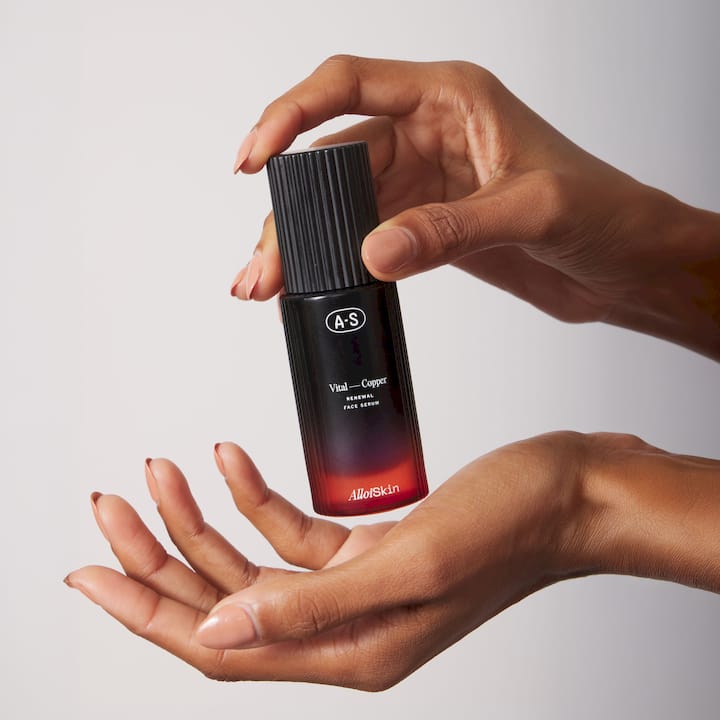
Creams and moisturizers play a supporting role rather than a delivery role for most anti-glycation actives. They matter because a compromised barrier makes skin more reactive to everything else in a routine, but they’re not usually where the highest concentrations of active ingredients live.
Look for formulations that state ingredient concentrations or reference the studied dose behind an active ingredient, rather than simply listing it on the label. A serum with copper tripeptide-1 at a documented percentage does more than one that lists it fifteenth on an ingredient panel at an unspecified trace amount. That distinction, dose versus mere presence, separates formulas that work from formulas that look good on paper.
For most people building a routine from scratch, one well-dosed serum paired with a barrier-supporting moisturizer and daily SPF covers the core anti-glycation bases without adding unnecessary steps.
How Often Should You Use Anti-Glycation Skincare for Results?
Daily, consistent use matters more than any single application. Most anti-glycation serums are formulated for once or twice daily use, morning and night, and skipping days repeatedly slows any measurable change.
Visible results take months, not days. Collagen remodeling and the reduction of oxidative stress that supports it operate on the skin’s natural turnover cycle, which runs roughly four to six weeks per cycle. Most people notice early texture and tone changes around the eight to twelve week mark, with more meaningful improvements in firmness and evenness building over three to six months of steady use. Alloi Skin’s guide to a minimal copper peptide routine outlines what that timeline typically looks like week by week.
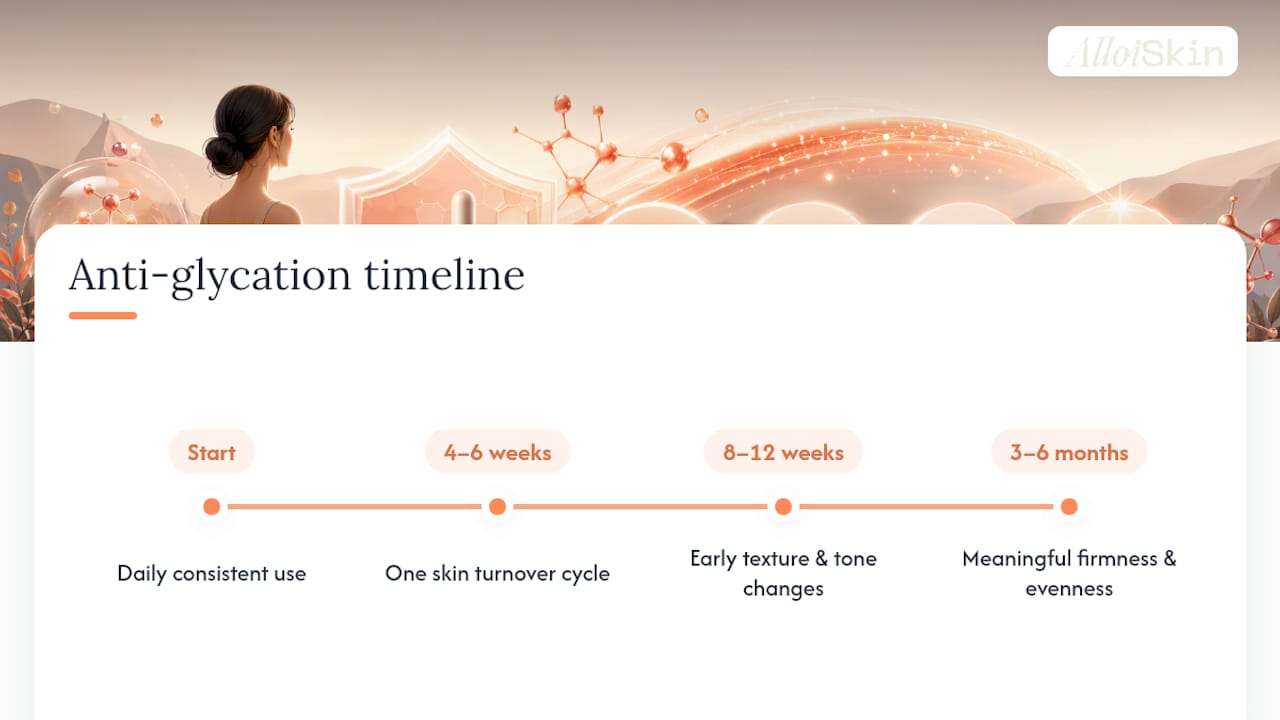
Stopping and restarting a routine repeatedly resets much of that progress. Anti-glycation care works best as a maintained habit, not a short-term fix you cycle in and out.
A Practical Timeline and Measurement Perspective
Expect months, not weeks, before you see meaningful change, and treat that as normal rather than discouraging. Researchers measure cumulative AGE levels using skin autofluorescence, a tool built for labs, not medicine cabinets, which underscores how gradual this process really is. If you notice sudden skin changes, or you manage a metabolic condition like diabetes, loop in a physician. Topical care supports the process; it doesn’t replace medical guidance.
— Alloi Skin
A Simple Anti-Glycation Routine That Actually Fits Together
Mornings: cleanse, apply an antioxidant or peptide serum, moisturize, then finish with broad-spectrum SPF, always last in the sequence. Evenings: cleanse, apply your peptide serum again, then seal with a barrier-supporting moisturizer. That’s the whole structure. No ten-step routine, no guessing which of fifteen ingredients is doing the work.
VitalCopper Renewal Face Serum slots into either step, morning or night, right after cleansing and before moisturizer. It pairs copper tripeptide-1 (GHK-Cu) with Matrixyl 3000 at the doses studied in the research behind each peptide, alongside panthenol, betaine, and hyaluronic acid to support the barrier while those peptides do their work. That combination targets the two things anti-glycation skin needs most: collagen support and a resilient barrier, without a long list of underdosed extras.
If you want the formulation logic behind that pairing before you buy, Alloi Skin’s copper tripeptide-1 ingredient page breaks down what the evidence actually supports. Ready to build the routine above? The VitalCopper Renewal Face Serum is available as a single purchase or on subscription for ongoing use.
Sources
- Advanced glycation end products: A systematic review
- The effects of advanced glycation end-products on skin and potential anti-glycation strategies
FAQ
Can You Reverse Glycation in the Skin?
Not fully. AGE cross-links in collagen are largely irreversible once formed, so anti-glycation skincare focuses on preventing new damage rather than undoing existing cross-links, according to the systematic review on AGEs.
How Do You Treat Skin Glycation?
Combine antioxidant or peptide-based topicals, like copper tripeptide-1 or carnosine, with daily broad-spectrum SPF and reduced dietary sugar. Consistency over three to six months produces the most noticeable improvement in firmness and tone.
What Does Glycation Look Like on Skin?
Glycated skin often looks dull or slightly yellow, with deeper static wrinkles and reduced elasticity compared to sun damage or dehydration alone. It tends to feel stiffer and bounce back more slowly when pinched or stretched.
How Do You Stop Glycation Naturally?
Lower added sugar intake, favor polyphenol-rich foods like berries and green tea, choose moist cooking methods over charring, and stay consistent with sun protection. These steps address the dietary and UV drivers that accelerate new AGE formation.


