


Copper peptides can produce modest, measurable skin improvements, but only with consistent use over weeks to months, never in days. Early hydration and surface smoothness show up first. Structural changes, like firmer texture and reduced fine lines, take longer because they depend on collagen remodeling rather than surface effects. Judge your results at the 8 to 12 week mark, not the 8 to 12 day mark.
TL;DR:
- Visible improvements in skin firmness and fine-line reduction typically take 8 to 12 weeks, not days or weeks, with early hydration occurring within the first two weeks.
- Effect sizes usually range from 15% to 30%, with some studies seeing about 70% of participants showing increased collagen, though these results are modest compared to other anti-aging treatments.
- Consistent application, proper formulation, and avoiding incompatible ingredients like acids are crucial to achieving and maintaining results over the recommended trial period.
- Topical copper peptides are supported by clinical evidence for skin aging, but injectable or oral forms lack robust data and are not recommended as effective alternatives.
- Copper peptides work by activating fibroblasts to increase collagen and elastin synthesis, calm inflammation, and support tissue repair, with results visible only after sustained use.
Table of Contents
- Copper Peptides Results Timeline: What Happens Week By Week
- What Do Clinical Studies Say About Copper Peptides Effectiveness?
- How Do Copper Peptides Work on Skin?
- Who Should Use Copper Peptides, and Is It Safe?
- How to Use Copper Peptides for Best Results
- How Alloi Skin’s VitalCopper Serum Addresses These Gaps
- Our Take on Setting Realistic Copper Peptide Expectations
- Start Your VitalCopper Routine Today
- Sources
- FAQ
Copper Peptides Results Timeline: What Happens Week By Week
Skin doesn’t rebuild collagen on the same schedule it hydrates, and that mismatch is where most people get their expectations wrong. Understanding the timeline matters more than almost anything else when you’re trying to judge whether a copper peptide serum is actually working for you.
Here’s the honest breakdown of what tends to happen, and when:
- Weeks 1 to 2: You’ll likely notice smoother, plumper skin and less transient redness. This early win comes mostly from the humectants and soothing agents (think hyaluronic acid, panthenol, betaine) that are typically formulated alongside copper tripeptide-1, not from the peptide reshaping your collagen matrix yet.
- Weeks 4 to 8: Some users start to see early improvements in texture and tone. Skin that “responds” tends to trend toward firmer, and pigment irregularities may look softer around the edges. This is the window where fibroblast signaling starts to translate into visible change, though not everyone will notice it yet.
- Weeks 8 to 12 and beyond: This is where the clinical data actually lives. Trials running 12 weeks report measurable gains in elasticity and reductions in fine lines, with effect sizes commonly falling in the 15 to 30% improvement range.
That range is worth sitting with for a second. A 15 to 30% improvement in fine lines or elasticity over three months is real and clinically documented, but it is not a dramatic before-and-after. It’s the kind of change a dermatologist measuring with calibrated instruments would flag, and the kind a close friend might notice before you do yourself.
Statistic Callout: One smaller trial found that roughly 70% of participants showed increased collagen production after topical GHK-Cu use, a figure worth knowing but also worth contextualizing. It comes from a single study, not a pooled analysis across dozens of trials, and it says nothing about how visible that collagen increase was to the naked eye.
Several variables shift these timelines in either direction:
- Formulation and concentration. A serum with copper tripeptide-1 at studied doses behaves differently than one where it’s listed on the label but present in a trace amount.
- Adherence. Skipping days resets the signaling clock more than most people realize, since the benefit depends on cumulative exposure.
- Baseline skin condition. Already-compromised barriers or heavily sun-damaged skin sometimes show earlier visible change simply because there’s more room for repair.
- Concurrent actives or procedures. Retinoids, chemical peels, or in-office treatments can accelerate or mask what you’re seeing from the peptide alone.
What Do Clinical Studies Say About Copper Peptides Effectiveness?
The human evidence for copper peptides is real, but it’s narrower and more concentrated than the marketing around it suggests. Most of what dermatology researchers have to work with comes from a cluster of trials running 8 to 12 weeks, testing topical GHK-Cu formulations against baseline or, in some older studies, against tretinoin.
The core findings are consistent enough to take seriously:
- Twelve-week topical trials report measurable improvements in fine lines, skin laxity, and hyperpigmentation, with effect sizes commonly in the 15 to 30% range.
- Separate research on copper’s role in tissue repair and wound healing shows improved elasticity and measurable wrinkle reduction, including in double-blind trials using copper-infused textiles over 4 to 8 weeks of nightly contact.
- Early split-face studies comparing copper peptides to tretinoin reported collagen production increases, but the samples were small and independent replication has been limited.
Statistic Callout: That 15 to 30% figure deserves one more layer of scrutiny. It’s a real, published range, but a systematic review of peptides for skin aging found that pooled benefits across the category are modest overall, and topical formulations tend to show smaller effect sizes than some other delivery methods. Translation: copper peptides work, but they’re a steady, unglamorous performer rather than a headline-grabbing outlier.
The limitations matter as much as the results. Sample sizes in most copper peptide trials are small, often in the dozens rather than the hundreds. A meaningful share of the topical research has some connection to product manufacturers, which is not disqualifying but does mean independent replication is thinner than you’d want for a fully settled question. Dermatology commentary has noted this gap directly, describing topical copper peptide evidence as promising but smaller in scale and often industry-linked compared to the evidence base behind retinoids or sunscreen.
One distinction that gets lost in casual conversation: this evidence applies to topical application. There is no robust randomized controlled trial support for injectable or oral copper peptide use for cosmetic anti-aging, and that gap in the data is exactly why dermatologists tend to recommend the well-studied topical route over off-label injectable versions. If you’re weighing procedural options against a topical serum, a resource like NexGen Clinic’s injectables coverage is a useful place to understand what clinician-administered treatments actually involve, and how they differ from what a serum can realistically do.
How Do Copper Peptides Work on Skin?
GHK-Cu, the copper tripeptide behind most of this research, works because copper is a signaling cofactor your skin already relies on for repair. The peptide chain (glycine, histidine, lysine) binds copper ions and delivers them directly to skin cells in a stable, bioavailable form.
Here’s the mechanism in plain terms:
- Fibroblast activation. Once delivered, the copper complex signals fibroblasts, the cells responsible for building your skin’s structural scaffolding, to ramp up production.
- Collagen and elastin synthesis. That signaling upregulates the matrix proteins that give skin its firmness and bounce, along with glycosaminoglycans like hyaluronic acid that help skin retain water and stay plump.
- Anti-inflammatory and antioxidant activity. Copper peptides also appear to calm inflammatory signaling and support the skin’s own antioxidant defenses, which is part of why they’re often positioned as a gentler option than acids or retinoids.
- Wound-healing origins. Much of the strongest mechanistic evidence comes from tissue repair research, where copper complexes show clear upregulation of angiogenic and matrix remodeling genes and measurable improvements in healing speed and tissue organization.
That wound-healing data is worth pausing on, because it’s the deepest mechanistic evidence available. It explains why copper peptides show up in post-procedure skincare and scar support, and it lends real biological credibility to the cosmetic anti-aging claims, since repair and anti-aging pathways overlap substantially. You can find more detail on how this translates to collagen synthesis specifically if you want the deeper mechanism.
The open question is delivery. Copper peptides need to reach living skin cells to do anything, and formulation, pH, particle stability, and what else is in the bottle all determine how much of that signaling potential actually gets used. This is where a lot of otherwise well-designed products fall short.
Who Should Use Copper Peptides, and Is It Safe?
Copper peptides tend to fit best for a specific set of skin concerns rather than as a universal fix. If you’re dealing with visible photoaging, a compromised or reactive barrier, post-procedure recovery, or inflammatory skin that can’t tolerate retinoids, copper peptides are one of the more evidence-supported gentler options available.
A few things worth knowing before you start:
- Tolerability is generally good. Most people experience no irritation at all, and rare reactions tend to be mild redness or sensitivity rather than anything severe.
- Systemic toxicity is not a topical concern. The safety questions that exist around copper peptides relate almost entirely to improper injectable use or unregulated oral supplements, not to a well-formulated face serum.
- Formulation instability is the real risk. Copper peptides can degrade or become less effective when mixed with low-pH vitamin C formats or strong exfoliating acids in the same application step, a point dermatology reviews and formulation guides both flag consistently.
- Retinoid layering needs a plan. Alternating copper peptides and retinoids, rather than applying both at once, tends to reduce the odds of one canceling out or irritating the other.
Pro Tip: If you’re combining a copper peptide serum with a retinoid routine, don’t guess at the schedule. A layering guide built specifically for this pairing will save you weeks of trial and error.
If you experience a genuine adverse reaction, or if you’re considering an injectable peptide product marketed for anti-aging, that’s the moment to talk to a dermatologist rather than troubleshoot on your own. Injectable peptide stacks have outpaced the human safety and efficacy data that would normally justify their marketing claims, which is exactly why the topical route remains the better-supported choice for most people.
How to Use Copper Peptides for Best Results
The routine matters almost as much as the ingredient. Copper peptides reward consistency because the benefit accumulates through repeated signaling, not through one intense application.
- Apply daily, ideally once per day, and commit to a minimum 8 to 12 week trial before deciding whether it’s working for your skin.
- Choose your layering slot deliberately. Many people do well applying copper peptides in the evening, separate from morning vitamin C, though a straightforward once-daily routine works too if you’re not using multiple actives.
- Alternate with retinoids rather than stacking them. Using copper peptides one night and a retinoid the next tends to reduce the odds of irritation or reduced efficacy from either ingredient.
- Check the label for copper tripeptide-1 listed at a meaningful position in the ingredient list, alongside supporting humectants like hyaluronic acid or panthenol, and confirm the formula doesn’t pair the peptide with high concentrations of destabilizing acids in the same step.
- Patch test first, and store the serum away from heat and direct light, since copper complexes can be sensitive to degradation over time.
Pro Tip: Set a calendar reminder for week 8. That’s when most people either see enough change to keep going or realize they need to reassess the formulation, and a structured 12-week starter routine makes that checkpoint easier to track.
Formulation philosophy matters here too. A serum built around fewer, properly dosed actives tends to produce more predictable results than one juggling a dozen ingredients at token concentrations, a principle behind Alloi Skin’s approach to formulation.
How Alloi Skin’s VitalCopper Serum Addresses These Gaps
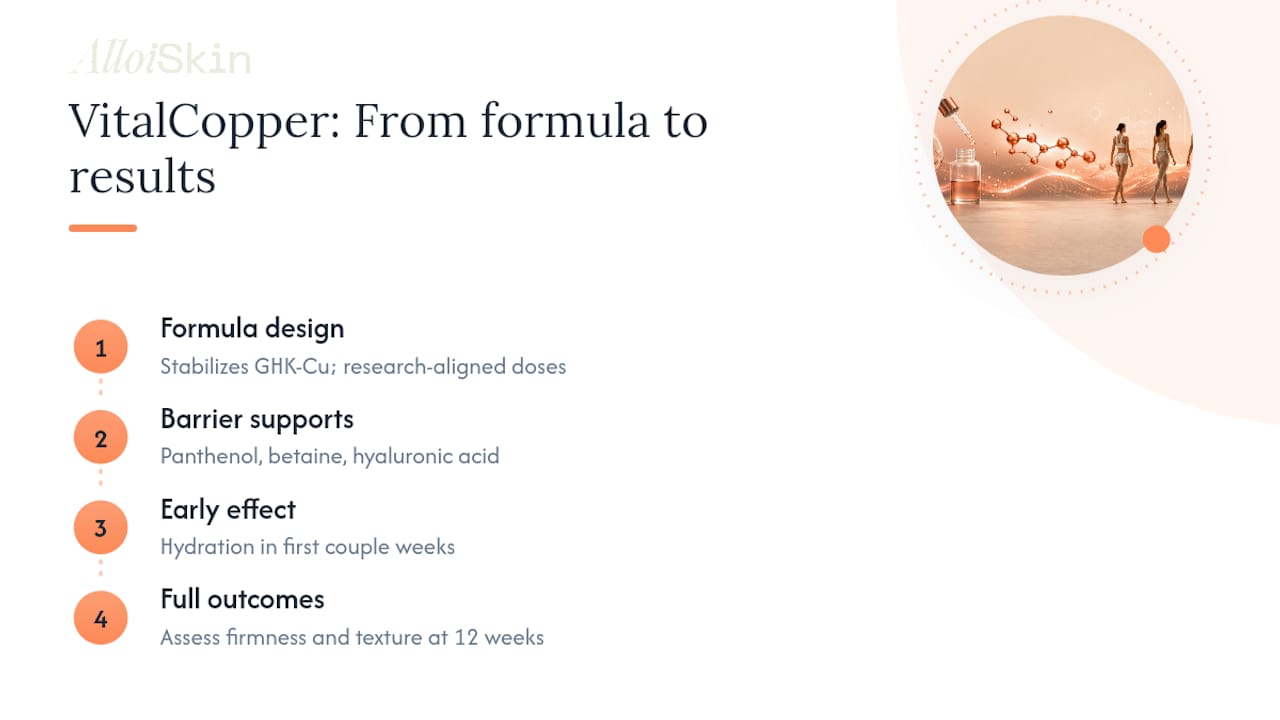
The VitalCopper Renewal Face Serum was built around the exact formulation problems that limit copper peptide effectiveness elsewhere: instability, poor tolerance, and underdosed actives. The formula pairs copper tripeptide-1 (GHK-Cu) with Matrixyl 3000, a peptide combination studied for its role in stimulating collagen and elastin production, at concentrations aligned with the doses used in published research rather than trace amounts meant to satisfy a label claim.
Supporting the peptide complex is a small, purposeful list of barrier ingredients: panthenol and betaine to calm and protect, and hyaluronic acid to handle the hydration and plumping that shows up earliest in most users’ experience. That combination exists specifically to avoid the pH and acid conflicts that degrade copper peptides in less careful formulations.
Alloi Skin’s guidance for new users follows the same evidence-based timeline covered throughout this article: expect early hydration in the first couple of weeks, and reserve judgment on firmness and texture until the full 12-week mark, consistent with the trial windows used in the clinical research itself.
Our Take on Setting Realistic Copper Peptide Expectations
Here’s where we differ from a lot of the enthusiasm around copper peptides: we think the ingredient is genuinely useful, but only when it’s positioned correctly. Sunscreen and a well-formulated retinoid still do more heavy lifting for long-term skin aging than any peptide serum on the market. Copper peptides work best as a supporting layer, not a replacement for the fundamentals that already have decades of evidence behind them.
What frustrates us about the copper peptide conversation online is the pressure toward instant judgment. Nobody sees meaningful structural change in ten days, and expecting it sets people up to abandon a genuinely effective ingredient before it’s had time to work. Give it the full 8 to 12 weeks the clinical trials actually used.
If you have specific skin concerns or questions about how copper peptides might fit your routine, product pages and formulation notes on dedicated skincare sites can be a resource.
— Alloi Skin
Start Your VitalCopper Routine Today
The VitalCopper Renewal Face Serum is designed with fewer ingredients, at doses intended to match clinical research, aiming to provide barrier support and hydration alongside peptide signaling that supports longer-term firmness and texture changes.
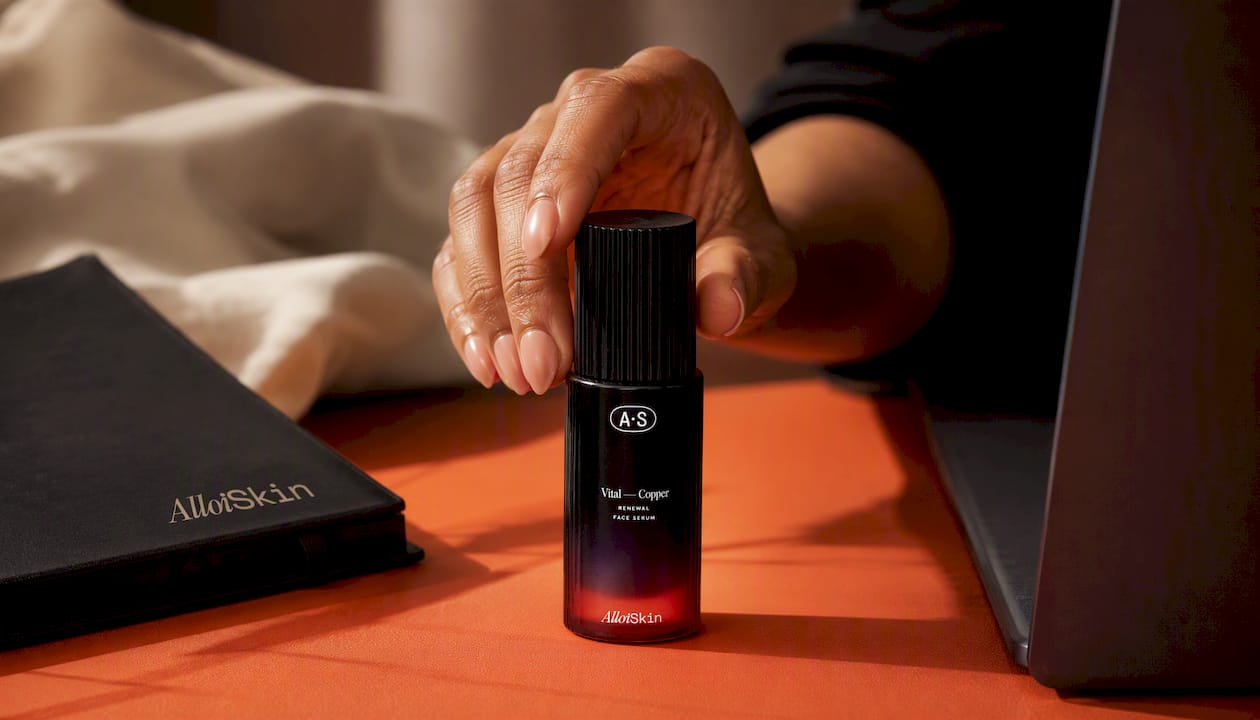
Where a lot of “all-in-one” serums spread a dozen peptides across a formula too thin to matter, VitalCopper keeps the list short and the doses real, so you’re not left guessing which ingredient is actually doing the work. If you’re ready to commit to the 8 to 12 week window the research calls for, start with the VitalCopper Renewal Face Serum and apply it consistently as part of a simplified evening routine. Track your skin at week 4, week 8, and week 12 rather than day 3, and you’ll have a fair read on whether it’s working for you.
Sources
- Copper peptides and skin: clinical trial data and reviews (PMC6073405)
- Should we all be using copper peptides for our skin? (The Cut, 2026)
This article is general information, not a substitute for advice from a qualified doctor. Consult a qualified healthcare professional about your own circumstances before acting on anything here.
FAQ
How Long Does It Take for Copper Peptides to Work?
Hydration and surface smoothness can show up within 1 to 2 weeks, but structural changes like firmness and fine-line reduction typically require the full 8 to 12 weeks used in clinical trials.
Does the Copper Peptide Actually Work?
Yes, topical GHK-Cu has documented, measurable effects on fine lines, elasticity, and hyperpigmentation in 12-week trials, though the improvements are modest rather than dramatic.
Does Copper Make You Look Younger?
Copper peptides can contribute to a firmer, more even-toned appearance over time by supporting collagen and elastin production, but they work as a gradual signaling agent, not an instant transformation.
What Do Copper Peptides Do to Your Face?
They support fibroblast activity to boost collagen and elastin synthesis, calm inflammation, and help skin retain moisture, which together produce the hydration, texture, and firmness improvements documented in clinical research.


