


Skin texture repair comes down to three things working together: daily broad-spectrum SPF 30+, a topical retinoid introduced gradually, and controlled chemical exfoliation. Barrier support and professional treatments fill in when those three aren’t enough on their own.
Start tonight:
- PM: cleanse, apply retinoid (start twice a week), follow with a ceramide moisturizer
- AM: vitamin C, moisturizer, SPF 30+ (non-negotiable, even indoors)
Surface smoothing shows up in 4 to 8 weeks. Real collagen remodeling takes 12 weeks or more of consistent use.
Key Takeaways
Skin texture repair depends on daily SPF, a gradually introduced retinoid, and controlled chemical exfoliation, with barrier support and professional treatments as needed.
| Point | Details |
|---|---|
| SPF is foundational | Daily broad-spectrum SPF 30+ prevents further collagen loss and protects gains from every other treatment. |
| Retinoids drive real remodeling | Start low, ramp up over 6 to 8 weeks, and expect deeper changes around 12 to 16 weeks. |
| Exfoliate 2 to 3 nights weekly | Rotate AHAs and BHAs rather than stacking them to avoid over-exfoliation. |
| Darker skin tones need gentler protocols | Mandelic and lactic acid, lower peel depths, and diligent SPF reduce PIH risk. |
| Alloi supports the barrier-repair stage | The VitalCopper Renewal Face Serum adds copper peptides as an adjunct alongside SPF and retinoid use, not a replacement for either. |
Table of Contents
- What Causes Uneven Skin Texture in the First Place?
- How Do Chemical Exfoliants Smooth Rough Texture?
- Are Retinoids Really the Most Important Active?
- What Role Does Hydration Play in Texture Repair?
- When Should You Consider Professional Treatments?
- How Do You Build a Safe Skin Texture Repair Routine?
- When Will You See Results, and When Should You See a Dermatologist?
- What Should Darker Skin Tones Watch For?
- Why Does a Minimalist Routine Outperform a Crowded One?
- Do Occlusive Moisturizers Actually Help Barrier Repair?
- How Does Cold Weather Affect Skin Texture?
- How Alloi Approaches Skin Texture Repair
- Frequently Asked Questions
- Sources
What Causes Uneven Skin Texture in the First Place?
Rough or bumpy skin usually traces back to one of five things: buildup of dead skin cells that aren’t shedding properly, active acne or leftover scarring, collagen loss from UV exposure, a damaged skin barrier causing inflammation, or genetics that affect pore size and cell turnover rate.
Ask yourself a few questions before choosing a treatment. Is the texture bumpy (likely congestion or dead cell buildup) or pitted (likely scarring)? Does it feel dry and flaky, or oily and thick? Sun exposure, smoking, poor sleep, and dehydration all accelerate collagen breakdown, and conditions like eczema or rosacea change which actives your skin can tolerate.
- Dead skin cell buildup: dull, rough surface
- Acne and scarring: pitted or textured patches
- Photoaging: crepey, uneven tone with fine bumps
- Barrier damage: reactive, flaky, or tight-feeling skin
Pro Tip: Take a photo in the same lighting each week. Texture changes are gradual, and memory alone will trick you into thinking nothing’s working.
How Do Chemical Exfoliants Smooth Rough Texture?
AHAs and BHAs remain the most impactful over-the-counter intervention for surface-level texture problems. Glycolic acid works fastest but can irritate sensitive skin. Lactic acid does the same job more gently, and mandelic acid is the mildest of the three, good for beginners or reactive skin. Salicylic acid (a BHA) is oil-soluble, so it gets inside pores to clear the congestion and blackheads that AHAs can’t reach.
Start with two to three nights a week, not daily. Watch for stinging that lingers, excess redness, or a tight, shiny look, all signs you’ve overdone it.
- Glycolic acid: fastest results, higher irritation risk
- Lactic acid: gentler, good for dry or sensitive skin
- Salicylic acid: best for oily, congested, acne-prone skin
Pro Tip: Rotate AHAs and BHAs on different nights rather than stacking them together, and pause exfoliation for about a week before any professional peel or laser session.
Are Retinoids Really the Most Important Active?
Yes, and the mechanism explains why. Retinoids speed up cell turnover while pushing skin cells to produce more collagen and break down less of it, which is the combination that actually rebuilds texture rather than just polishing the surface. Meaningful remodeling shows up around the 12 to 16 week mark in most dermatology research, though early smoothing often appears sooner.
| Type | Strength | Best For |
|---|---|---|
| Retinol (OTC) | Mild to moderate | Beginners, sensitive skin |
| Adapalene (OTC) | Moderate | Acne-prone, textured skin |
| Tretinoin (prescription) | Strong | Stubborn texture, deeper collagen work |
- Start with a pea-sized amount, two nights a week
- Buffer with moisturizer if you notice flaking or stinging
- Increase to every other night, then nightly, over 6 to 8 weeks
- Escalate to prescription tretinoin with a dermatologist if OTC options plateau
Retinoids make skin more sun-sensitive. Use them at night only, and never skip SPF the next morning.
What Role Does Hydration Play in Texture Repair?
Hydration isn’t cosmetic filler, it’s functional. A well-hydrated barrier reflects light evenly and feels smoother within days, while a compromised barrier makes every active you apply sting more and work less. Ceramides, hyaluronic acid, and niacinamide visibly reduce roughness faster than any exfoliant alone, and they’re what make retinoids and acids tolerable long-term.
- Morning: vitamin C serum, moisturizer, SPF 30+
- Evening: retinoid, then a ceramide-based moisturizer on top
- Weekly: a hyaluronic acid layer if skin feels tight or dehydrated
Oral collagen peptides show modest gains in elasticity in clinical comparisons against retinol, but topical collagen mostly just sits on the surface as a humectant. If you’re choosing where to spend, a retinoid and SPF still outperform any collagen cream for structural repair.
When Should You Consider Professional Treatments?
Home care handles surface texture well, but deeper scarring, enlarged pores, or significant photoaging often need in-office help.
- Chemical peels (medium-depth): improve dullness, fine lines, and superficial scarring; a few days of peeling, usually 3 to 6 sessions spaced weeks apart
- Microneedling: creates controlled micro-injury to stimulate collagen; good for acne scarring and pore size; minimal downtime, typically 3 to 4 sessions
- Laser resurfacing: addresses deeper structural texture and scarring; downtime varies from days to two weeks depending on intensity
Microneedling and laser resurfacing work well for deeper scarring, but both carry pigmentation risk that needs to be managed carefully in darker skin tones.
- Persistent pitted scarring that doesn’t respond to retinoids after 6 months
- Worsening dark spots after any at-home treatment
- Texture changes paired with new moles or lesions (see a dermatologist immediately)
How Do You Build a Safe Skin Texture Repair Routine?
The order matters as much as the ingredients. Cleanse, apply actives, moisturize, then SPF in the morning. Patch-test any new product on your inner arm for 48 hours before it touches your face.
Oily or acne-prone skin:
- AM: gentle cleanser, niacinamide, SPF
- PM: salicylic acid three nights a week, adapalene the other nights, moisturizer
Dry or sensitive skin:
- AM: hydrating cleanser, vitamin C, moisturizer, SPF
- PM: lactic acid twice a week, retinol twice a week (alternate nights), ceramide moisturizer
Combination skin:
- AM: balanced cleanser, vitamin C, SPF
- PM: BHA on oily zones, retinoid overall, moisturizer everywhere
- Increase frequency only after two weeks without irritation
- Never introduce a new acid and a new retinoid in the same week
- Bring in professional treatments once your home routine is stable, not as a first resort
When Will You See Results, and When Should You See a Dermatologist?
Surface smoothing from exfoliants and retinoids typically appears within 4 to 8 weeks. Deeper collagen remodeling, the kind that actually fills in old scarring, takes 3 to 6 months of consistent use.
- Weeks 1 to 4: possible purging, mild flaking, early glow
- Weeks 4 to 12: visible surface smoothing
- Months 3 to 6: measurable texture and scar improvement
See a dermatologist if you notice worsening dark patches, scarring that deepens, or irritation that doesn’t calm down after a week of scaling back. Some purging and flaking during the first few weeks is normal, not a sign of failure, but persistent inflammation is not something to push through alone.
What Should Darker Skin Tones Watch For?
Darker skin tones carry a higher risk of post-inflammatory hyperpigmentation (PIH), meaning any irritation, however minor, can leave a dark mark that lasts longer than the original texture problem. The safer path is gentler acids, lower peel depths, and professional supervision before anything aggressive.
- Choose mandelic or lactic acid over glycolic acid
- Start retinoids at the lowest strength available and extend the ramp-up period
- Ask for a conservative-depth peel and confirm your provider has experience treating skin of color
- Always test a small patch before committing to a new active or a professional treatment
Pro Tip: Daily SPF isn’t optional for darker skin tones treating texture. UV exposure is one of the biggest triggers for PIH to deepen and persist.
Why Does a Minimalist Routine Outperform a Crowded One?
A handful of high-evidence actives beats ten mediocre ones. Every additional product is another chance for irritation, and irritation is what derails progress.
The priority order that holds up across the research: SPF first, retinoid second, chemical exfoliant third, barrier support wrapped around all of it. Peptides and oral collagen are optional additions, not replacements for that core stack. If progress stalls after 12 weeks of consistency, that’s the signal to consider prescription-strength options, not to add more products.
- SPF 30+ daily, no exceptions
- One retinoid, introduced gradually
- One chemical exfoliant, used 2 to 3 nights a week
- Ceramide moisturizer to hold the barrier together
Consult a dermatologist before starting retinoids if you’re pregnant or have an underlying skin condition like severe eczema or psoriasis.
Do Occlusive Moisturizers Actually Help Barrier Repair?
Occlusive ingredients, think petrolatum, dimethicone, and shea butter, work differently than humectants like hyaluronic acid. Instead of pulling water into skin, they sit on top and physically block water from evaporating out. That distinction matters when you’re using retinoids or acids, both of which temporarily thin the outermost barrier layer and make water loss worse.
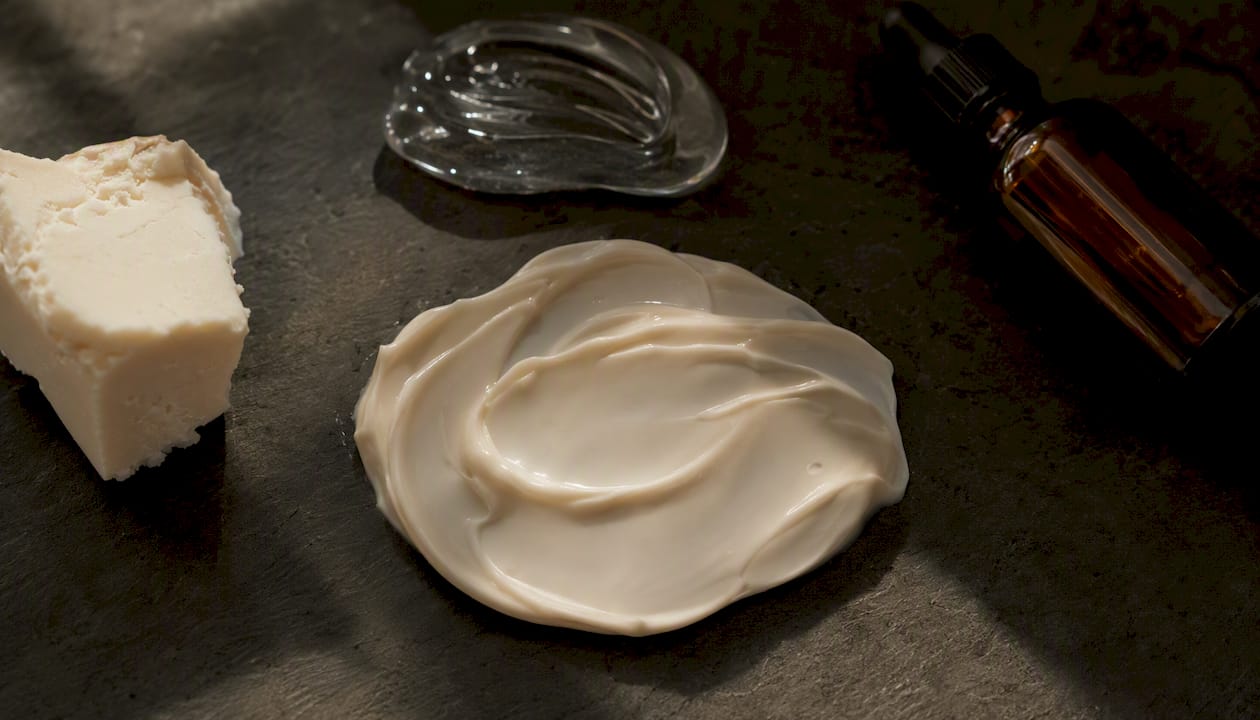
Applying an occlusive on top of a hydrating layer traps moisture where skin can actually use it. This is especially useful right after introducing a new retinoid, when flaking and tightness are common. A thin layer of an occlusive-rich moisturizer at night gives the barrier time to rebuild while the retinoid does its work underneath.
Ceramides deserve separate mention here. They’re not occlusive in the traditional sense, but they replace lipids that acids and retinoids strip away, which is why most barrier-repair formulas combine ceramides with an occlusive agent rather than relying on one or the other. Ingredients like phytoceramides target this exact gap, replenishing what active ingredients temporarily deplete.
Skip heavy occlusives in the morning if you’re oily or acne-prone. They can trap sebum and worsen congestion. Save the thicker layer for nighttime, when your only goal is repair, not makeup wear or oil control.
How Does Cold Weather Affect Skin Texture?
Cold air holds less moisture than warm air, and indoor heating strips even more of it out, which is why texture problems often get worse in winter regardless of your routine. Skin that looked smooth in August can turn flaky and rough by January, even without changing a single product.
The barrier responds to cold the same way it responds to over-exfoliation: increased water loss, more visible flaking, and heightened sensitivity to actives that felt fine a month earlier. This is the season to scale back retinoid frequency slightly and lean harder on occlusive moisturizers and ceramides.
Wind exposure compounds the problem, physically abrading the outer skin layer, while low humidity accelerates transepidermal water loss. Indoor heating dries the air further, and hot showers, however tempting in winter, strip natural oils and leave skin more reactive.
- Reduce retinoid nights from daily to every other night if flaking increases
- Add a humidifier to bedrooms and main living spaces
- Swap a lightweight gel moisturizer for a richer cream with ceramides
- Keep SPF daily. UV damage doesn’t pause for cold weather, and cloud cover doesn’t block UV rays
Panthenol, a provitamin B5 ingredient found in many barrier creams, supports moisture retention and soothes irritation, making it a useful addition when cold weather stress-tests your barrier.
A Note From the Editorial Team
Texture improves in layers, not overnight, and consistency does more than any single product ever will. Perfect skin isn’t the goal. Healthier, smoother skin that holds up over time is.
— Trett
How Alloi Approaches Skin Texture Repair
Alloi built its entire formulation philosophy around one idea: fewer ingredients, chosen for evidence rather than marketing appeal, deliver more consistent results than a ten-step routine ever will. That principle is explained in full on how Alloi formulates, and it’s the same logic this article has walked through, SPF, a retinoid, a chemical exfoliant, and real barrier support, without extra clutter.
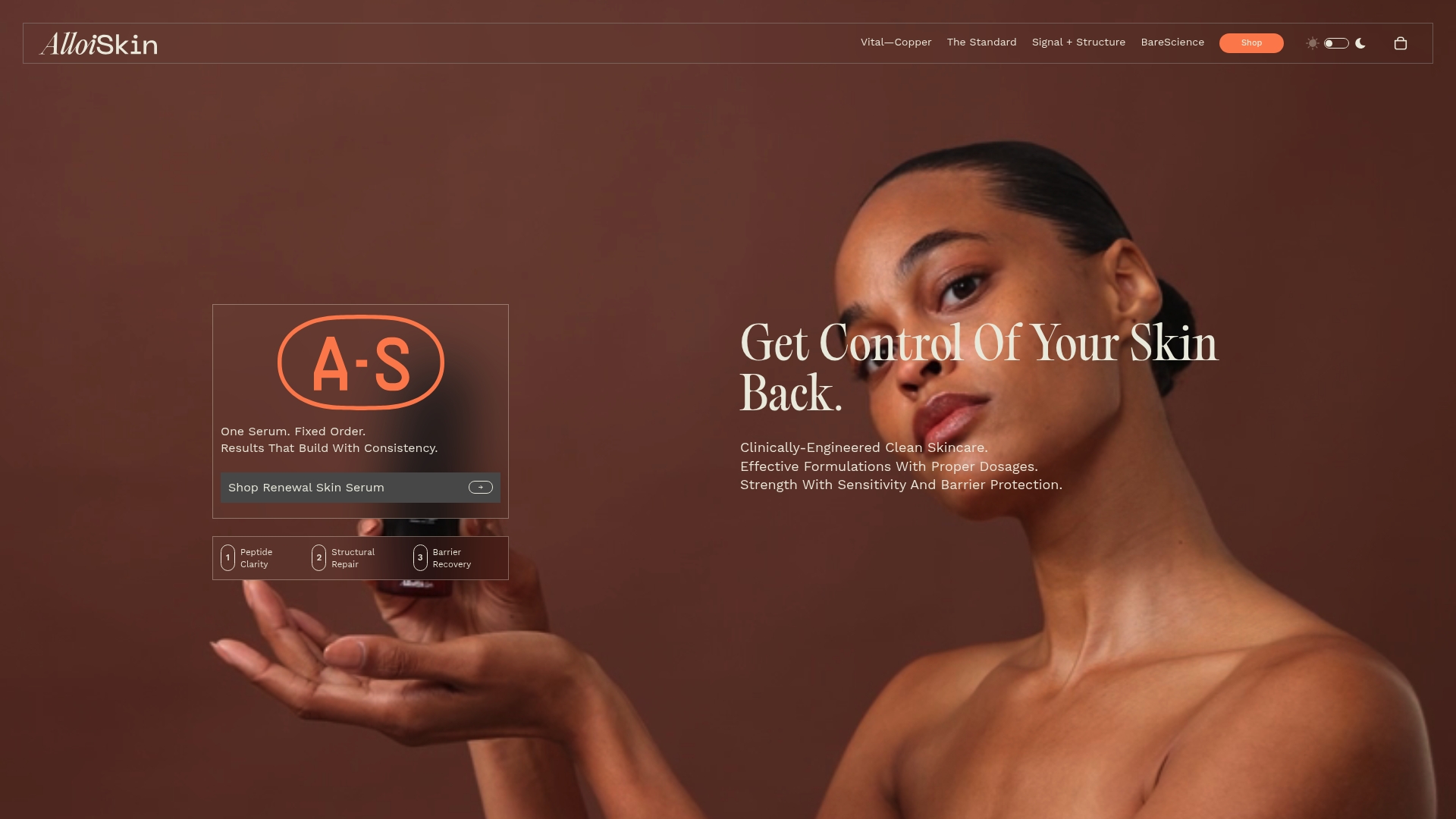
The VitalCopper Renewal Face Serum uses copper peptides as a repair-focused adjunct, layered in alongside your retinoid and exfoliant rather than replacing either. Copper peptides support the skin’s structural repair processes, which makes the serum a fit for the barrier-support stage of the routine outlined above, not a stand-in for SPF or retinoid nights. Patch-test it on your inner arm for 48 hours before introducing it to your face, same as any new active.
If you’re building the minimalist routine this article recommends, check the full ingredient list to see exactly what’s in the formula, then read the standard Alloi holds its products to before you order. Pair the serum with your existing SPF and retinoid schedule, and give it the same 8 to 12 week window the rest of your routine needs to show results.
Frequently Asked Questions
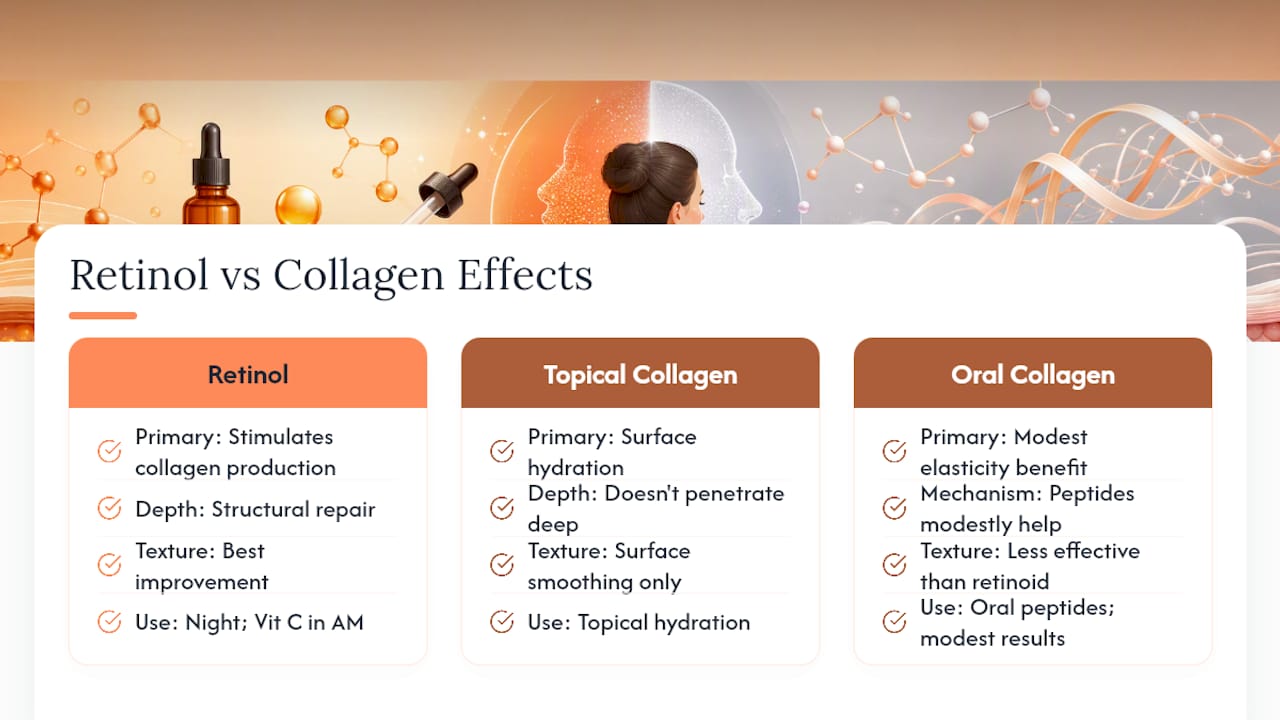
Which is better, retinol or collagen, for improving texture? Retinol wins for structural repair. It stimulates your skin’s own collagen production, while topical collagen mostly hydrates the surface without penetrating deep enough to rebuild anything. Oral collagen peptides show modest elasticity benefits but don’t match what a retinoid does for texture.
How often should I exfoliate to avoid overdoing it? Two to three nights a week is the standard starting point for AHAs or BHAs. Daily use for most people causes more irritation than benefit, especially when combined with a retinoid.
Can I use a retinoid and vitamin C together? Yes, but separate them by time of day. Vitamin C in the morning, retinoid at night, keeps both effective without canceling each other out or over-irritating skin.
Is textured skin always caused by acne scarring? No. Dead skin buildup, sun damage, dehydration, and normal genetic variation in pore size all cause texture changes independent of acne history.
When should I stop trying home treatments and see a dermatologist? If you’ve followed a consistent routine for 3 to 6 months without improvement, or if you notice worsening dark spots, deepening scars, or irritation that won’t calm down, it’s time for a professional evaluation.
This article is general information, not a substitute for advice from a qualified doctor. Consult a qualified healthcare professional about your own circumstances before acting on anything here.
Sources
- PMC article on retinoids and skin (source provided)
- Health
- How to Improve Skin Texture: A Data-Driven Guide | SKŌR
- How to get rid of textured skin | Vogue
- How to fix uneven skin texture | Byrdie


