


Copper peptides are generally suitable for sensitive skin, and for most people the main payoff is a stronger, calmer barrier and firmer texture that builds over roughly four to twelve weeks. The caveat: you should patch-test first, introduce them slowly, and stop if you see persistent redness. Used this way, GHK-Cu tends to support repair rather than provoke it, with improvements typically appearing gradually.
TL;DR:
- Copper peptides support collagen and elastin production slowly over several weeks to months, mainly rebuilding skin infrastructure rather than providing instant results.
- They are generally well tolerated by sensitive skin but require careful patch testing and gradual introduction to avoid transient redness or irritation.
- Using copper peptides alongside strong acids or retinoids can destabilize formulations, so alternating nights or applying separately is recommended for optimal safety.
- For best results, expect noticeable improvements in firmness and resilience after eight to twelve weeks of consistent, careful use.
- Combining copper peptides with soothing ingredients like hyaluronic acid and panthenol can enhance tolerability and support barrier recovery during treatment.
Table of Contents
- What Copper Peptides (GHK-Cu) Are and How They Work
- Do Copper Peptides Actually Improve Skin Firmness?
- Is Copper Peptide Safe for Sensitive Skin?
- How to Use Copper Peptides Without Irritating Your Skin
- Who Should Consider Copper Peptides, and Who Shouldn’t
- What the Research and Dermatologists Actually Say
- How Copper Peptides Compare to Niacinamide and Other Peptides
- What to Expect Week by Week With Copper Peptides
- A Sensitive-Skin Serum Built Around the Right Doses
- Sources
- FAQ
What Copper Peptides (GHK-Cu) Are and How They Work
GHK-Cu, short for glycyl-histidyl-lysine bound to copper, is a naturally occurring tripeptide the body already produces in smaller amounts as it ages. Copper tripeptide-1 is the same molecule as it’s known in skincare formulation. Once applied topically, it acts less like an exfoliant and more like a signal. It tells skin cells to get back to work.
Rather than forcing rapid shedding the way a retinoid or acid does, GHK-Cu communicates with fibroblasts and epidermal stem cells to ramp up production of the proteins that keep skin structurally sound. Clinical and preclinical research shows it increases synthesis of collagen and elastin and supports wound healing, which is part of why it shows up in post-procedure skincare as often as it does in anti-aging serums.
For sensitive skin specifically, that distinction between signaling and forcing matters:
- Retinoids and acids accelerate cell turnover, which can strip the barrier before it’s ready.
- Copper peptides support the collagen synthesis pathway without triggering that same aggressive turnover.
- The result tends to be a gentler process: repair signaling instead of forced renewal.
That mechanism is also why copper peptides get grouped with “maintenance actives” rather than instant-fix ingredients. They rebuild infrastructure. They don’t sand it down and hope something better grows back.
Do Copper Peptides Actually Improve Skin Firmness?
Yes, and the evidence for it is more specific than most skincare claims get. A widely cited review on copper’s role in dermatology found that copper-containing treatments improved skin elasticity and enhanced wound healing across multiple controlled and randomized studies. That’s not a marketing claim; it’s a pattern showing up across independent trials using copper oxide dressings and topical copper compounds.
Copper’s clinical signal: Across the studies summarized in that review, copper-containing products consistently showed measurable gains in elasticity and faster wound closure, with the review’s authors linking this directly to copper’s role in upregulating extracellular matrix proteins.
Dermatologists frame these findings the same way: GHK-Cu supports long-term skin health and resilience, and it’s better understood as a repair and maintenance active than a wrinkle eraser you’ll see working overnight.
That framing matters most for sensitive, thinning, or post-procedure skin, where the priority isn’t dramatic transformation. It’s stability. A barrier that’s already compromised, whether from eczema, rosacea, laser treatments, or years of over-exfoliation, needs proteins rebuilt before it can tolerate anything more aggressive. Copper peptides work at that foundational level.
Set your expectations accordingly. Nobody wakes up on day 10 with visibly firmer skin. The changes are cumulative, showing up gradually as collagen and elastin production catches up to what the skin lost.
Is Copper Peptide Safe for Sensitive Skin?
For most people with sensitive skin, yes, copper peptides are one of the better-tolerated actives available. That said, “well tolerated” isn’t the same as “risk-free,” and sensitive skin still deserves a careful introduction.
The research is reassuring on one specific point. Copper is considered a very weak sensitizer compared with many other metals used in skincare and medicine. In the studies reviewed on copper’s dermatological role, several trials reported no recorded adverse reactions at all. That’s a low bar for concern by ingredient standards.
Still, some users do experience mild irritation, tingling, or transient redness, particularly in the first two weeks as skin adjusts. Dermatologists note this is more common in reactive skin types and usually resolves once tolerance builds.
Before applying anywhere near your face, run a real patch test:
- Apply a small amount to your inner forearm or behind the ear.
- Wait 24 to 48 hours and watch for redness, itching, or swelling.
- If nothing happens, apply to a small facial area (like your jawline) for two more nights before going all-in.
- Stop immediately if you see persistent redness, burning, or breakouts that don’t settle within a day.
The bigger risk isn’t usually the peptide itself. It’s stacking it carelessly with too many other actives at once, especially strong acids or high-percentage vitamin C, which can overwhelm a barrier that’s already working overtime.
Pro Tip: If you’re introducing copper peptides alongside a new retinoid or acid, don’t start both in the same week. Sensitive skin can usually tell you what it can handle, but only if you’re not asking it to adapt to three things simultaneously.
How to Use Copper Peptides Without Irritating Your Skin
Getting the sequencing right does more for your results than any single product choice. Copper peptides work best layered thoughtfully, not stacked haphazardly on top of everything else in your routine.
A starter schedule that respects sensitive skin:
- Weeks 1 to 2: Apply every third night after cleansing, before moisturizer. Skip retinol and strong vitamin C entirely during this window.
- Weeks 3 to 4: If tolerated, move to every other night. Watch for any lingering redness the morning after.
- Week 5 onward: Nightly use is generally fine for most sensitive skin types once tolerance is established.
- Reintroduce other actives gradually: Add back retinol or vitamin C on alternating nights, never the same session as copper peptides.
On layering specifics, dermatologist guidance is consistent: avoid combining GHK-Cu with strong acids or unbuffered retinoids in the same application, since copper can destabilize some retinoid formulations and reduce efficacy on both sides. The safest approach is alternating nights or using copper peptides in the morning under sunscreen while reserving retinol for evenings.
Copper peptides pair well with hyaluronic acid, panthenol, betaine, and ceramides, all of which reinforce the barrier rather than compete with it. Daytime, sunscreen is non-negotiable, not because copper peptides increase photosensitivity directly, but because any skin actively rebuilding collagen benefits from UV protection.
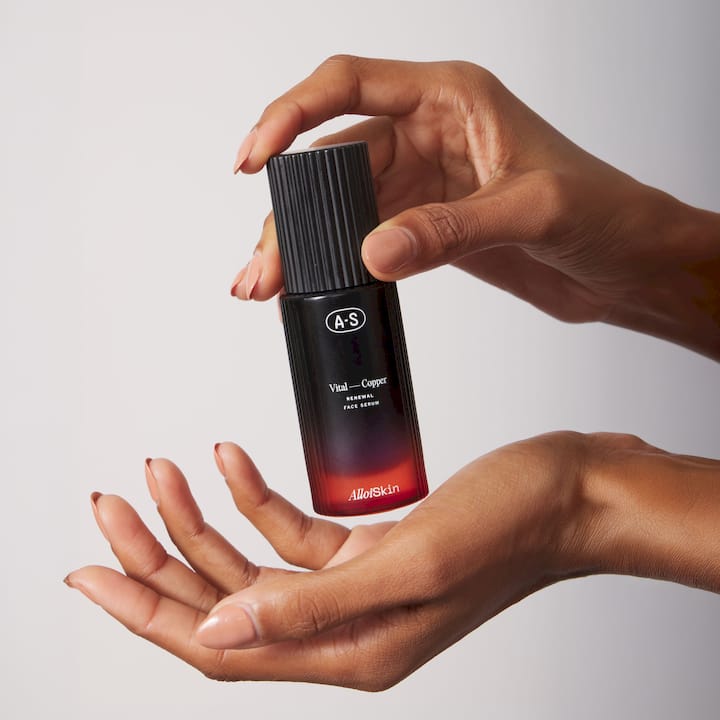
Pro Tip: Apply copper peptide serums to slightly damp skin right after cleansing. The added moisture helps the formula spread evenly and can reduce the tingling some sensitive-skin users notice on fully dry skin.
Who Should Consider Copper Peptides, and Who Shouldn’t
Copper peptides tend to work best for people managing a barrier that’s already under stress: post-procedure skin recovering from lasers or peels (with medical clearance), mature skin losing collagen density, and anyone who reacts badly to retinoids but still wants firming support.
A few groups should proceed with more caution or skip them for now:
- Anyone with active, severe inflammatory acne, since copper peptides aren’t formulated to address bacterial or hormonal breakouts.
- People with a known copper or metal allergy, who should skip patch testing altogether and choose a different active.
- Anyone recovering from an ablative procedure without explicit clearance from their dermatologist.
If any of those apply, niacinamide or a plain ceramide-based moisturizer are gentler starting points until skin stabilizes.
What the Research and Dermatologists Actually Say
The clearest picture comes from combining clinical data with practical guidance. The NCBI review on copper’s dermatological role ties copper’s biological function directly to observed gains in elasticity and wound healing, not just theoretical mechanism. Dermatologists add the practical layer: build tolerance slowly, and don’t pair copper peptides with strong acids or unbuffered retinoids in the same routine.
Copper peptides support cumulative improvements in firmness and skin resilience, but they’re a repair tool, not an instant fix. Users get the best results by building tolerance gradually and avoiding simultaneous use with aggressive actives.
Alloi Skin’s formulation method follows that same logic. The 4 to 12 week minimal routine it recommends isn’t arbitrary. It matches the timeline dermatologists describe for visible collagen and elastin gains, and it avoids the layering conflicts that undermine results when copper peptides get crowded out by too many competing actives in one formula.
How Copper Peptides Compare to Niacinamide and Other Peptides
Sensitive skin routines usually come down to a short list of trusted ingredients, and copper peptides sit in interesting company. Niacinamide is the closest comparison in terms of reputation for gentleness. It calms inflammation, supports barrier lipids, and has an even lower irritation profile than copper peptides for most users. But niacinamide doesn’t meaningfully drive collagen synthesis the way GHK-Cu does. It’s a barrier-calming ingredient, not a structural-repair one.
Other peptides, like Matrixyl 3000 (a combination of palmitoyl tripeptide-1 and palmitoyl tetrapeptide-7), work through a different signaling pathway but land on a similar outcome: supporting collagen without forcing turnover. Copper peptides and Matrixyl 3000 are often formulated together because they reinforce each other rather than compete, which is part of why that pairing shows up in barrier-focused serums rather than as standalone products.
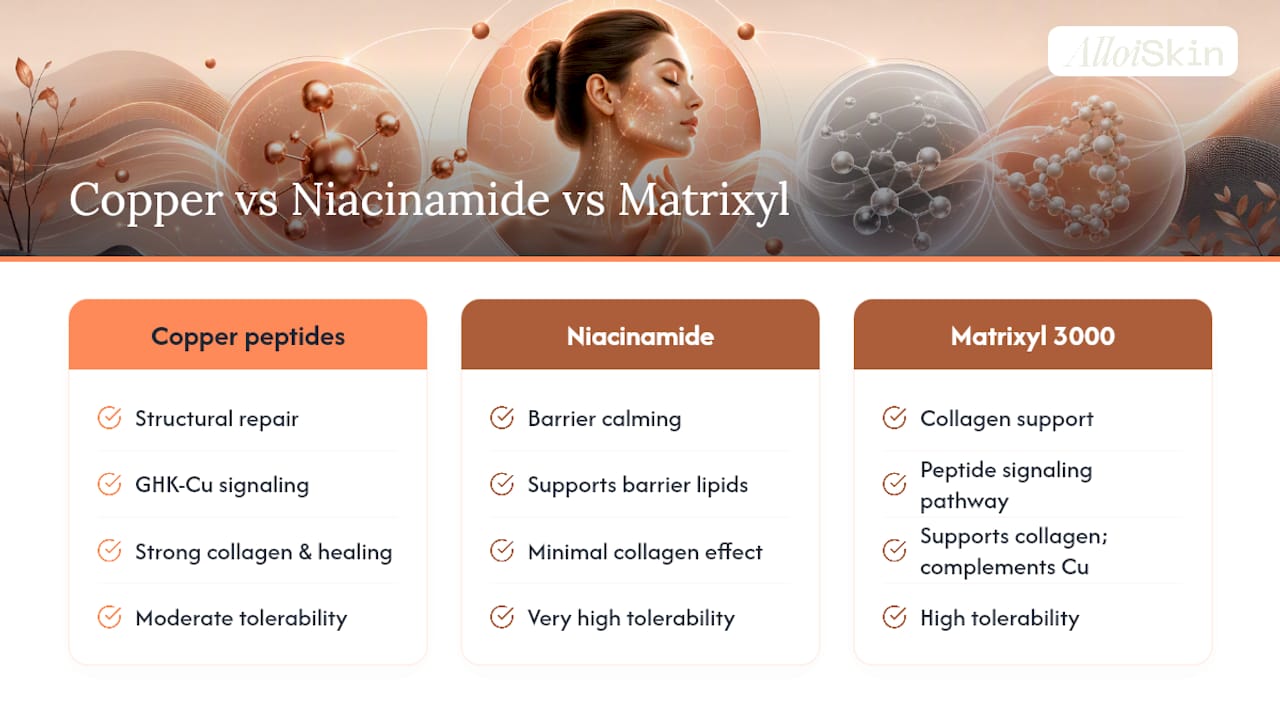
Where copper peptides pull ahead of both niacinamide and most standalone peptides is in the wound-healing and elasticity data, which is more robust than what exists for niacinamide alone. Where niacinamide wins is tolerability. It’s genuinely difficult to react badly to it.
For sensitive skin, the practical answer isn’t choosing one over the other. It’s sequencing them: niacinamide calms and stabilizes, copper peptides rebuild, and the two rarely conflict when introduced separately.
What to Expect Week by Week With Copper Peptides
Realistically, week four is about tolerance, not transformation. That’s when you should notice your skin adjusting comfortably and maybe a subtly smoother texture. The more meaningful shift, firmer texture and better resilience to environmental stress, tends to show up between eight and twelve weeks of consistent use.
Track how your skin responds after each application, not just the big picture. If redness lingers longer than an hour or shows up more than a couple times a week, pause and consult a dermatologist rather than pushing through. Used at a careful pace, copper peptides are generally well tolerated and can be incorporated thoughtfully into routines for sensitive skin.
— Alloi Skin
A Sensitive-Skin Serum Built Around the Right Doses
Most serums marketed for sensitive skin either underdose their actives to avoid complaints or overload the ingredient list until nothing in it works at a meaningful concentration. The VitalCopper Renewal Face Serum takes the opposite approach: copper tripeptide-1 and Matrixyl 3000 at studied concentrations, paired with panthenol, betaine, and hyaluronic acid to protect the barrier while the peptides do their work.
That combination maps directly onto the starter schedule outlined above. You can introduce it every third night for the first two weeks, watch how your skin responds, then build up to nightly use as tolerance develops. Panthenol and betaine are there specifically to buffer the process, cutting down on the tingling or dryness that can show up when a new active meets reactive skin. If you’d rather not think about reordering each month, the subscription option applies the same 4 to 12 week logic automatically. Either way, the product page has the full ingredient breakdown if you want to see exactly what you’re applying and why.
Sources
- A Dermatologist’s Take on the Copper Peptide (GHK-Cu) Skin Care Trend
- Using Copper to Improve the Well-Being of the Skin
FAQ
Is Copper Peptide Safe for Sensitive Skin?
Yes, for most people. Copper is considered a very weak sensitizer, and several clinical trials reported no adverse reactions, though patch testing before full use is still the smart move.
What Is the Best Copper Peptide Serum for Sensitive Skin?
Look for a formula that pairs GHK-Cu at a studied dose with barrier-supporting ingredients like panthenol and hyaluronic acid. The VitalCopper Renewal Face Serum combines copper tripeptide-1 with Matrixyl 3000 and those soothing actives for that reason.
What Are the Downsides of Copper Peptides?
The main downsides are mild irritation or tingling during the first couple of weeks, incompatibility with strong acids or unbuffered retinoids used in the same session, and results that take weeks to months rather than days to show up.
Do Copper Peptides Make Your Skin Sensitive to Sun?
Copper peptides don’t directly increase photosensitivity the way retinoids can, but daily sunscreen still matters, since skin actively rebuilding collagen benefits from UV protection regardless of the active driving that repair.


