


Collagen powder is well tolerated by most adults, and the side effects that do occur are usually mild and predictable: digestive upset, an off-putting taste, and occasionally a skin or allergic reaction tied to the source material. Serious events are rare. Most complaints trace back to how a product is made, not to collagen itself, which is why sourcing and label transparency matter more than the ingredient name on the front of the tub.
TL;DR:
- Most adults tolerate collagen powder well at doses between 2.5 and 15 grams daily, with side effects mainly limited to mild digestive issues.
- Marine collagen carries a higher risk of causing allergic reactions in people with fish or shellfish allergies, while bovine and porcine sources pose lower but still possible allergy risks.
- Those who are pregnant, breastfeeding, have kidney issues, or take blood thinners should consult a healthcare professional before starting collagen supplements.
- Product quality depends heavily on sourcing and transparent labeling; third-party testing and avoiding unnecessary additives help ensure safety.
- Reactions typically occur within days, so starting with half a serving on an empty stomach and monitoring your response helps prevent adverse effects.
Table of Contents
- What Are the Most Common Collagen Powder Side Effects?
- Can You Have an Allergic Reaction to Collagen Powder?
- Who Should Avoid or Talk to a Doctor Before Taking Collagen?
- How Do You Know if a Collagen Powder Is Safe?
- What Dose of Collagen Is Safe, and Does It Interact With Medications?
- What Should You Do if You Have a Reaction?
- How Alloi Skin Approaches Formulation to Limit Side Effects
- Our Take on Collagen Safety vs. Hype
- A Formulation You Can Actually Verify
- Sources
- FAQ
What Are the Most Common Collagen Powder Side Effects?
Collagen peptides side effects tend to cluster around the gut. The protein load hits your stomach fast, and for people unaccustomed to a concentrated dose, that means:
- Bloating and a feeling of fullness
- Mild heartburn or acid reflux
- Nausea, especially on an empty stomach
- Diarrhea or loose stools
- A fishy or chalky aftertaste
Marine-sourced powders carry a stronger odor and flavor than bovine versions, and that sensory hit is often what people describe as nausea rather than true digestive distress. Sugar alcohols and artificial sweeteners added to flavored blends compound the problem, drawing water into the gut and triggering the same bloating you’d get from sugar-free gum.
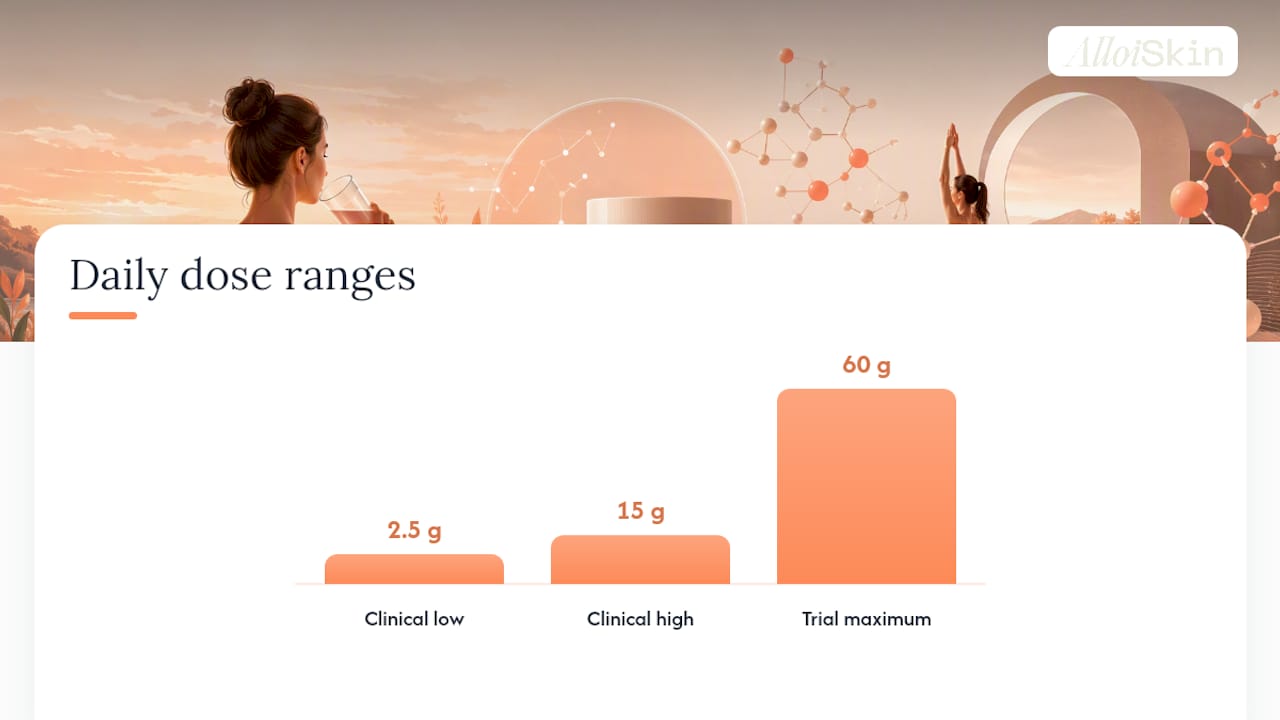
Clinical reviews of collagen supplementation report that doses in the 2.5 to 15 gram per day range are generally well tolerated, with some trials pushing as high as 60 grams without adverse events. That’s a wide safety margin, which tells you most reported issues come from formulation choices, not the collagen dose itself. Trusted health-system summaries list the same short roster of GI symptoms as the primary complaint category.
Can You Have an Allergic Reaction to Collagen Powder?
Yes, though it’s uncommon, and it depends heavily on where the collagen comes from. Collagen allergy symptoms show up almost exclusively in people with an existing sensitivity to the source animal.
- Fish or shellfish allergy raises real risk with marine collagen, including cross-reactivity in people who’ve never had a reaction to whole fish
- Bovine and porcine collagen carry lower but nonzero risk for those with beef, pork, or gelatin allergies
- Immediate signs include hives, facial or throat swelling, itching, and in rare case reports, breathing difficulty or anaphylaxis
Anyone with a known food allergy to fish, shellfish, or a specific animal protein should read the source line on the label before buying, not just the word “collagen.” A product that simply says “collagen peptides” without naming the species is telling you less than you need to know.
Who Should Avoid or Talk to a Doctor Before Taking Collagen?
Most healthy adults can try collagen powder without medical clearance. A few groups should check in first:
- Pregnant or breastfeeding people. Safety data in this population is limited, so a conversation with your OB or midwife is the responsible move before adding any new supplement.
- People with kidney disease or a history of kidney stones. Extra protein and mineral load can matter for compromised kidney function, and this needs a nephrologist’s input, not a guess.
- Anyone on blood thinners like warfarin, or on beta-blockers. Interaction risk is not well studied, but it’s worth a pharmacist or physician review before you start.
- People with multiple food allergies, or dietary restrictions such as kosher, halal, or vegan. Collagen is always animal-derived, so sourcing and certification need a close look. MD Anderson advises consulting a clinician whenever a complex medical history is in play, since new symptoms should never be assumed to be the supplement without ruling out other causes.
How Do You Know if a Collagen Powder Is Safe?
Sourcing drives most of what goes wrong. Marine collagen brings the strongest flavor and odor profile and the highest allergen sensitivity for shellfish-reactive people, along with occasional heavy-metal concerns depending on the fish species and waters used. Bovine and porcine collagen are milder in taste but carry their own allergen and, for some buyers, dietary-restriction concerns. Chicken-sourced collagen sits in between on both counts.
Beyond the base ingredient, watch for:
- Sugar alcohols (sorbitol, erythritol, xylitol) added for flavor, a common driver of bloating and diarrhea
- High-dose biotin, often stacked in “beauty” blends, which can interfere with certain lab tests, including thyroid panels
- Herbal extracts layered in for marketing appeal, which bring their own interaction profiles
A review of supplement labeling found many collagen products failed to clearly identify the source species, and few carried third-party verification. That’s the gap third-party testing closes. The FDA does not preapprove dietary supplements for safety or effectiveness before they reach shelves, so certifications like NSF and USP, plus a manufacturer willing to publish its sourcing, are the closest thing consumers get to independent verification.
Pro Tip: Start with half a serving on an empty stomach and track how you feel for 48 to 72 hours. That short window usually separates sensory-driven nausea, which is common with marine collagen’s taste, from a genuine intolerance or allergic response.
What Dose of Collagen Is Safe, and Does It Interact With Medications?
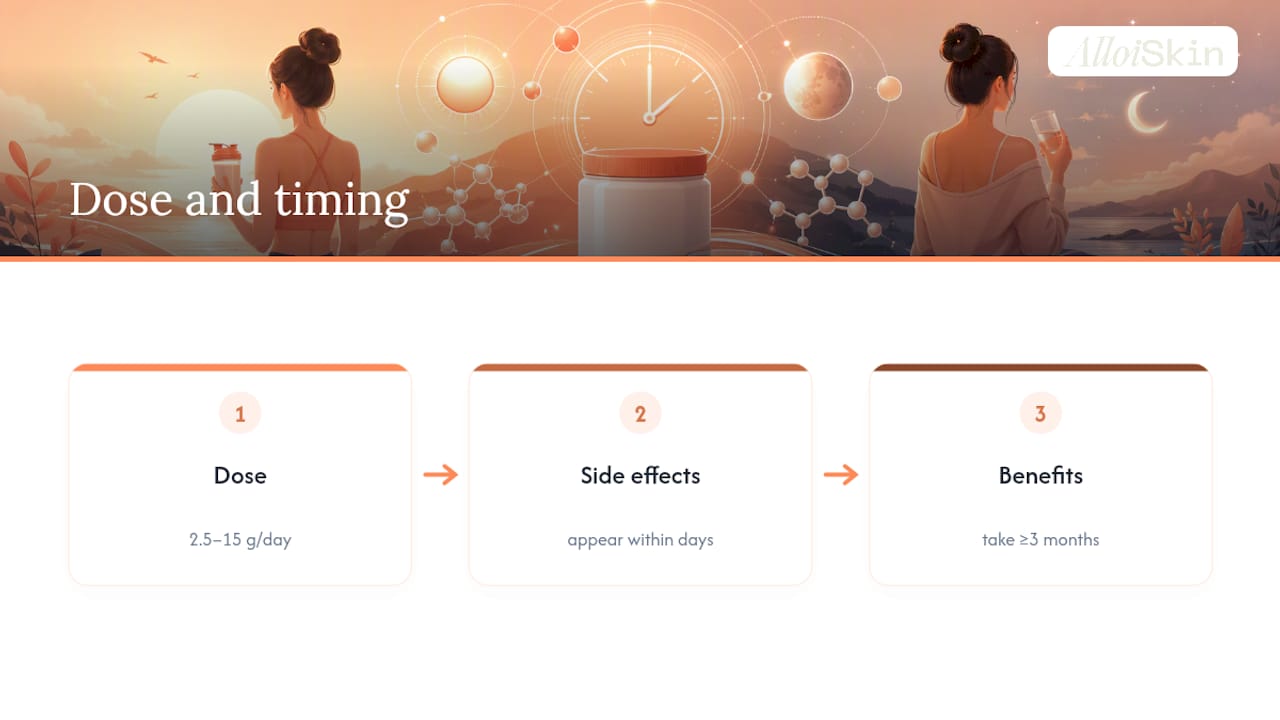
Most published trials use daily doses between 2.5 and 15 grams, and benefits for skin and joint outcomes generally take at least three months to show up. That timeline matters: side effects, if they happen, usually appear within days, while the payoff you’re chasing takes months. It’s worth structuring your expectations accordingly.
Adverse events at these doses are uncommon in the clinical literature reviewed to date, though long-term data beyond a year or two remains thin. Interaction risk is not well mapped, but people on blood thinners or beta-blockers should still flag collagen powder to their prescriber, since herbal additives and high-dose vitamins bundled into some formulas are the more likely interaction culprits, not the collagen peptides themselves.
What Should You Do if You Have a Reaction?
- Stop the product immediately and note the brand and lot number from the packaging.
- Watch for red flags that need urgent care: difficulty breathing, facial or throat swelling, severe abdominal pain, or black, tarry stools.
- Report the reaction through FDA MedWatch or the HHS safety reporting portal and let your clinician know, especially if symptoms persist after stopping.
How Alloi Skin Approaches Formulation to Limit Side Effects
Most collagen side effects come from what’s added around the core ingredient, not the collagen itself. That’s the reasoning behind how Alloi Skin formulates: minimal actives, dosed at levels the clinical literature actually supports, with full ingredient transparency instead of a long list padded for the label.
That discipline is what keeps sugar alcohols, mega-dose biotin, and filler herbal extracts out of the formula in the first place. Fewer additives mean fewer variables that can trigger bloating, mask true tolerance, or interfere with a lab test.
Our Take on Collagen Safety vs. Hype
Collagen powder is one of the lower-risk supplements you can add to a routine, provided the product is tested and the label tells you where the collagen came from. The bigger risk isn’t the peptide, it’s the marketing dressing built around it: unnecessary sweeteners, mystery herbal blends, and vague sourcing. If you have a complicated medical history, a five-minute conversation with your clinician beats guessing. Otherwise, spend your scrutiny on the certification, not the hype.
— Alloi Skin
A Formulation You Can Actually Verify
Most of the risk in this category comes from what a brand hides, not what collagen does on its own. Alloi Skin’s VitalBuild Daily Collagen Powder is built on the same principle behind the marine collagen peptides research: transparent sourcing, no sugar-alcohol fillers, and dosing that matches what clinical trials actually studied.

It’s formulated for people who want visible skin support without decoding a label full of unnamed extracts. Pair it with the VitalCopper Renewal Face Serum for a topical layer that follows the same minimal-ingredient logic, copper tripeptide-1 and Matrixyl 3000 at studied doses, nothing added for show. If you’re also rethinking what goes on your skin, a detox-focused herbal tea from our wellness partners is worth a look for the same reason: fewer, better-dosed ingredients. Visit the product page to see the full ingredient breakdown before you buy.
This article is general information, not a substitute for advice from a qualified doctor. Consult a qualified healthcare professional about your own circumstances before acting on anything here.
Sources
- Clinical review on collagen supplementation (PMC8521576)
- Cleveland Clinic — Collagen supplements: Benefits and side effects
- FDA — Dietary supplements
FAQ
Is Collagen Powder Safe to Take Daily?
Yes, for most healthy adults, daily use at studied doses (2.5 to 15 grams) is generally well tolerated, with benefits typically appearing after three months or more of consistent use.
What Are the First Signs of a Collagen Allergy?
Hives, itching, facial or throat swelling, and in rare cases difficulty breathing are the immediate signs, and they call for stopping the product and seeking care right away.
Does Collagen Powder Cause Bloating?
Bloating is one of the most reported collagen supplement side effects, usually from the protein load itself or from added sugar alcohols and sweeteners in flavored formulas.
Is Marine Collagen Riskier Than Bovine Collagen?
Marine collagen carries a stronger taste and odor and higher risk for people with fish or shellfish allergies, while bovine collagen is milder but still unsuitable for those with beef or gelatin allergies.
How Can I Tell if a Collagen Product Is High Quality?
Look for clear source labeling, third-party testing seals like NSF or USP, and a short ingredient list without added sugar alcohols, mega-dose biotin, or unnamed herbal extracts, the same standard reflected in Alloi Skin’s ingredient transparency page.


